Aaronne Colagrossi

Aaronne
Colagrossi

Aaronne Colagrossi was born in Campobasso in 1980.  Since childhood he has nurtured a deep passion for nature in all its forms, in particular for dinosaurs and sharks, the mysterious creatures of the sea. He obtained a degree in Geological Sciences from the University of Molise with a thesis in geological survey and paleontology, which proved to be a turning point in his future career as a fiction author. The border between Abruzzo and Molise, is very rich in shark tooth fossils. His first novel, entitled Megalodon the perfect predator (2012), was inspired by the immense amount of data concerning the fossil sharks of central Italy.


He has always combined his passion for science with his passion for history, in particular for the long and complex history of piracy in the East and West Indies, both from a nautical and technical as well as geopolitical and geographic point of view. His book Pirati Socco Scacco/Pirates in Check explores the adventures of the pirates of the Caribbean in 1665. He is also the author of several other books on paleontology, available on Amazon.


His passion for nature, geology, animals and photography, lead him to travel extensively in Europe and Africa, as well as to obtain diving qualifications and offshore sailing. He is an adventure guide for diving among the islands of the Red Sea, tent safari in the Kalahari desert, sailing on the Okavango river delta, cross-driving Namibia, part of Botswana and Zimbabwe and to see his beloved creatures at sea, as well as an expedition to South Africa, to admire the great white shark, protected by an anti-shark cage.


Main Website, books and articles www.aaronnecolagrossi.com

Amazon author page https://www.amazon.it/kindle-dbs/entity/author/B01N9IYCKI

Safari guide https://exploraexpedition.com/
Member for

6 years 8 months

View Recent Blogs

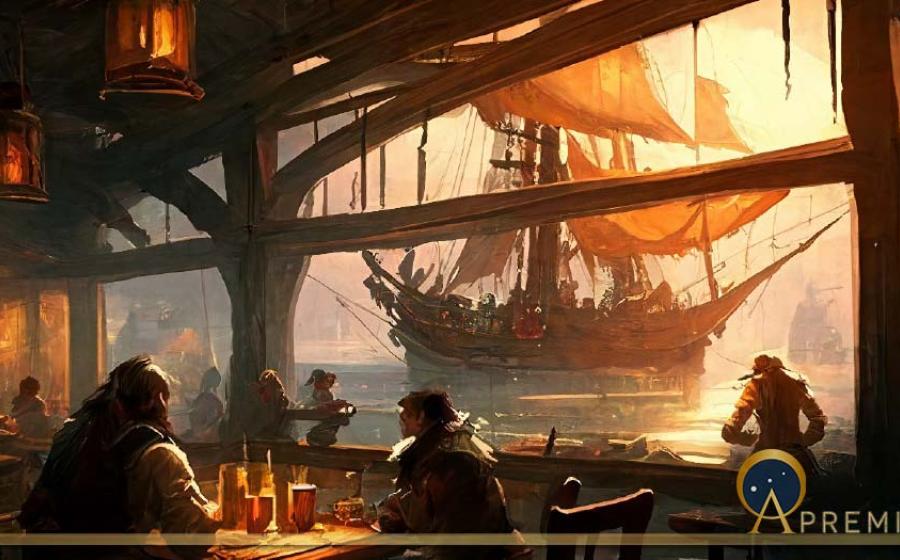
Caribbean cuisine was certainly founded by pirates. Images of filibusters as ragamuffins gnawing bugs in some cell, or perhaps scraping the bottom of some barrel adrift in the Caribbean, hunting for prey, or that of pirates getting drunk in front of taverns in Tortuga, Petit-Goave or Port Royal, Jamaica are popular depictions. Certainly such scenes were part of their lives, as theirs were not an easy life at that time, and revelry and orgies formed an integral part of that vision. But it would be a mistake to believe that buccaneers and privateers did not enjoy the refinements of cuisine. Father Labat Dining with the Pirates " We dined very merrily and with appetite. I had had wine and brandy

Caribbean cuisine was certainly founded by pirates. Images of filibusters as ragamuffins gnawing bugs in some cell, or perhaps scraping the bottom of some barrel adrift in the Caribbean, hunting for prey, or that of pirates getting drunk in front of taverns in Tortuga, Petit-Goave or Port Royal, Jamaica are popular depictions. 

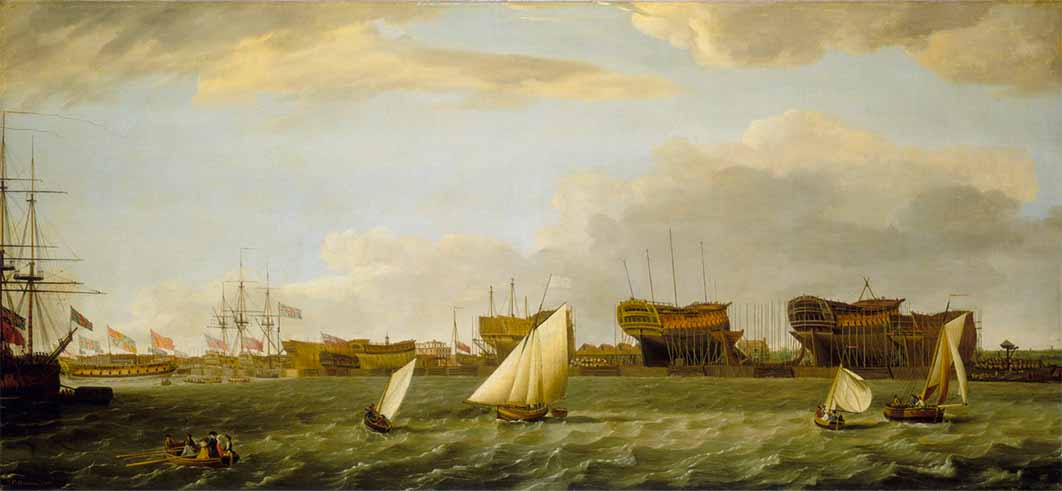
During the 1700s, European naval studies were decisive and very important, so much so that espionage by Spain and France against England for military and naval purposes alone had become a real scourge. The designers of the time had succeeded in improving vessel stability, hull, tonnage, and many other features as never before. What had not yielded the desired results, was the refinement of shapes. The perfect combination of a vessel’s shape and increased speed was still a vital missing element of shipbuilding. There were many reasons for this, starting with the initial constraints of each design aimed at a specific use and the difficulties of adequate measurements, even in shipyards. [[{"type":"media","view_mode":"media_large","fid":"106737","attributes":{"alt":"Two warships being constructed at the Thames Ironworks and
The crucial role of intelligence among the various royal navies of Europe during the 17th and the 18th centuries cannot be underestimated. Since naval warfare was a very powerful weapon during these centuries, as indeed it is today, it is no wonder that many naval architects, such as Deane and Chapman, as well as designers of various kinds, and even skilled workers were kept under surveillance by naval and military espionage. A historian of the 1800s remarked, " The design of the ships remained a jealously guarded secret until the great thirst for knowledge of the 1600s leveraged to open up the old era. The mystery was based on technical knowledge and practical experience." [[{"type":"media","view_mode":"media_large","fid":"104631","attributes":{"alt":"Diagram of a warship \"A SHIP

There had never been such good blood between Spain and England as in the mid-16th century. However, in the last quarter of this century relations between Philip II of Spain (also known as 'Philip the Prudent') and Elizabeth I (also known as 'The Virgin Queen') were very tense at that time, and they deteriorated from 1585 onwards. 

There had never been such good blood between Spain and England as in the mid-16th century. However, in the last quarter of this century relations between Philip II of Spain (also known as 'Philip the Prudent') and Elizabeth I (also known as 'The Virgin Queen') were very tense at that time, and they deteriorated from 1585 onwards. History teaches that in addition to places, dates, winners and losers, there is another important variant to observe, perhaps of even greater importance: the whys. [[{"type":"media","view_mode":"media_large","fid":"101090","attributes":{"alt":"Philip II of Spain by Joos van Cleve (c. 1580) National Portrait Gallery, London (Public Domain) and Queen Elizabeth I by Marcus Gheeraerts the Younger (c. 1597), Trinity College, Cambridge (Public Domain)","class":"media-image","height":"520","style":"width: 610px; height: 520px;","typeof":"foaf:Image","width":"610"}}]] Philip II of
Modern naval history is considered to have commenced in 1616, but the ensuing century between 1715 and 1820 marked an era not only of geopolitical change, but also a time when oceans were turned into battlefields and navies were required to out-maneuver their enemies in terms of strategy, tactics and shipwright design. Many historians concur that the death of King Louis XIV of France in 1715, heralded a new historical chapter in Europe, especially in the naval arena. In addition to the death of the French Sun King, two important events influenced European politics; namely the Treaty of Rastatt in 1714 between France and Austria and the Peace Treaty of Utrecht in 1715 which ended the War of the Spanish