

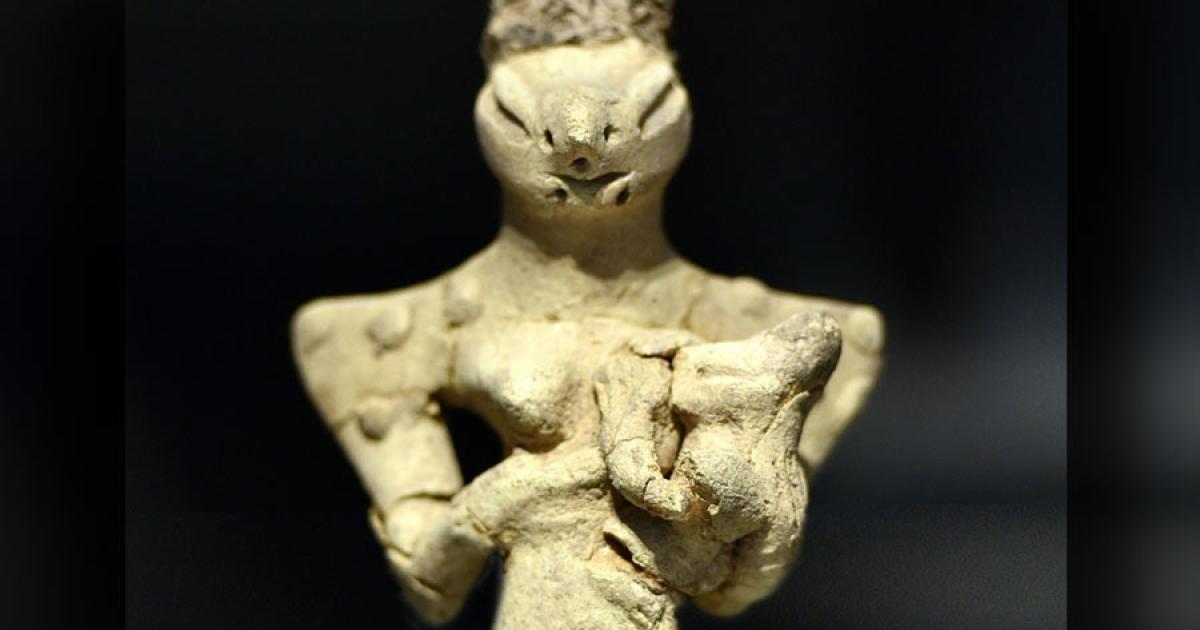

It is a commonly accepted view in mainstream archaeology that civilization started in ancient Mesopotamia with the great civilization of Sumer in what is now modern-day Iraq. However, at the beginning of the 20th century, archaeologists excavating at Tell Al’Ubaid in Iraq made an unusual discovery when they unearthed several 7,000-year-old artifacts which appear to represent humanoid figures with reptilian features.

Examples of the Ubaid lizardmen discovered in Iraq. (Mary Harrsch / CC BY 2.0)
Understanding Ubaidian Culture
The Ubaidian culture is a prehistoric culture in Mesopotamia that dates between 4000 and 5500 BC. As with the Sumerians, the origins of the Ubaidian people is unknown. They lived in large village settlements in mud-brick houses and they had developed architecture, agriculture and farmed the land using irrigation.
- Eridu: The Sumerian Garden of Eden and the Oldest City in the World?
- Ancient Mesopotamia and the Rise of Civilization
The domestic architecture of the Ubaidians included large T-shaped houses, open courtyards, paved streets, as well as food processing equipment. According to the Metropolitan Museum of Art, some of these villages began to develop into towns, temples began to appear, as well as monumental buildings such as in Eridu, Ur and Uruk, the major sites of the Sumerian Civilization. Sumerian texts explain that Ur was believed to be the first city.
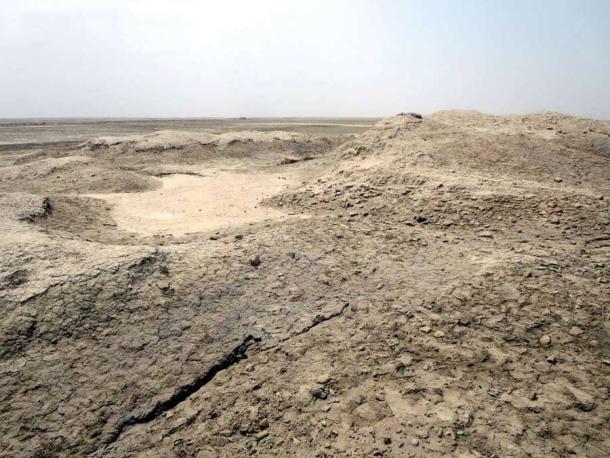
Tell al-Ubaid is a small tell discovered near Ur in southern Iraq. (David Stanley / CC BY 3.0)
Discovering Ubaid Lizardmen Figurines at Tell Al’Ubaid
The main site where the unusual artifacts were discovered is called Tell Al’Ubaid – although figurines were also found in Ur and Eridu. The Al’Ubaid site is a small mound of about half a kilometer (0.3 mi) in diameter and two meters (6.56 ft) above ground. First excavated by Harry Reginald Hal in 1919, male and female figurines were found in different postures. Most of the figurines appear to be wearing a helmet and have some kind of padding on the shoulders.
Other figurines were found to hold a staff or scepter, possibly as a symbol of justice and ruling. Each figurine has a different pose but the strangest of all is that some female figurines hold babies suckling milk, with the child also represented as a lizard-type creature.

Lizard-headed nude woman nursing a child, from Ur, Iraq, c. 4000 BC, now at Iraq Museum. (Osama Shukir Muhammed Amin FRCP / CC BY-SA 4.0)
Ubaid Lizardmen: The Prehistoric Lizard Figurines
The figurines are presented with long heads, almond shaped eyes, long tapered faces and a lizard-type nose. What exactly they represent is completely unknown. According to archaeologists, their postures, such as a female figure breast-feeding, do not suggest that they were ritualistic objects. So what did these Ubaid lizardmen represent?
- Enki: The Epic Mesopotamian Water God Who Saved Humanity
- The Great City of Uruk Became Sumerian Powerhouse of Technology, Architecture and Culture
Whatever they were, they appear to have been important to the ancient Ubaidian people. We know that the serpent was a major symbol used in many societies to represent a number of gods, for example, the Sumerian god Enki, and the snake was used later on as the symbol for the Brotherhood of the Snake, supposedly an ancient secret society. Is there a link between the symbol of the snake and the representations of lizards? For now, these questions remain unanswered.
Top image: Ubaid Lizardmen Source: CC by SA 4.0





















Comments
Dinosaurs?
Permalink
in these comments not one mentioned dinosaurs. Is it possible that dinosaurs due to the death of humans from dinosaurs maybe were considered some higher form than humans at that time? Although the comments I am reading about the fallen angels is interesting who really knows why they made those statutes
Similarities to Help?
Permalink
Looking at the figures their sexual samenesses to ourselves have me wondering whether they are :
Origin of people living in
Permalink
Origin of people living in Sumer is unknown?
They left inscriptions saying they were black headed, they came from Aratta (Ararat-Armenia), they told about their two rivers (Tigris and Euphrates of Armenia), mount Mashu ( Masis in Armenian) and their artefacts show they were Armenoids. Aratta is today's Metsamor. Sumerian is the name given to them by modern historians after the city Sumer- Shinar in Bible. Shinar+ar is a builder in Armenian with AR being God Creator. People living in Sumer called their God Enki which had several names, one of them being Haya...Hay means Armenian in Armenian language.
The Sumerian Anunnaki God Enki (Akkadian Ea, Armenian Haya), with the twin streams of the Euphrates and Tigris emerging from his shoulders.
Gobekli Tepe: Genesis of the Gods: The Temple of the Watchers and the Discovery of Eden. By Andrew Collins
Have read his books they are
Permalink
In reply to Origin of people living in by Mane (not verified)
Have read his books they are fascinating, these figures relate well
Have you heard the Hungarian
Permalink
In reply to Origin of people living in by Mane (not verified)
Have you heard the Hungarian Language connection? How do you explain what your stating and facts? They claim the Hungarians are the modern day descendants of the Sumerians.