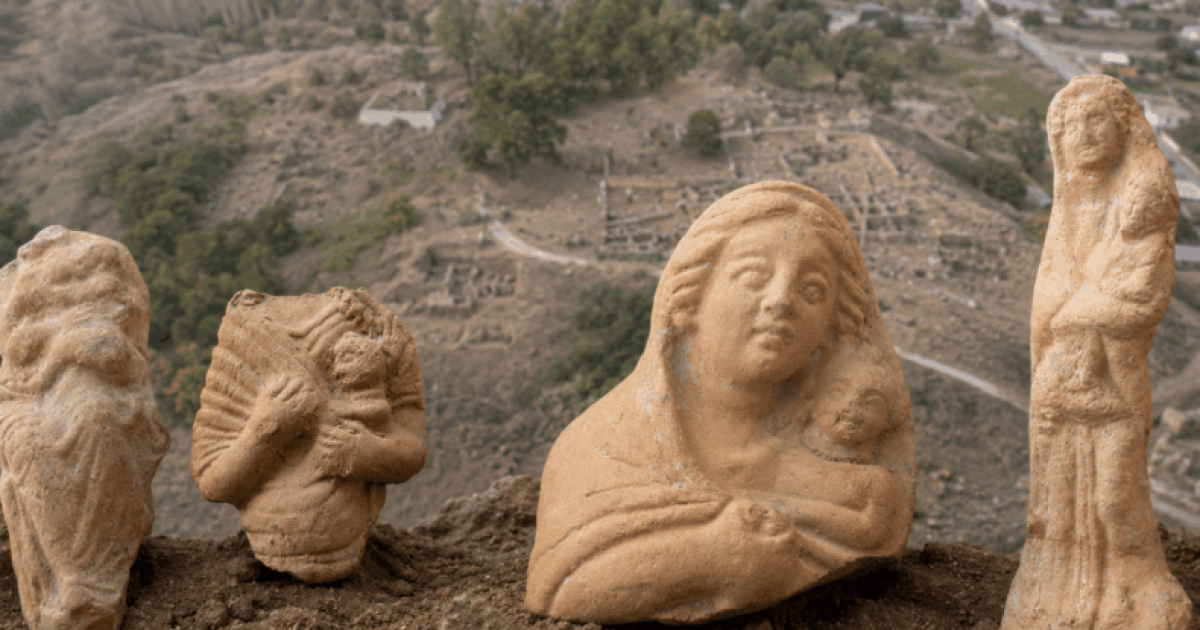

Five small terracotta figurines uncovered at the ancient site of Tatarlı Höyük in southern Turkey are offering a rare look at how motherhood, childcare, and protective beliefs shaped domestic life in Hellenistic Cilicia. These unique artifacts, found in residential spaces rather than grand temples, suggest that the deeply personal anxieties of childbirth and infant survival were managed through intimate household rituals. The discovery highlights a localized expression of a widespread Mediterranean phenomenon, where maternal protection was elevated to the divine.
The figurines were found in the Citadel area of Tatarlı Höyük, a prominent mound settlement situated near Mustafabeyli in the Adana province. Strategically positioned in eastern Plain Cilicia, the site was a major hub along ancient trade routes linking Anatolia, northern Syria, and the wider Mediterranean. Since 2007, excavations under Prof. Dr. K. Serdar Girginer of Çukurova University have revealed continuous habitation from the Bronze Age through the Hellenistic period. The study of these specific Hellenistic figurines was published in the 2026 issue of the journal Höyük by researchers Mehmet Cevher and Girginer.
Sacred Protectors of the Ancient Household
Four of the newly analyzed terracotta figurines depict women carrying children, while the fifth and most remarkable specimen shows a woman breastfeeding an infant. They belong to a widely recognized class of ancient votive objects known as kourotrophos, a Greek term meaning "child nurturer". In the ancient world, these figurines were deeply associated with fertility, successful childbirth, and the protection of newborns.
The domestic context of the find is particularly telling, as the figurines were recovered from houses and courtyards rather than formal sanctuaries. In antiquity, pregnancy and early childhood were periods of extreme vulnerability, leading families to seek divine intervention. Terracotta kourotrophoi were often dedicated to local deities as votive offerings, either before pregnancy as a plea for fertility, or after a successful birth as a token of gratitude.
- Read more: Ancient Childbirth Beliefs and Rituals Thought to Protect Mothers and Infants
- Read more: Birthing Trauma Comes from Two Million Years of Walking Upright
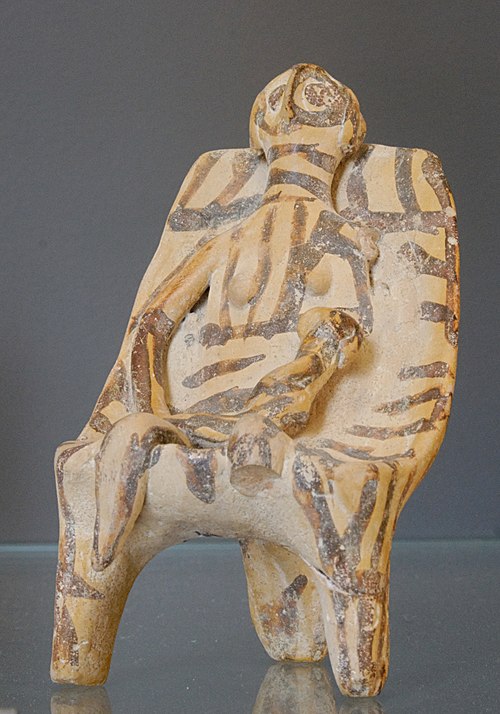
A Mycenaean phi-type terracotta kourotrophos figurine from the Louvre Museum, Paris, showing the deep roots of this maternal iconography (Marie-Lan Nguyen/CC BY 2.5)
A Shared Iconography Across Ancient Civilizations
The imagery of the nursing mother has a remarkably long and interconnected history across the ancient Mediterranean and the Near East. Mesopotamian cuneiform texts describe devotees praying and making offerings to Ishtar in hopes of receiving her divine milk and protection. Similarly, in the Greek pantheon, the protective epithet of kourotrophos was applied to major goddesses like Aphrodite, Artemis, and Demeter .
During agricultural and fertility festivals such as the Thesmophoria, Greek women celebrated the cycles of life, birth, and family continuity under the patronage of Demeter. The Tatarlı Höyük figurines represent a localized, provincial version of this widespread religious vocabulary. Rather than high-status luxury imports, these terracotta pieces exhibit rustic, provincial styles, confirming they were crafted for the everyday inhabitants of Hellenistic Cilicia.
- Read more: The Mother of all Gods: The Phrygian Cybele
- Read more: Another Venus? Rare Neolithic Female Figurine Discovered in Turkey
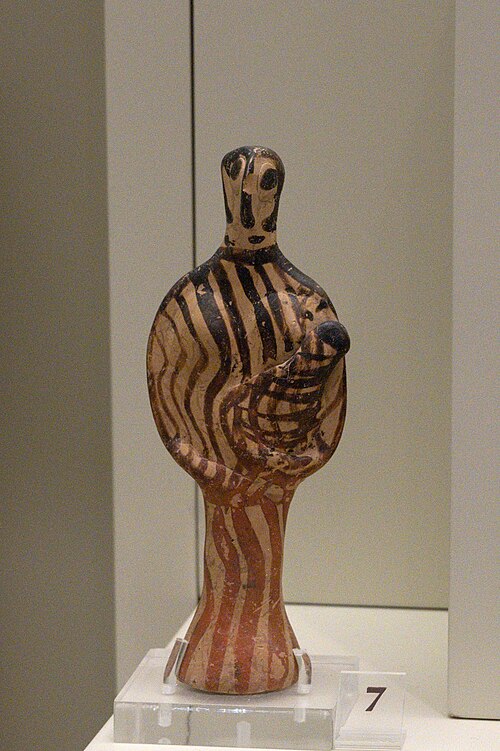
A Mycenaean phi-type terracotta kourotrophos figurine from the Archaeological Museum of Mycenae (Zde/CC BY-SA 4.0)
The Legacy of the Mother and Child
While the political landscapes of Hellenistic Cilicia were defined by trade, military campaigns, and imperial shifts, these small objects tell a far more intimate human story. They remind us that the core of ancient domestic life was centered on the survival of the family unit. The mother-and-child motif proved so powerful that it easily outlived the Hellenistic period, eventually transitioning into early Christian iconography.
Ultimately, the five modest terracotta figures from Tatarlı Höyük bridge the gap of two millennia, connecting modern observers with the universal human desire to keep a newborn safe. They reflect a world where faith was not confined to monumental temples, but was actively practiced on the hearths and in the courtyards of ordinary homes. These modest artifacts show how deeply family continuity and childcare were valued in Hellenistic Anatolia.
Top image: The five 2,000-year-old kourotrophos figurines discovered at Tatarlı Höyük in southern Türkiye representing motherhood and childcare beliefs. Source: Anatolian Archaeology
By Gary Manners
References
Cevher, M. and Girginer, K. S. 2026. Tatarlı Höyük'te Ele Geçen Kourotrophos Figürinleri. Höyük, Issue 17, pp. 65–88. Available at: https://www.anatolianarchaeology.net/2000-year-old-traces-of-a-motherhood-cult-found-at-tatarli-hoyuk-in-southern-turkiye/
Hoffmann, S. 2020. Between Deity and Dedicator: Greek Votive Terracotta Figurines at Work. The Danish Institute at Athens. Available at: https://www.youtube.com/watch?v=8lll1i85rGI
Wikipedia. 2026. Kourotrophos. Available at: https://en.wikipedia.org/wiki/Kourotrophos