

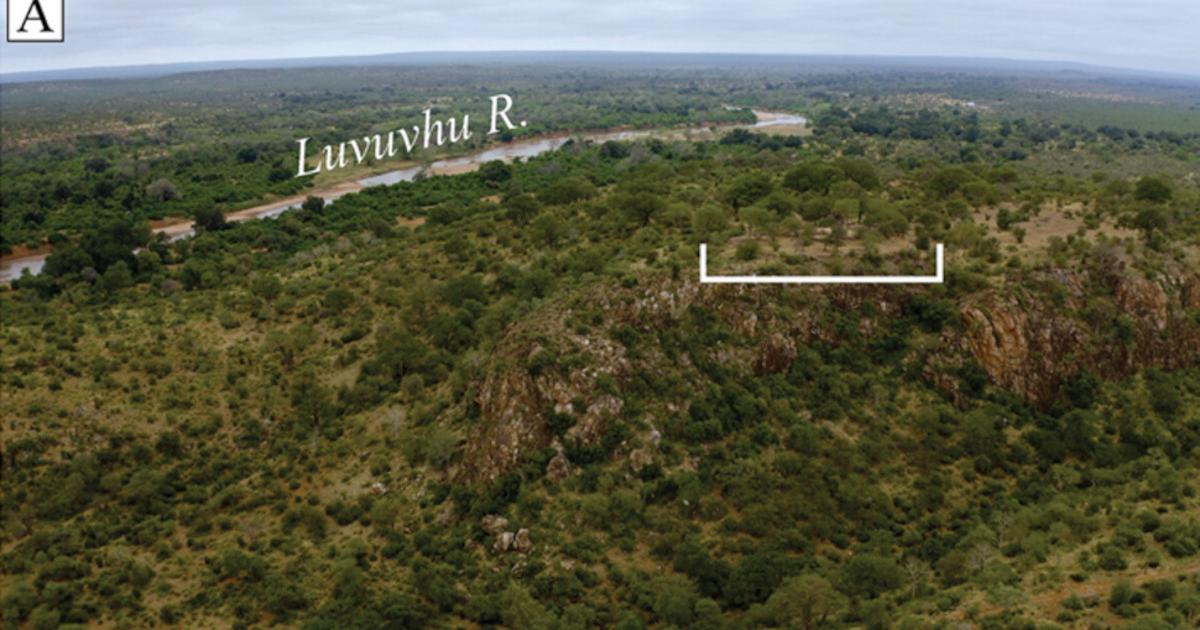

The ruins of Thulamela are situated in the heart of the Kruger National Park in South Africa on a sandstone hill that overlooks the Luvuvhu and Limpopo rivers. Thulamela was a mighty kingdom in Africa operating in the 15th to 17th centuries AD, but the details of its existence have remained largely obscure. According to a recently published research paper in the journal Conservation and Management of Archaeological Sites, Thulamela has never truly been understood even though it has been hailed as one of the most significant Heritage Sites of post-apartheid South Africa.
The archaeological findings such as the gold artifacts and human burials, production of crafts, and stone buildings indicate that Thulamela was a complex society, but most of the vital archaeological findings have remained unexplored or unpublished for decades.
A Commanding Hilltop and Golden Linkages
The location of the Thulamela site is not an accident as it commanded key trading routes between the coastal regions and areas farther inland. Archaeological work performed in the 1990s revealed a site that consisted of a set of walls housing residential buildings, passages, and stone pillars, which ranks Thulamela alongside some of the great stone-walled sites such as Great Zimbabwe and Mapungubwe. However, the authors of the paper argue that borrowing findings from these better-known sites can do little to explain the emergence of Thulamela. According to radiocarbon dating, Thulamela was occupied during the range of 1447-1643 AD.
The finds that first brought Thulamela to public attention were gold objects associated with human burials. The gold assemblage, which included ornaments and worked items, belonged to a broader material world of iron and copper artifacts, spindle whorls, and ceramics. Interestingly, the study notes evidence for local gold working, based on a ceramic sherd with gold residue. This suggests Thulamela was not just a place where gold circulated, but a center where it was processed and shaped, highlighting the skills of local craft specialists.
- The Salt Trade of West Africa that Built Kingdoms and Spread Culture
- Meet the 800-Year-Old Golden Rhinoceros that Challenged Apartheid South Africa
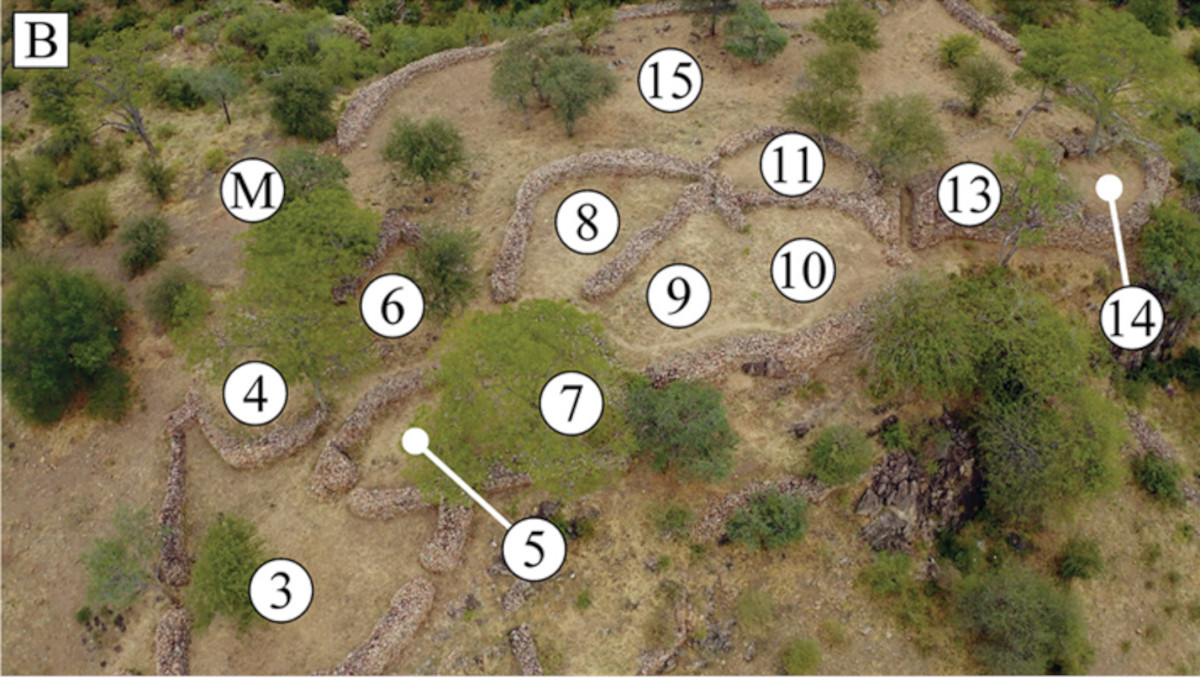
Stone-walled complex at Thulamela, showing the locations of the enclosures and the midden (image courtesy of Clive Morris productions/Forssman et al)
Royal Burials and Daily Life
During rehabilitation work in 1993, human remains were identified beneath the floors of two hut areas. These burials have often been described in royal terms, interpreted as a male (King Ingwe) and a female (Queen Losha). While they have been linked to ideas of a chief or elite household, the new study is careful with these labels, noting that the dates suggest the burials may not have been contemporary. Nevertheless, they demonstrate high-status funerary practices and raise questions about how wealth was tied to ancestry and leadership.
Thulamela was more than just a node in a trade route; it was a lived settlement and a political center. Exotic goods like glass beads and porcelain show participation in Indian Ocean exchange networks, but local evidence points to farming, food storage, and textile production. Spindle whorls indicate thread making, while iron arrowheads speak to technical skill. The stone-walled layout suggests planned space and possibly controlled access, reflecting a structured society.
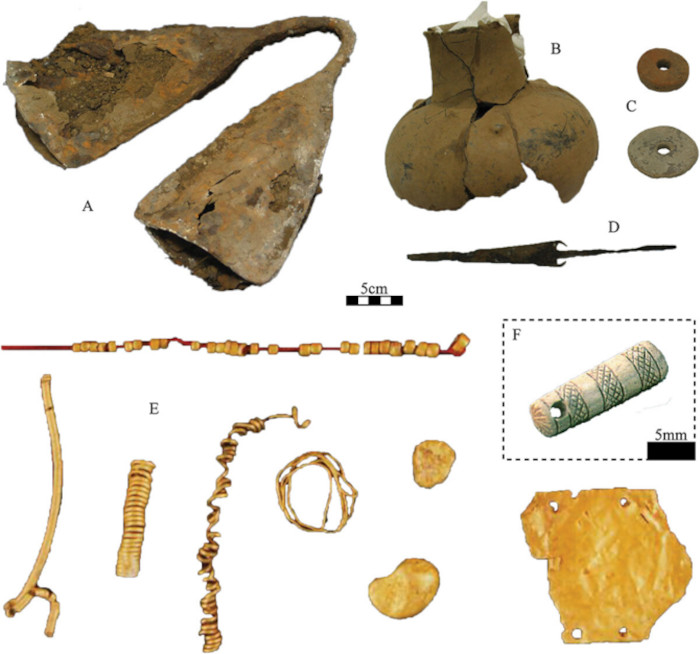
A variety of recovered items from Thulamela linked to trade and local crafts. (A–D courtesy Lynn Meskell and E & F from the SANParks archive/Forssman et al.)
Unstudied Archives and Future Research
One of the study's strongest points is highlighting what remains undone. After the 1990s excavations, many finds were boxed and stored at the Ditsong Museum in Pretoria, remaining largely unanalysed. Only a small selection of gold items reached public display, leaving a gap in our understanding of Thulamela. The new research programme aims to reverse this by cataloguing finds, applying non-destructive analysis, and rebuilding the site's chronology.
The current team plans to move beyond the walled complex, surveying the wider region where over 100 archaeological sites have already been identified. This broader approach, utilizing LiDAR and 3D documentation, may help answer unresolved questions about Thulamela's rise, organization, and eventual decline. As the site remains physically vulnerable to flooding, animal activity, and erosion, this renewed work is not just an academic project, but a vital rescue of evidence from a fragile kingdom at risk.
Top image: Aerial view of the Thulamela walled site in Kruger National Park in South Africa. Source: Clive Morris Productions/ Forssman et al
By Gary Manners
References
Arkeonews. 2026. Forgotten African Kingdom of Thulamela Reveals Gold, Royal Burials, and a Neglected History. Available at: https://arkeonews.net/forgotten-african-kingdom-of-thulamela-reveals-gold-royal-burials-and-a-neglected-history/
Forssman, T. 2026. Thulamela: Gold, Human Burials, and a Forgotten African Kingdom. Conservation and Management of Archaeological Sites. Available at: https://www.tandfonline.com/doi/full/10.1080/13505033.2026.2664111






















