What desire led to the birth of this art?
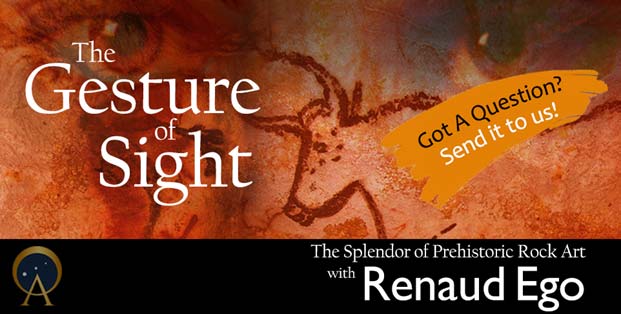
The discovery of prehistoric paintings was accompanied by the very powerful feeling of attending an apparition. This enchantment culminated with the cave of Lascaux in France, but the dazzling that continues to envelop the paintings leaves on our eyes a case, similar to a blind spot, which has not yet dissipated. It is true that the prehistorians have focused their attention, not on this innovative gesture of making the world visible in the form of figures, but on the supposed uses of these first images: to be a decorative pastime or an attempt to inflect the success of hunting by "sympathetic magic"; to represent a mythology, made of pairs of animals embodying a sexual conception of the world or else to be a shamanic ritual of religious contact. But the question of the genesis of the drawing remains intact and, all surrounded by images, we have lost sight of the fact that this invention is a prodigious leap of thought. To synthesize a form or a living being in a few strokes that capture their appearance is an intellectual operation of crazy significance. What could be the desire, so patiently pursued, that led to the birth of this art? From the thought that has risen to the drawing, can we resume the journey? The gesture of the glance is the hypothesis of its routing towards the figure.
“Southern Africa is rich in Neolithic rock paintings and engravings rarely seen, and more rarely shown. Unpublished, these images testify to the splendor of an art of several thousand years, preserving intact the mystery that brought their authors to drawing.”
To celebrate the life-size exhibition of the French Lascaux Cave in South Africa, renown rock art specialist Renaud Ego will be joining us for a discussion on South African Rock Art.
A one-of-a-kind partnership between the Embassy of France in South Africa and the French Institute of South Africa (IFAS) and Sci-Bono Discovery Centre. Opening 17 May 2018 at Sci-Bono Discovery Centre, Johannesburg.

Join Ancient Origins Premium for this exclusive In-Depth Interview.
 Poet, writer, critic of art and literature, Renaud Ego is a French writer living and working in Paris. He is active in the field of literature, especially in poetry, and in art studies, and is a member of the International Association of Art Critics (AICA). Renaud Ego is a recognized specialist on the rock art of South Africa and has written two essays on Southern African rock art. Ego published Sanin 2000 which he continued to explore with another book, L’animal voyant. All of them are richly illustrated. L’animal voyant, under the title ‘Visionary animal’ will be published in 2018 in English. It deals with the birth of Paleolithic art in Europe. He is also the introducer in France of the Swedish poet Nobel laureate Tomas Tranströmer, whose works he prefaced (Gallimard, 2004).

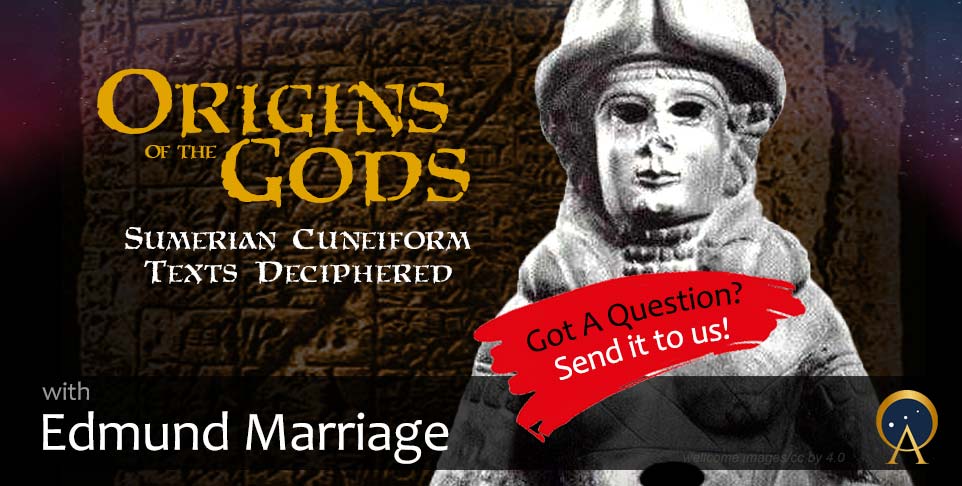
 Christian O’Brien was the one person who, before he died in 2001, mastered the translation skills required to understand the archaic Sumerian cuneiform writing. Deciphering Sumerian texts from the Nippur Temple Library, in his books The Genius of the Few and The Shining Ones, O’Brien presented secular insight into the Sumerian version of the Garden of Eden and the senior Anannage: An, Enlil, Enki and Ninkharsag. The Sumerians recorded their secular history for us, and attributed all their advanced knowledge, including astronomy, mathematics, standard units of measurement worldwide, domesticated crops and animals, and more to their Gods— identified as the Elohim, Shining Ones, Archangels, Angels and Watchers. They even identified the location of Eden, where Enlil had his home in 9500 BC, and where his wife Ninkharsag, (also known as the angel Gabriel), was the guardian of the garden, with her seven archangels, at the settlement of the Anannage.