

Talk To An Expert

Ancient Origins Interviews give you direct access to the minds behind groundbreaking research in history, archaeology, and ancient mysteries. Through exclusive conversations with leading experts and authors, we explore new discoveries, challenge established theories, and uncover fresh perspectives on humanity’s past. Gain unique insights straight from the source, available only to our members.

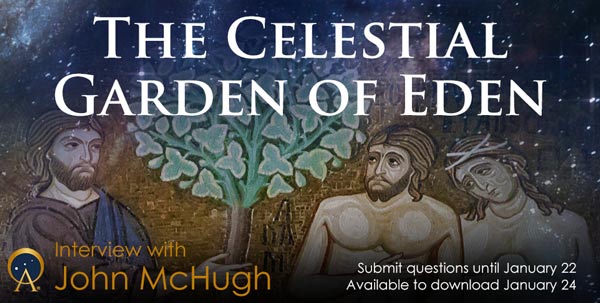
The Celestial Garden of Eden

The historical existence of the Garden of Eden (Genesis 2:4-3:24) remains a mystery. The Hebrew text depicts the Judaic deity, Adam, Eve, and the villainous Serpent interacting within an intimate setting—Adam and Eve hearing God’s footsteps as he strolled through the Garden, then hiding from his sight, the Deity’s multiple conversations with the first man and woman, and the Serpent’s face-to-face dialogue with Eve. Yet the notion of imminent proximity is contradicted by geographical data in the same passage.

Eden’s sole river branches into four tributaries whose localities are verified by later Old Testament passages. The river Pishon winds through Havilah, which is Arabia; the Gihon river meanders through the land of Cush, the Hebrew word for Ethiopia; the Tigris flows east of the Assyrian religious capital at Asshur, and the renowned Euphrates courses through Babylonia. The circumstance is further confounded by the fact that the Arabian Pishon and Ethiopian Gihon rivers are never mentioned again in the Bible. And here lies the mystery: How did the characters in the Garden of Eden manage to remain visible and audible while simultaneously occupying terrain that spans 1000 miles? And how did two enigmatic rivers, the Pishon and Gihon, spontaneously materialize in Eden?

The answer has been visible in plain sight since Genesis was written. To see it we must first relinquish our modern, science-oriented mindset and embrace the cognitive worldview of the Genesis authors. The Old Testament recounts that during the Babylonian subjugation (586-538 BC) Jewish sages were conscripted into the entourage of vanquishing King Nebuchadnezzar II and his successors. There, Judaic neophytes were then indoctrinated with the most revered Mesopotamian astrological tenet—that the starry sky embodied hallowed “Heavenly Writing” that imparted unassailable truth through pictorial and literary wordplay embedded in the constellation’s images and titles.

Archaeoastronomist John McHugh translates the Hallowed Heavenly Writings of the ancient astronomers to introduce us to a Garden constellation whose titles render: “Steppe-land” (Eden in Hebrew), “Asshur,” “Cush,” and “Serpent” alongside the terms “River Pishon” and “River Gihon.” Situated beside the stellar Garden was a “Man” (Adam in Hebrew) and “Woman” constellation. Southwest of the stellar Garden hovers a constellation-god whose Sumerian sobriquet rendered “He-Will-Be,” or Yahweh in Hebrew, the personal name of the Hebraic deity. When plotted on a star map it becomes evident that all of the “Garden of Eden” legend’s actors and geographic landmarks lie in close proximity while simultaneously defining earthly localities separated by a thousand miles—a situation that perfectly mirrors their interrelationship in Genesis.
John McHugh John McHugh earned a Master’s degree from Brigham Young University (Provo, Utah, USA) with a dual emphasis on Near Eastern and Native American Archaeology (1999). He has extensive archaeological excavation and survey experience throughout Syria, Jordan, and the American Southwest. He specializes in Near Eastern and Native American archaeoastronomy as well as American Indian rock art and possesses reading knowledge of Sumerian, Akkadian, Ugaritic, Biblical Hebrew, Aramaic, Greek, and Qur’anic Arabic. John is the lead archaeologist for the Utah Cultural Astronomy Project, which is committed to exposing and celebrating the wealth of scientific wisdom embedded in the religious cosmologies of Ancestral Puebloan peoples and their modern Puebloan descendants.  His current book, The Celestial Code of Scriptures (Monkfish Publishing), will appear in Autumn, 2021.
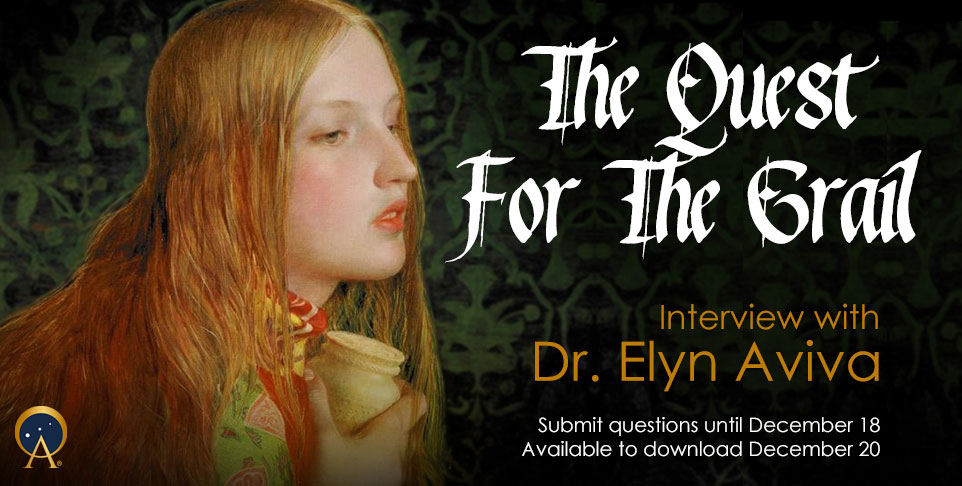

 

The Quest for the Grail


Do you seek the Grail?

Growing up reading Arthurian legends, one would probably think the Grail is the holy cup associated with Jesus and the Last Supper, and that the Knights of the Round Table were sent on the Quest for the Grail.

However, things are not always (or often) what they seem, and the true nature of the grail is much more complicated. In this broad-ranging interview, Dr. Aviva Elyn will delve into Celtic antecedents to the Grail, shifts in the Arthurian Grail legends over the centuries, and Jungian interpretations of the “true” meaning of the Grail.

She will also explore the significance of The Quest and its relationship to the ritual process we know as pilgrimage. Drawing on her long-time study and experiential research on the Camino de Santiago pilgrimage—the subject of her Ph.D. dissertation—Elyn will consider how the process of going on pilgrimage relates to the grail quest, and how it can be made relevant to our own contemporary life situations.

ElynDr. Elyn Aviva is a writer, transformational traveler, and fiber artist. She is fascinated by journeys of quest and self-discovery, both interior and exterior. Her academic credentials include a Ph.D. in cultural anthropology (topic: the modern-day pilgrimage to Santiago de Compostela) and a Master’s of Divinity. She has taught comparative religion courses, trained as a labyrinth facilitator, and is an Active Dreaming leader. Her fascination with earth energies led her to study dowsing, sacred geometry, and geomancy. For many years, Elyn has delved deeply into Kabbalah and the Western Mystery traditions, which have had a significant influence on her work.

Elyn’s most recent novel is  Melita’s Quest for the Grail.  Set in medieval France, legends of King Arthur, Greek mythology, and the magical Forest of Brocéliande weave through Melita’s journey of self-discovery.

She has written a number of books and novels on pilgrimage, quest, and earth mysteries, as well as co-authoring (with her husband) the series Powerful Places Guidebooks. These guidebooks help people experience the transformative energies at sacred sites.

Born and raised in the American Midwest, Elyn and her husband Gary White lived in Spain for a decade before returning to USA. You can learn more about her at www.powerfulplaces.com; www.pilgrimsprocess.com; and www.fiberalchemy.com. 

She can be found on Facebook at Elyn Aviva Writes and Fiberalchemy.

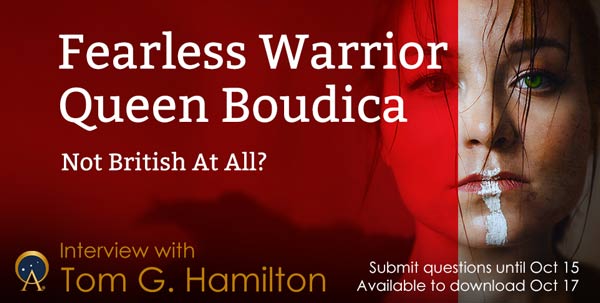
Was the Fearless Warrior Queen Boudica Not British At All?

Her home, plundered, her body flogged, her daughters raped – and her vengeance… complete.

During the reign of Queen Victoria and the English Renaissance, the fame of her namesake in meaning—Boudica, first century AD queen of the Celtic Iceni tribe—experienced a historical revival. Roman historians Tacitus and Cassius Dio related how Boudica had led an uprising against the conquering forces of the Roman Empire in 60 or 61 AD. This statuesque woman who was flogged in punishment, and witnessed her daughters raped, is regarded as an important cultural symbol in the United Kingdom. It is said that 80,000 people died in the revolt when she burned down Camulodunum (modern Colchester) and destroyed Londinium (modern London) in a rage—torturing and crucifying any survivors.

The Boudica story, however much it has fascinated us, and however well it has been presented, has always left us with many questions unanswered. Who was Boudica? Where did she come from? How come she and her husband were promoted as overseers of the Iceni tribe?

Tom Hamilton adopts a different stance, looking outwards from the insular, patriotic British viewpoint, away from the Iceni, to understand the ancient Atlantic cultural reality, at a time when there were no borders or nations. Boudica’s statue at Westminster holds the clues, the Latin texts pose the questions. There was always more to this legend, just begging to be found. His research takes us to a small, mountainous region of ancient Iberia still famous for its strong, fearless women. There it is that we will find answers to the identity of the fearless woman who dared to say NO to Rome.

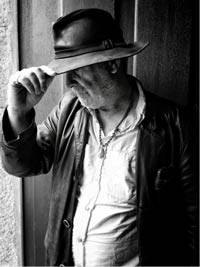
Tom HamiltonBorn in Burnham, England in 1959, Tom G. Hamilton moved to the interior of Portugal in 1992. He is currently investigating the ancient peoples of Beira Baixa, a small region in the interior of Portugal. He has made documentaries and films about the region, music, and the culture, and is currently writing a book about one of his discoveries— unique Iberian turquoise. He is a trained language teacher, professional musician, songwriter and producer, gem-hunter, artisan, investigator, and writer.

Tom spends a lot of his time on mountains, and with Michael Severin, produced Black Mountain Argemela, a film dedicated to the preservation of Argemela and its unique ecosystem. Published on YouTube channel, Vettonia Films.

In-depth Interviews are available to our Gold Members. (It’s easy and quick to become a Gold Member – get immediate access to interviews, webinars, free eBooks, exclusive content, and so much more!)

As a Gold Member, you get to submit your questions or points in advance. In-depth Interviews are pre-recorded, and then are available to watch at a time that’s easy and convenient to you.


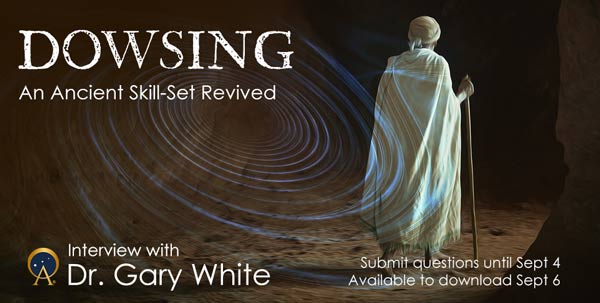
Legacy of Ancient Ancestors  Dowsing, An Ancient Skill-Set Revived

What is the legacy of our Ancient Ancestors? Is it an innate skill?

Our ancient ancestors lived completely different lives from ours.  They stood on the ground by day and looked at the sky at night.  This gave them a connection to the earth that most of us generally miss.  Our ancient ancestors also had very different needs than us.  For example, they could not just turn on a tap,  and needed to find sources of drinkable water hidden deep below the surface of the earth. Even Moses was a dowser, as God instructed him to take the rod and “the rock yielded water”. We have allowed an ancient skill-set inherited from our ancient ancestors to languish in our deep subconscious, like those hidden water sources.

Drawing on his decades of experience as a successful teacher, composer, and dowser, Dr. Gary White has developed a series of exercises to enable us to access our own innate inner “dowsing mind.” Demonstrating a variety of muscle-testing techniques, Gary illustrates how they can be used for both tangible (underground water, lost items, etc.) and intangible (non-physical queries) dowsing. Moving to profound, consciousness-altering methods, Gary leads us on an exploration that ranges from the material world into the multi-dimensional realms—a source of information and inspiration throughout the centuries.

Gary WhiteGary White, Ph.D. is Distinguished Professor Emeritus at Iowa State University, where he was a professor of music theory and a successful composer. He is author of a number of college-level music theory textbooks. After his (early) retirement in 1994, he established Pilgrims Process Publishers, which has published over 30 books by different authors on a variety of subjects, including sacred sites, pilgrimage, fiction, and a series of seven books under the general title of “Powerful Places in . . .” The series, which is co-authored with his wife, Elyn Aviva, includes: Powerful Places in Scotland, Wales, Ireland, Cornwall, Catalonia, Brittany, and the Caminos de Santiago. His latest book is The Dowsing Mind - Into the Multi-Dimensional Realms and Back.
For more information, go to www.powerfulplaces.com.


Hidden History: What Lies Beneath Our Time-Line?

What causes people to innately believe in mystery and mysticism despite their most rational intentions?

The mythology of the ancients is much richer than that of today. The difference is immediately obvious to anyone who studies the wisdom of the past. The problem, however, is that many of us who were raised in a technologically materialistic and shallow culture don't fully understand the difference. Jim Willis believes that we are living on the cusp of a new, deep, and spiritual paradigm shift that will promote the growth of people who want to look beneath the surface of life and this may be the most exciting time in the history of our civilization.

Quantum mechanics, although counter-intuitive, seemingly impossible, and maddeningly difficult to grasp intellectually, is currently the most tested and consistently substantiated phenomenon in the history of science. Not once has it been proven false. But even Albert Einstein, one of the greatest theoretical physicists who ever lived, refused to accept quantum reality until his initial emotional response was finally overcome by complex mathematical equations. The theory claims, among other things, that the basis of everything is, in the end, nothing, even though a reality called "nothing" probably doesn't exist. What does one do with information like that?

In this scientific age of materialism, we have reduced virtually everything down to its core, peered into the very heart of the atom, traveled to the nether regions of human consciousness, and plumbed the depths of creation itself. And yet, in defiance of all claims of intellectual rationality, polls show that religion, superstition, belief in alien intervention, and psychic abilities still thrill us and form the basis of what many people believe to be true. Why? What is it about these subjects that is so compelling it causes people to innately believe in mystery and mysticism despite their most rational intentions?

Jim WillisHaving earned his master's degree in theology from Andover Newton Theological School, Jim Willis is the author of 13 books on religion and spirituality. He has been an ordained minister for over 40 years while working part-time as a carpenter, hosting own drive-time radio show, as well as being an arts council director and adjunct college professor in the fields of World Religions and Instrumental Music. His current residence in the woods of South Carolina inspired his books Supernatural Gods: Spiritual Mysteries, Psychic Experiences, and Scientific Truths, and Ancient Gods: Lost Histories, Hidden Truths and the Conspiracy of Silence and Lost Civilizations: The Secret Histories and Suppressed Technologies of the Ancients as well as The Quantum Akashic Field: A Guide to Out-of-Body Experiences for the Astral Today he discusses his book: Hidden History Ancient Aliens and the Suppressed Origins of Civilization  which looks at a variety of dissenting, suppressed, and forbidden accounts of history and the origins of humanity.
Visit JimWillis.net 

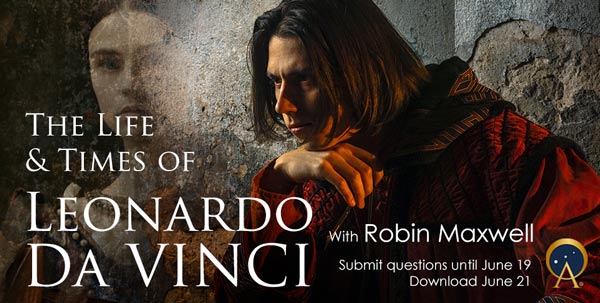
Clandestine meetings of Lorenzo de Medici's Platonic Academy of Florence are the setting for several pivotal scenes in Robin Maxwell’s novel Signora da Vinci. The membership boasted the best and brightest minds of the day. It was here in the palazzos and villas of the Medici—as much as in the artists' studios—that the culture-shattering Italian Renaissance was truly born. While all the members of the Platonic Academy were outwardly devout Catholics, the beliefs of this secretive "Company of Night" had pagan roots, and were considered dangerous and heretical. Those convicted of heresy might be imprisoned, tortured, or even burned at the stake.

In his lifetime, Leonardo da Vinci also came face to face with possible execution. While everyone seems to have extremely strong opinions about the man, no one—biographer or historian—has conclusive evidence about whether Leonardo was straight, gay, bi-sexual or asexual. When Leonardo was 19, he and three other Florentine youths were arrested by the church's vice squad (the Officers of Night) on a charge of sodomy. In those days, sodomites could be burned at the stake. But the infamous trial that ensued proved nothing, and charges were later dropped. The scandal seemed to traumatize this exquisitely sensitive young man. Once an outgoing, fancily clad man-about-town, he became quite reclusive and solitary. Set against the backdrop of Renaissance Italy, bestselling author Robin Maxwell highlights the cultural and religious landscape of one of the world’s greatest artists and inventors, through the eyes of his mother.

Robin Maxwell Robin Maxwell is a historian, screenwriter, podcaster, internationally acclaimed and Los Angeles Times bestselling author of nine novels. Her debut — The Secret Diary of Anne Boleyn — is now in its 25th printing. Two historical fiction titles from her Elizabethan Quartet, The Wild Irish and The Queen’s Bastard, are currently in development for a limited cable series “Rebel Queen." Signora Da Vinci and O, Juliet tell the story of the Italian Renaissance from the point of view of two of its most fabulous women. Jane: The Woman Who Loved Tarzan has just been optioned for another limited series for cable television. Robin has long been known as ‘one of the Queens of Historical Fiction.’ With the publication of her new Early Erthe series, she has evolved into ‘one of the Queens of Pre-historical Fiction.” She currently lives with her husband, yogi Max Thomas, at their private retreat and wildlife sanctuary, High Desert Eden, in Southern California.
Set against the backdrop of Renaissance Italy, in Signora Da Vinci, she looks at Leonardo’s life, from the eyes of his mother, Caterina.

| Visit Robin at her website, www.robinmaxwell.com or on Facebook @AuthorRobinMaxwell

In-depth Interviews are available to our Gold Members. (It’s easy and quick to become a Gold Member – get immediate access to interviews, webinars, free eBooks, exclusive content, and so much more!)

As a Gold Member, you get to submit your questions or points in advance. In-depth Interviews are pre-recorded, and then are available to watch at a time that’s easy and convenient to you.

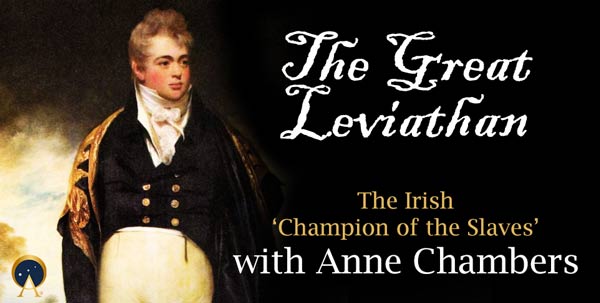
The story of a man who became known as Champion of the Slaves.

From Ireland, England, France, Austria, Greece, Turkey, and Italy to America and the West Indies, overflowing with historic events, from the French Revolution to the Great Irish Famine,  Howe Peter Browne, 2nd Marquess of Sligo, spy, sailor, and jailbird, lived life to the absolute limits.

At 21, Howe Peter Browne inherited five titles in the peerage, an estate in the West of Ireland and valuable plantations in Jamaica. Educated at Eton and Cambridge, his early years conformed to the popular image of a ‘regency buck’ in the notorious circle of the Prince Regent, including the company of such profligates as Thomas de Quincey, Lord Byron, John Cam Hobhouse, and Scrope Davies.

In 1816 he married Catherine de Burgh and settled on his estates in West Ireland. He alleviated the desperate circumstances of his tenants and established a cotton and corduroy factory in Westport. As famine engulfed the west of Ireland in 1831, at his own expense, he imported cargos of grain and potatoes, built a hospital and dispensary to care for the sick, and raised money in London for relief and additional public works.

On his appointment as Governor General of Jamaica and the Cayman Islands in 1834, Sligo took on the brutal system of slavery. His objective to establish “a social system absolved forever from the reproach of Slavery,” set him on a bitter collision course with the local planters. He was the first plantation owner to initiate a wage system for black workers and after emancipation, to divide his lands into numerous farms to lease to the former slaves. The planters commenced a campaign of vilification against him in the Jamaican and British press.

Lord Sligo earned an honored place in the history of Jamaica, where he is acknowledged as ‘Champion of the Slaves’ and where the town of Sligoville, the first free slave village in the world, still bears his name.

Anne Chambers

Anne Chambers is author of ten biographies, including the best-selling Grace O’Malley – The Biography of Ireland’s Pirate Queen 1530-1603, a historical novel and a collection of short stories. Her latest biography, The Great Leviathan: The Life of Howe Peter Browne, 2nd Marquess of Sligo, 1788-1845 was published in 2018. Her books have been translated into many languages and have been the subject of TV and Radio documentaries for Discovery, The Learning Channel, Travel Channel, ABC Australia, BBC, BBC World Service, RTE, and Lyric FM. In 2018 she was awarded the Wild Atlantic Way Words Festival Hall of Fame Award in recognition of her contribution to Ireland’s literary tradition.

In-depth Interviews are available to our Gold Members. (It’s easy and quick to become a Gold Member – get immediate access to interviews, webinars, free eBooks, exclusive content, and so much more!)

As a Gold Member, you get to submit your questions or points in advance. In-depth Interviews are pre-recorded, and then are available to watch at a time that’s easy and convenient to you.


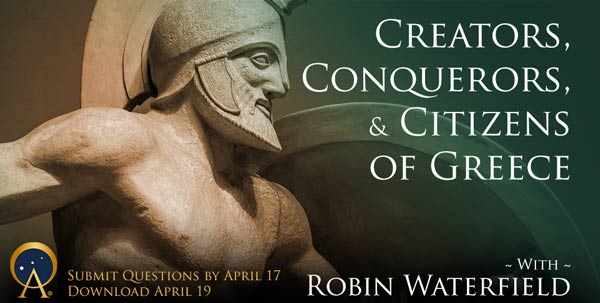
Creators, Conquerors, and Citizens of Greece

Ancient Greek history presents us with many puzzles, but one stands out above all.

Wherever they lived, on the Greek mainland or southern Italy and Sicily, or the coastlines of what is now Turkey, they spoke the same language (albeit in different dialects), worshipped more or less the same gods, dressed similarly, ate and drank similarly, fought their battles similarly, and had similar political institutions. In short, they recognized one another as kin.

Why, then, is their history so often the history of one state fighting another? How could they treat their kin as enemies to be slaughtered and sold into slavery? Why did it take so long for their cultural unity to be translated into a degree of political unity? The long march of Greek history, from its origins c. 750 BC to the takeover of the last of the Hellenistic Greek kingdoms by the Romans in 30 BC, reveals some of the answers.

Author Robin Waterfield gives a magisterial and comprehensive re-telling of Greek history from Archaic, Classic, and Hellenistic periods.

Robin WaterfieldRobin Waterfield is an independent scholar and translator, living on a small olive farm in southern Greece. He took the Classics Prizes in 1972 and 1973 at Manchester University.  He accepted a one-year post in the Classics department at Newcastle University, followed by three one-year posts at St Andrews University, in the Department of Greek. He was an invited lecturer at Williams College, Massachusetts, in January and February 2000, and Writer in Residence at the University of Sussex in the academic year 2001-2; and between 2002 and 2005 he taught academic writing skills at several universities and colleges in London and south-east England. He is co-editor, with Richard Alston, of the Oxford University Press series ‘Ancient Warfare and Civilization’. In addition to more than 25 translations of works of Greek literature, he is the author of numerous books, including Dividing the Spoils and Taken at the Flood and Creators, Conquerors, and Citizens: A History of Ancient Greece.

| Read more at: robinwaterfield.com

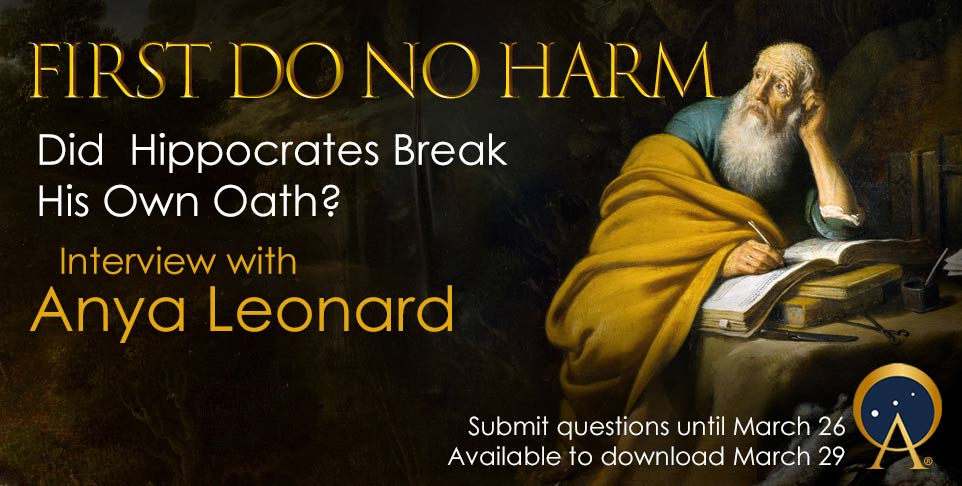
The Hippocratic Oath is one of the most widely known ancient medical documents. Revered and revolutionary, it laid out a code of ethics for physicians – one that is used today, albeit modified. It’s supposed author and namesake enjoys even greater respect. Hippocrates is the beloved venerated doctor whose contributions to the medical field and his pioneering approach to his craft has earned him the accolade of the ‘father of medicine.’ Indeed, he is credited with the beginnings of western medicine.

Primum non nocere – first do no harm – is closely associated with this ancient Greek doctor… but did he really do no harm?

Founder and Director of Classical Wisdom, Anya Leonard, delves into the truth of the man, his work and his legacy, and asks is Hippocrates really worth the hype? And whom his work really hurt...

Anya Leonard

Anya Leonard is the founder of Classical Wisdom and Project Director. She has a MA. in Sociology from University of Edinburgh and studied at St. John’s College in Annapolis with a double major in Philosophy and the History of Math of Science. She lives and writes from all over the world.

ClassicalWisdom.com


In-depth Interviews are available to our Gold Members. (It’s easy and quick to become a Gold Member – get immediate access to interviews, webinars, free eBooks, exclusive content, and so much more!)

As a Gold Member, you get to submit your questions or points in advance. In-depth Interviews are pre-recorded, and then are available to watch at a time that’s easy and convenient to you.

Ancient Origins Webinars

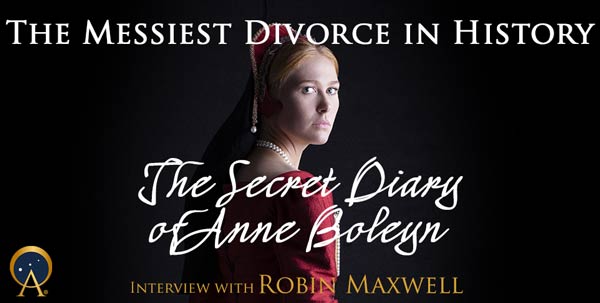
Schooled in sexuality, politics, and religion by two of France’s wisest and most progressive royal women, Anne turns the tables on the famous Henry VIII, leading him in a six-year dance of destiny.

Set in the mid-16th century, Anne Boleyn spent her childhood at the court of Duchess Margaret of Burgundy (Margaret of York), and in her adolescence and middle teenage years she was part of the lascivious inner circle of King Francois I’s French court at Amboise Chateau. It is here that Anne receives her political and sexual education, forced by her grasping father to spy for him, and watching as her beautiful sister, Mary Boleyn, is prostituted to become mistress to King Francois, later passed around to all his courtiers as a toy.

While the early years of Anne’s life had been spent in the French court, at the age of 17 she is recalled home to England at the direction of King Henry VIII — a married man — who has already decided the beautiful teenager will become his mistress. But Anne has other ideas. Schooled in sexuality, politics, and religion by two of France’s wisest and most progressive royal women, Anne turns the tables on Henry, leading him in a six-year dance of destiny, in which she becomes the most powerful person (male or female) at the Tudor court, managing against all odds to keep her virginity, be crowned Queen of England, becomes mother of the greatest Queen of England, Elizabeth I and through the introduction of seminal Lutheran texts, shows Henry the way towards the Protestant Reformation. But in doing so she collects the most virulent of enemies, all of whom seethe with jealousy and begin to plot her downfall. Eventually, Anne is tried and executed for treason, adultery, and witchcraft — the “goggle-eyed whore” reviled by everyone, not only at court, but in all of England.                   

Robin Maxwell's international best-selling, award-winning, debut novel The Secret Diary of Anne Boleyn — now in its 25th printing (Simon and Schuster, 1998) and translated into 16  languages — is the only historical novel ever written to feature the relationship between Anne and her only child with Henry VIII,  Elizabeth.

Robin MaxwellRobin Maxwell is a historian, screenwriter, podcaster, internationally acclaimed and Los Angeles Times bestselling author of nine novels. Her debut - The Secret Diary of Anne Boleyn - is now in its 25th printing. Maxwell’s historical fiction titles include The Queen’s Bastard, Signora Da Vinci, and Jane: The Woman Who Loved Tarzan.  "All the Queens’ Men," based on Robin’s Elizabethan Quartet, is currently in development for a limited cable series. She’s been called ‘one of the Queens of Historical Fiction.’ With the publication of her new Atlantos series, she has evolved into ‘one of the Queens of Pre-historical Fiction." The fourth book in her “Elizabethan Quartet” - The Wild Irish: A Novel of Elizabeth I and the Pirate O’Malley - features, in Maxwell's opinion, the greatest female hero of all time - Grace O’Malley. Maxwell has partnered with Australian producer Monica O’Brien, Ambience Entertainment, and Kew Media for a TV series based on The Wild Irish, soon heading into production. Robin currently lives with her husband, yogi Max Thomas, at their private retreat and wildlife sanctuary High Desert Eden, California.
| Visit Robin at her website, www.robinmaxwell.com or on Facebook @AuthorRobinMaxwell