
The Shepherd of Hermas was read with serious attention in early Christianity, yet the Muratorian Fragment says it could not be read publicly to the people in church.
That formula records a distinction that modern talk of “included” and “excluded” can easily flatten: a work might be worthy of reading and instruction, yet not authorized for public proclamation among the writings assigned to prophets or apostles. The Shepherd’s long afterlife, visible in major manuscripts and in later catalogues, makes the distinction more, not less, important.
A Text That Travelled Widely
The Shepherd is a large early Christian work presented through visions, commands (often called Mandates), and parables or Similitudes. Its voice is practical but also urgent: repentance, moral repair, communal discipline, and the Church imagined as a structure still being built. Whatever one concludes about its precise date or authorship, the work’s survival and circulation show that it was important to readers across several centuries.
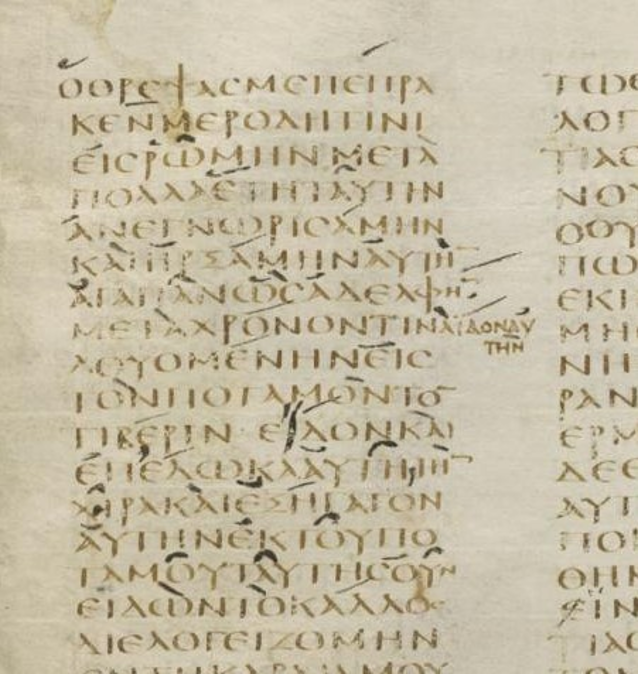
One striking witness is Codex Sinaiticus, the fourth-century Greek Bible manuscript. The Shepherd appears after the Epistle of Barnabas in the codex’s later leaves. Its presence does not, by itself, settle a canon list; it does, however, make visible a world in which a book’s devotional, instructional, and manuscript life could be substantial without fitting every later boundary in the same way.