

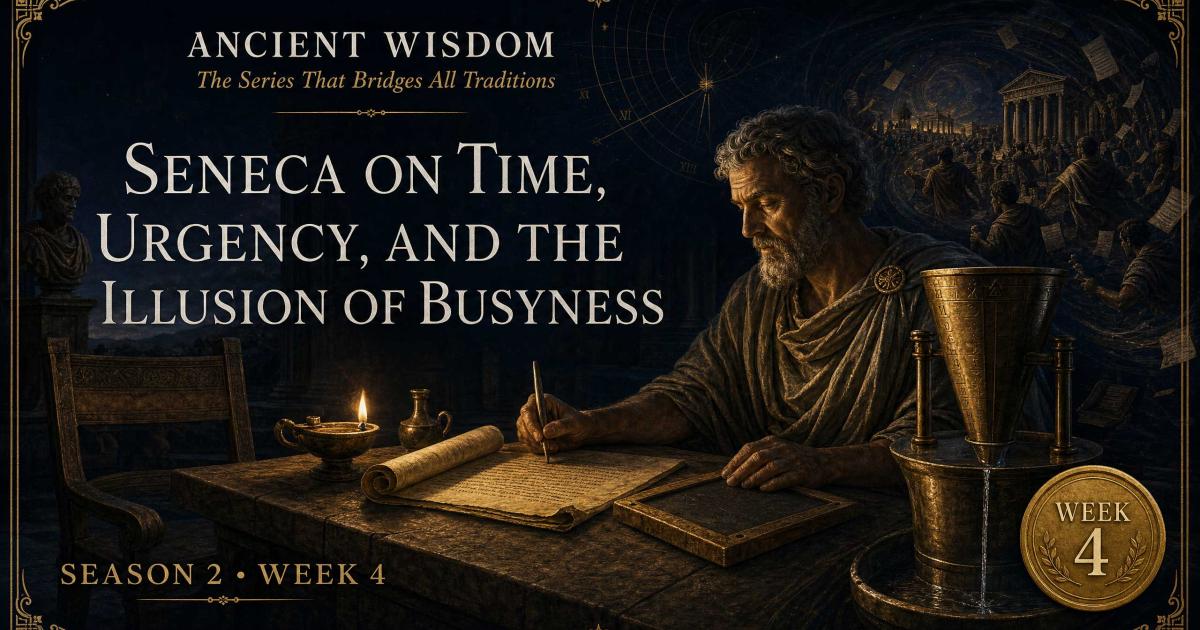

There is a particular kind of exhaustion that comes not from doing too much, but from never being able to say what, exactly, all the doing was for.
A busy day starts with urgency. You have to answer a slew of messages, make decisions about what to do with the next task, reassure those around you, and complete several tasks, as well as wait for just one more piece of information. You fill up your calendar with the things you have to accomplish; you empty your inbox; then your email inbox fills again. You go to bed each night with the knowledge that you were busy, but with no sense of living. Have you felt like this?
Two thousand years ago, Seneca identified this condition. Although he lived in Rome at a time when there were no smartphone notifications, shared online calendars, or economic systems designed to harvest people's attention, he did have a huge number of legal commitments, a great deal of political activity, wealth accumulation, a large number of clients, and a social environment where everyone needed to impress each other. Many of these are similar today, after all we are still human beings!
So, his conclusion was that while people may have too many obligations and responsibilities, it is not the quantity of things being done which keeps them preoccupied and out of touch with themselves.
Seneca, in his “On the Shortness of Life”, makes the statement that has troubled many readers over the years:
















