

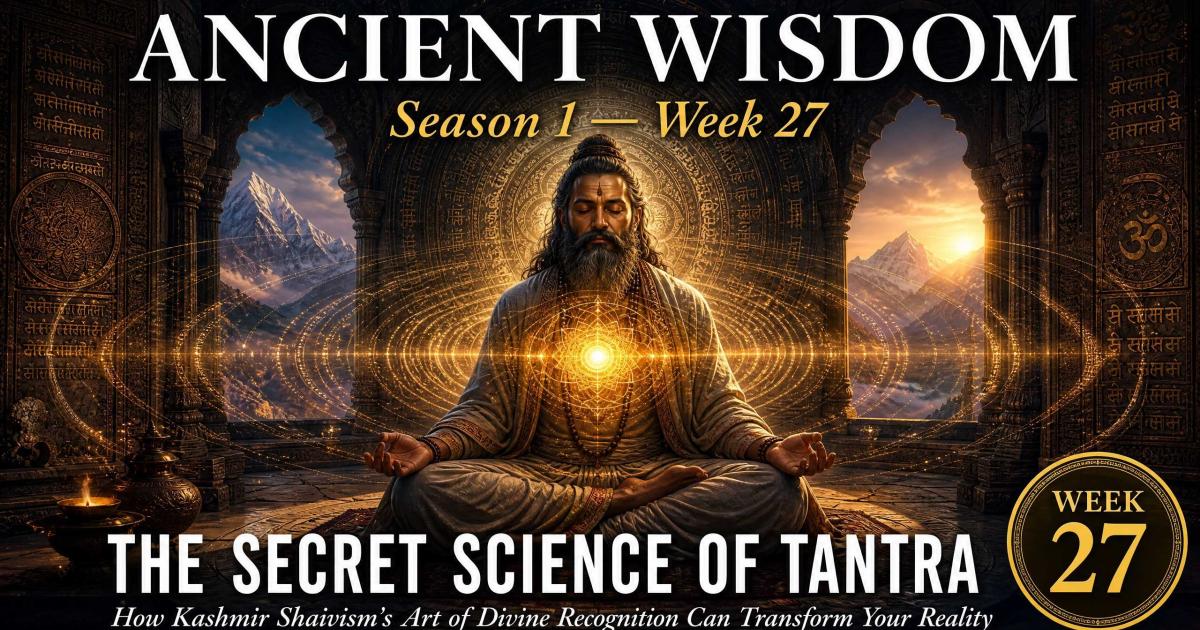

In the snow-covered heights of the Himalayas, in the green valleys of tenth-century Kashmir, an internal spiritual transformation was taking place. The transformation was neither led by starving monks nor rigid priests that imposes unquestioned following of rules. Instead, genius thinkers and poets were analyzing the world and arriving at the conclusion that the universe is not a machine producing consciousness. It was, rather, consciousness itself set into motion with the Spirit.
This gave rise to the Kashmir Shaivism, which is among the most advanced and complex forms of the non-dualist teachings.
Many traditions among spiritual paths claim that our physical existence and experience is merely an illusion or a prison experience from which we should escape. The masters of Kashmir Shaivism led by the philosopher Abhinavagupta maintain the opposite. According to them, the physical world is reality at its best. It is in the ecstatic play of the Absolute Consciousness exploring itself through different forms. The supreme goal of human beings is not to escape but to realize their own divine identity in the physical world.
Who Was Abhinavagupta?
For those who want to understand Kashmir Shaivism, it is essential to know its greatest master, i.e. Abhinavagupta (c. 950–1016 CE). He was not just a philosopher, but an extraordinarily enlightened man. Abhinavagupta could be studied as a theologian, mystic, aesthetician, and tantra ritual master: he was a genius born in a family of scholars living in the valley of Kashmir and received education from no less than fifteen teachers in his life, mastering all philosophical and spiritual schools of his time.
Kashmir Shaivism existed long before the advent of Abhinavagupta, tracing its root to Shiva Sutras, which were revealed to sage Vasugupta in a dream a century ago. However, Abhinavagupta perfected this school of philosophy. The Tantraloka, which he wrote, is an essential teaching on philosophy of Kashmir Shaivism and one of the greatest spiritual texts ever written!















