
Magazines

Ancient Origins Magazine is your gateway to exploring the mysteries of the past. Each issue is packed with in-depth articles by experts in history, archaeology, mythology, and ancient civilizations. Awarded the European Award for 2023, our magazine brings together cutting-edge research and amazing storytelling to shed light on the origins of humanity and the secrets of our shared heritage.

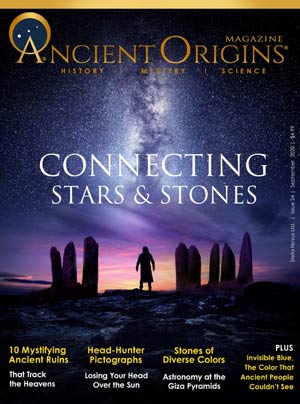
AO Magazine - September 2020

The famous American astronomer, Edwin Krupp, once said that “across the whole face of the earth, are found mysterious ruins of ancient monuments with astronomical significance... They mark the same kind of commitment that transported us to the moon and our spacecraft to the surface of Mars.”

For centuries, people have marveled at ancient structures such as the pyramids of Giza, Stonehenge, Newgrange, and thousands of other equally impressive sites, pondering how such immense works were undertaken, and awe-struck by the amount of effort and commitment that must have been poured into their construction.

But these sites become even more amazing when the deeper layer is revealed – astronomical alignments, symbolic layouts and representations of cosmic order embedded in the very placement of the stones. Many of these sites are not just simple monuments, but complex constructions that enshrine the remarkable achievements of ancient astronomers. They reflect a vision of mankind’s efforts to integrate culture and religion with the mysteries of the cosmos.

Archaeoastronomy draws upon archaeological evidence and mythological traditions to reveal how ancient humans perceived celestial phenomena, and how their understanding of the skies became intricately woven into their monuments and into the very fabric of their existence and daily life.

It is a ‘new’ field, having only been officially recognized since the 1970s, but in just a few decades, experts have come to learn much about these ancient astronomers and how they connected stars and stones to develop timekeeping, weather prediction, navigation, agriculture and a rich mythology and belief system, which have profoundly marked our world and our own modern understanding of astronomy.
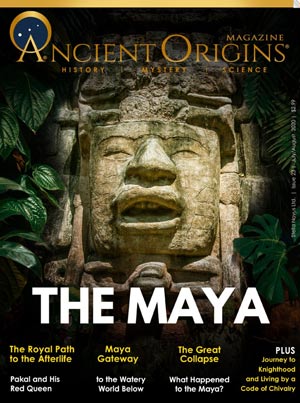
AO Magazine - Jul/Aug 2020

The ancient Maya created one of the most famous civilizations in the world. Even today, people are still astounded by their monumental city structures at sites like Uxmal, Tikal, and Chichén Itzá. We trek through these awe-inspiring Mesoamerican locations where elite priests and powerful royals managed their people and lands.

The Maya had advanced knowledge of math, astronomy, and agricultural techniques, and in this issue we look at how they applied their skills so cleverly to life. They also developed their own writing system and used the hieroglyphs to tell their factual and mythological stories on decorated temple walls, pottery, and monuments. This special July-August issue reveals some of the rich religious beliefs held by the ancient Maya to explain how humanity arrived here and what happens in the Underworld when our days are done.

This issue provides insight on some of the darker ancient Maya traditions, such as bloodletting and human sacrifice. Thankfully, those practices have been cast aside by later generations, but other, more peaceful actions, such as creating foamy chocolate drinks and caring for stingless bees, are still cherished by their descendants today.

It seems the ancient Maya people had everything going for them…but then their civilization suddenly stopped. They abandoned their most precious city centers and stopped writing about their rulers. Why the ancient Maya civilization fell is one of the greatest archaeological mysteries. So, of course we explore the most popular, science-backed beliefs about what led to their dramatic end.

While the people have left us, their stories and influence remains. Whether it is through genetic ties, curiosity, a visit to the amazing sites, or by incorporating their tasty crops into our own kitchens (tomatoes, chilies, chocolate…the list goes on), everyone has felt the impact of the ancient Maya!

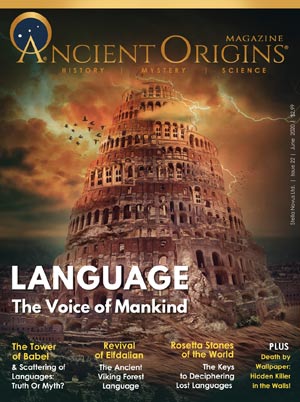
AO Magazine - June 2020

The American philosopher Ralph Waldo Emerson summed it all up in 1844, when he said: “We infer the spirit of the nation in great measure from the language, which is a sort of monument to which each individual in a course of many hundred years has contributed a stone.”

Languages are indeed a monument to our past. History is embedded in the content and structure of the 6,500+ languages spoken in the world today. Even when unwritten, language is the most powerful tool we have as humans to preserve our past knowledge, making possible both the living of a common history and the telling of it.

The emergence of language, a powerful engine of intellect and creativity, was a defining moment in the evolution of modern humans. Yet, how, when and where it came into being is still unknown and has intrigued many great minds over the centuries. They are questions for which we may never hold the answers. 

The annals of history are also full of languages that have died out, cultures and societies that have come to an end, leaving no speakers at all.  As many as half of the world’s tongues are expected to be extinct by the end of this century, erasing living documents of history.  There is hope, however, as many nations are working hard to keep alive their critically endangered languages.

In this issue, we celebrate the wonder of words and explore the fascinating history of mankind’s most incredible creation. Language is, after all, at the very heart of human nature.

Ancient Origins Magazine May 2020

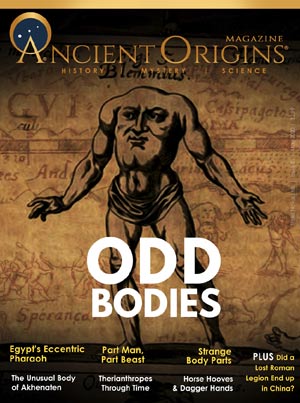
In faintly preserved Paleolithic rock etchings made by early humans, in the lines of millennia-old historical texts, and among intricate illustrations of medieval manuscripts, we find displays and descriptions of all manner of strange and astonishing people, both real and unreal.  The archaeological record also yields its fair share of ‘odd bodies’ – abnormally elongated skulls, gem-encrusted teeth, bizarre hybrid burials that combine animals and humans into grotesque beasts reminiscent of the mythological chimeras of ancient cultures, and surprising artificial body parts, including peg legs with horse hooves, and a warrior knight with a dagger hand!

In this issue, we take you on a journey through the weird and wonderful world of odd bodies, odd burials, and odd people. Some are purely mythological, like the part-human, part-animal therianthropes and headless Blemmyes of medieval folklore; some are unexplained, like the stigmatics that bear the marks and wounds of Christ’s crucifixion; and others are rooted in reality. Yes, wearing dead man dentures and stretching one’s head into alien-like contortions were once in fashion!

When it comes to strange bodies of the ancient world, there is perhaps none as perplexing as that of the Pharaoh Akhenaten, ruler of Egypt’s prosperous 18th Dynasty. Represented in numerous art pieces, Akhenaten’s slender neck, long face with sharp chin, narrow, almond-shaped eyes, spindly arms, rounded thighs and buttocks, and drooping belly, have long puzzled scholars – were his features genetic or aesthetic?  Guest contributor Jonathon Perrin offers a new explanation that may solve the riddle.

AO Magazine - April 2020

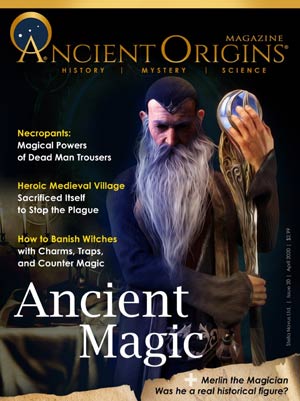
Think of the word ‘magic’, and it may conjure up images of wands, witches, or the wizarding world of Harry Potter. But in ancient times, magic wasn’t about an awesome display of fantastical feats. It was a way for people to make sense of and take control their lives. Magic, overlapping with notions of science, medicine, and religion, was a resource for navigating an uncertain world.

It was everywhere – magic was a source of protection, a means for healing, a way to enact justice, a method for predicting and controlling future events, and a practice to farewell the dead and ensure their safe onwards journey. From birth until death, magic permeated all aspects of life and was called upon to accomplish things beyond the scope of human abilities.

In this edition, we illuminate the ancient and medieval world of magic – mythological tales of the Tengu, mischievous tricksters of Japanese legend; Middle Eastern folktales of magical flying carpets, made famous by Walt Disney’s Aladdin; and magic rings of power that have made numerous appearances throughout history. Did an Ancient Egyptian ring protect archaeologist Howard Carter from the mummy’s curse, when many others were struck down?

But where does superstition end and reality begin? Did Merlin the Magician, the famous wizard of King Arthur’s court, really exist? And is there any truth to the bizarre accounts of Icelandic ‘necropants’ made from the skin of a dead man?

Whilst some tales may be closer to fiction than fact, expert contributor Brian Hoggard reveals solid archaeological evidence for the mysterious and eerie rituals for magical house protection, including witch-bottles, concealed shoes, horse skulls, and even dried cats!

An issue on magic wouldn’t be complete without a spotlight on John Dee, the Master of Magic himself, occult magician and astrologer of the English Royal Court, nor without delving into the dark and frightening world of grimoires and the dangers of dark magic.

But welcome to your ‘Defence Against the Dark Arts’ class; we’ve included some healing herbs and spells that the ancients relied upon to combat dark forces. Enjoy this magical issue!

AO Magazine - March 2020

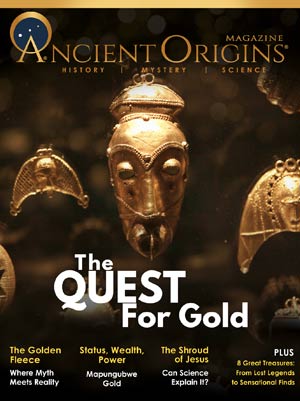
Gold. It is history’s most coveted asset. It has inspired some of humanity’s greatest achievements, stirred passions for power and glory, commanded veneration, and provoked greed, slavery, and even murder. There is no other object that has played such a significant role in shaping human history as this illustrious metal.

It began its journey as a symbol of omnipotence, equated with gods, purity and immortality, and it was buried with the dead – a certain entry into heaven. But make no mistake, gold’s most central role in history has been as a powerful and unbreakable symbol of wealth, status, and power. It has adorned the heads of kings and the necks of queens; it has shone from the tops of pyramids and it has been displayed to cheering crowds by victorious rulers in triumphal processions.

In this issue, we trace the colorful and dramatic story of gold through the ages, from mythological tales with morals, like the story of King Midas and his golden touch and the way Golden Apples reflect some of humanity’s biggest vices, to the ambitious quests of ancient alchemists and civilizations to acquire the pure, shining substance.

We also reflect on the way gold transforms individual lives, as treasure hunters confront the highs and lows of striking it rich, and the impact gold hoards can have on a whole culture, such as the discovery of the magnificent South African Mapungubwe Gold Collection.

Finally, join us as we trek alongside explorers searching for the legendary lost city of El Dorado and get a special peek inside the labs of some of the best scientific minds looking for information on the supposed burial shroud of Jesus. Answers to these mysteries shine bright in the distance.

AO Magazine - February 2020

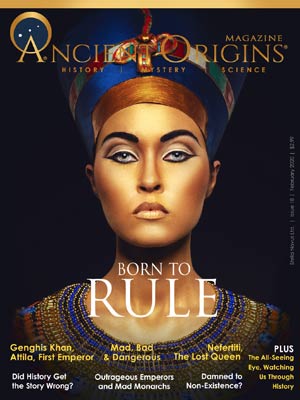
How do you keep a king humble when they rule one of the most powerful kingdoms of their era?  Once a year, you strip them of their regalia, force them to their knees and slap them hard in the face. At least, that was the tradition in Mesopotamia 5,000 years ago. Times have certainly changed, though many would say our modern-day politicians could do with a good dose of Mesopotamian humbling!

Today, our leaders rarely maintain absolute, unquestioned power; prime ministers, presidents and even dictators are usually ‘moderated’ to some degree. This was not always the case in the ancient world – monarchs, pharaohs, warlords, conquerors and tyrants possessed immense power, whether for better or for worse.  A strong ruler, like Roman Emperor Augustus, could advance a nation and bring it to the forefront of culture and technology. An unrestrained emperor, like Nero or Ivan the Terrible, could cause the downfall of some of the greatest empires and civilizations of their time. 

In this issue, we shine a spotlight on some of the most famous and infamous rulers in history; we take an eye-opening look at outrageous emperors and mad monarchs; we examine rulers who were almost lost to history through the ‘punishment of non-existence’; and we question the long-accepted historical narrative – are Genghis Khan, Attila the Hun, and the First Emperor of China really deserving of their ‘bad boy’ image?  

From the strong and courageous to the brutal and ruthless, the world has been forever changed by powerful rulers throughout time.

AO Magazine - January 2020

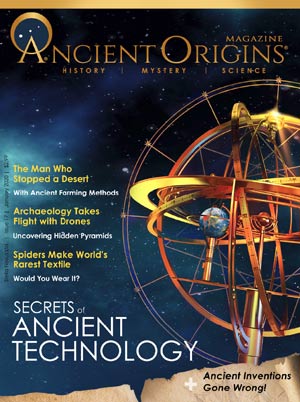
As the world looks on with shock and horror while Australia is ravaged by fires, we are reminded that at times our modern technology is simply not enough. From infrared sensors to satellites, drones, waterbombing planes, navy vessels, and thousands of firefighting tools at our disposal, nothing but Mother Nature, it seems, has the power to bring the fires to a close. So how did ancient people survive such disasters without technology to aid them? The truth is they did have technology, albeit in a different form. For tens of thousands of years, the indigenous people of Australia applied advanced land management techniques to create fire-resilient landscapes.

Today, sophisticated knowledge of the ancients is fading into obscurity as modern tech takes over, but in some parts of the world, it is being revived and used to solve present-day problems. Aztec floating gardens are being utilized in Mexico to achieve sustainable farming; in Iran, ancient Nashtifan windmills harness strong winds to grind grains, and in West Africa, one man even stopped a desert using centuries-old agricultural techniques.

Modern tech is now emerging as a powerful tool in the discovery, investigation, and preservation of ancient sites. Nowhere has this become more apparent than in Peru, where drones have been used to map more than 600 archaeological sites across the country. We talk to the COO of a drone technology company that is playing a key role in that process.

In this issue, we consider the advanced age-old wisdom that was used to solve everyday problems, while highlighting some awesome ancient inventions that changed our world forever, like paper, printing, wheels, rockets, and even forks, as well as surprising ancient tech that is just down-right cool, like solar-powered laser beams, spider-woven cloaks, and chess-playing mechanical robots! 

Just as we still grapple with machinery and computers today, our forebears, too, had to wrestle with uncooperative technology. For one particular medieval inventor, more than just his ego was hurt when his alchemically-enhanced flying machine failed to perform for the king! If only parachutes had been invented!

The twists and turns of such advances and setbacks are played out in the surprisingly ancient game of Snakes and Ladders. It may have been only a childhood game for you, but it is full of hidden messages.

In viewing the long history of humanity, we come to realize that we have actually never been without technology. The ancients weren’t technophobes or Luddites; quite the contrary. They enthusiastically harnessed tech to make their lives better (or at least more interesting!)

AO Magazine - December 2019

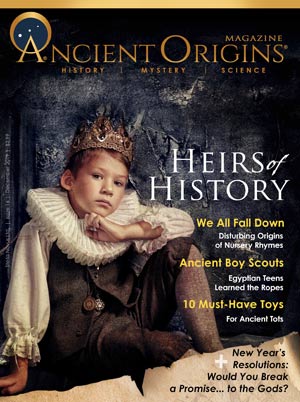
Over the centuries, historians have told us in detail about the rise and fall of civilizations, the leaders and rulers of our world, dramatic battles and magnificent monuments, but the history of children and childhood has been strangely absent.

The invisibility of children in history and archaeology is sometimes attributed to the scarcity of historical records relating to children, and artifacts that once belonged to them. Perhaps too has been the view that children are somewhat peripheral to the most important historical subjects.

In the last few decades, however, an understanding of childhood through the ages has begun to emerge, and researchers have started to shine a spotlight on this vital aspect of human history.

The archaeological and historical record provides opportunity for the exploration of numerous aspects of childhood – an ancient, ceramic baby bottle, a child-size weapon, tiny fossilized footprints, child ‘doodles’ in medieval manuscripts, nursery rhymes, and mythological tales – they all have stories to tell about the children of our past, and in this issue we examine these records and more, offering a glimpse into what life was really like for children throughout history.

Like children traversing a river by leaping from raised stone to stone, we hop, skip, and jump across fascinating topics.  We speak with Daniel Farkas, the CEO of Drops, a language learning app that strives to preserve Ainu history by harnessing tech to teach their language before it disappears completely. Author Jonathan Perrin uncovers the connections between a heretic Egyptian Pharaoh and the most symbolic color in Judaism. And we examine the ancient origins of New Year’s resolutions, which may have been easier to adhere to in past – when giving up was akin to breaking your vows to a god.

We have found the children; they were there all along, hidden in plain sight. They were the tiny, resilient creators of history, eventually passing it down to us, the children of the future. In that way, it would seem that WE are the ‘heirs of history’, and we must pass it on as humans have done since our time began, striving to create a better world for the little ones that come after us.

AO Magazine - November 2019

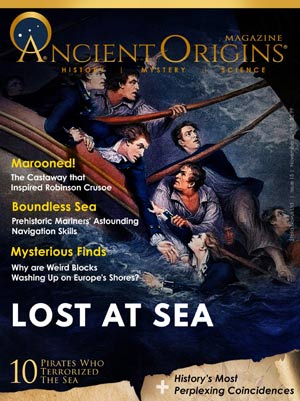
For millennia, humans’ innate curiosity about their world has sparked a desire to explore, leading men and women to cross vast seas. In doing so, they faced untold dangers and hardships: merciless weather, unpredictable winds and waves, sea raiders and pirates, fragile vessels, rough conditions, and weeks or months in an immense, unknown expanse.

In this issue, we explore some of what has been Lost at Sea – pirate treasures, a ship’s crew, castaways, bottles with hidden messages, and even a mysterious set of floating blocks containing cryptic inscriptions which, for over a century, have been washing up on beaches across Europe.

History is replete with stories of both heroics and tragedies of seafarers as they set off on quests to discover new lands, to trade, (or to raid) across unchartered waters.  Maritime historian Professor David Abulafia takes us on a journey through the human history of the ‘Boundless Sea’, as ancient people around the world set a course across the vast oceans.

Faced with uncertainty and isolation on these treacherous voyages across the world, a rich mythology emerged. Legendary creatures lurked in the depths of dark waters, and a myriad of mermaids and sea maidens lured sailors into the sea, never to be seen again.

Surviving maritime perils, we come ashore and explore some weird and wonderful accounts from history: the jaw-dropping Buddhist ritual of Self-Mummification, the lost Roman invention of unbreakable, flexible glass, and historical coincidences whose odds were so incredibly small that they appear almost miraculous!