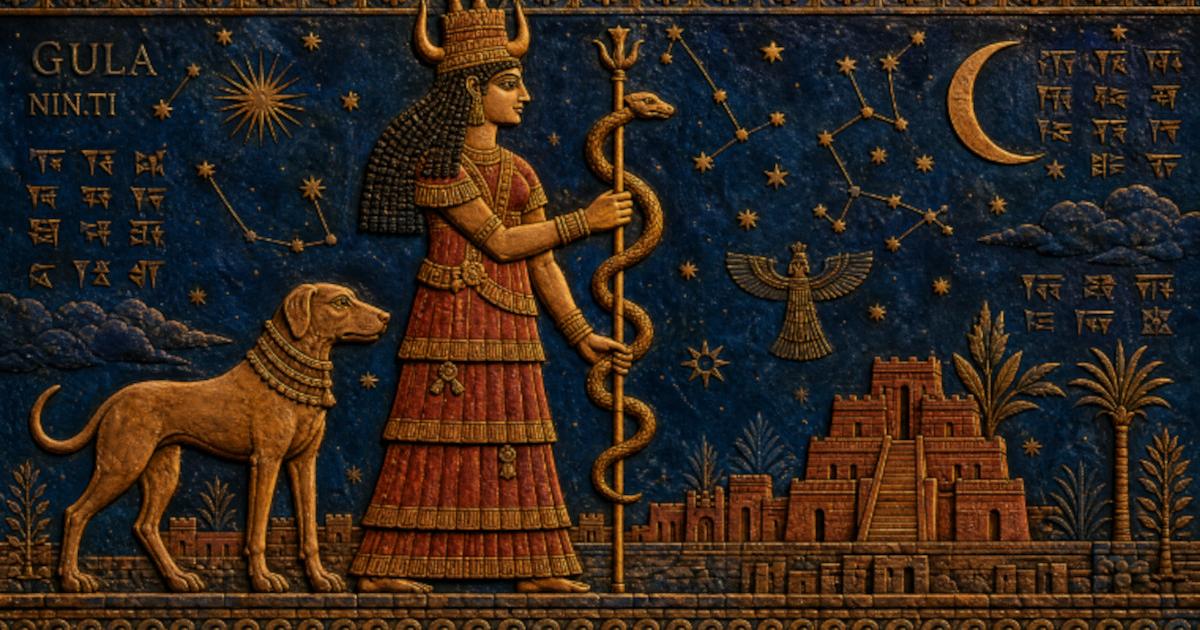

The ancient civilizations of Mesopotamia possessed a complex understanding of medicine, viewing health as a divine gift and illness as a supernatural affliction. At the heart of this ancient medical system was Gula, the revered Mesopotamian healing goddess. Often depicted with her sacred canine companions, Gula was considered the great physician of the Sumerians and Akkadians, offering both miraculous cures and fierce protection to her followers. Her enduring legacy provides a fascinating glimpse into how ancient people sought to understand and combat disease long before the advent of modern medical science.

A sculpture of Gula, Sumerian deity of healing. (CC BY 4.0)
In ancient Mesopotamia, the boundary between science and religion was fluid, with medical treatments often inextricably linked to spiritual rituals. Gula, whose name translates to "Great" or "Great in Healing," embodied this synthesis. First appearing in the historical record during the Ur III Period (2047–1750 BC), she quickly became one of the most popular deities in the Mesopotamian pantheon. Her main cult center was established at Isin, which effectively functioned as an early medical training center where aspiring physicians learned the healing arts.
Gula's origins can be traced back to earlier Sumerian mythology, where she was first known as Bau or Baba, a goddess associated with dogs. Early observers noted the relationship between dogs and humans and attributed healing properties to dogs. After observing dogs licking their wounds, the wounds appeared to heal quicker than wounds not licked by a dog. Subsequently dogs became correlated with healing and eventually evolved into the leading deity of healing, taking on many different titles, such as Ninkarrak, "She Who Guards the Wall," Ninisinna, "Lady of Isin," and Azugallatu, "Great Healer”.
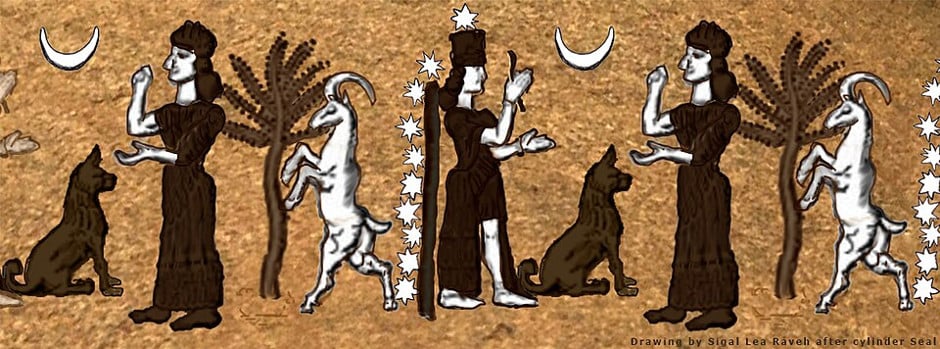
Bau- Baba or Gula scene - drawing by Sigal Lea Raveh based on a cylinder seal. (Sigal Lea Raveh/CC BY-SA 4.0)
The Divine Family of Healing
Because of her divine parentage, Gula was well known in the ancient world as she was perceived as Anu's daughter (Anu was the most powerful god in the heavens). In each different region and period, Gula is represented with different partners, but we find her frequently associated with either Ninurta (a warrior and medicinal deity) or Pabilsag (a divine judge). All of Gula's children shared Gula's healing skills, Damu and Ninazu were each revered as gods of healing along with Gunurra (her daughter), in their own right.
Damu, in particular, was a central figure in Sumerian medicine. He was believed to combine magical incantations with empirical treatments, acting as the intermediary through which Gula's supreme healing power reached human physicians. Ninazu, her other son, was associated with serpents, a symbol of transformation and healing that would later be adopted by the Greeks in the form of the caduceus, the staff of Hermes, which remains a universal symbol of medicine today. The influence of these Sumerian deities extended far beyond their immediate cult centers.
- How Did Ancient Civilizations Heal Themselves?
- Mesopotamian Magic: Ancient Tablets Reveal a World of Witchcraft
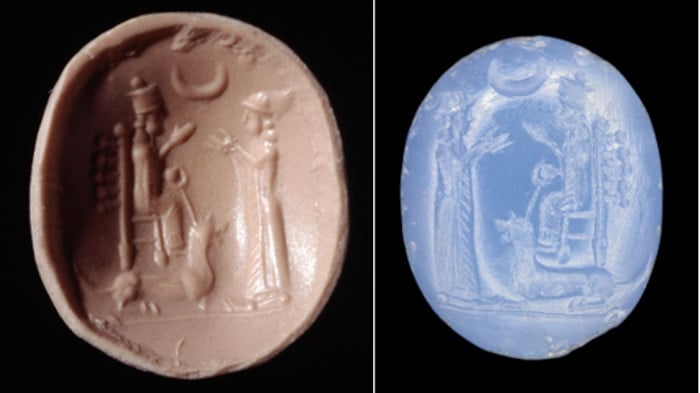
Stamp seal, Late Babylonian (700 BC-550 BC), Blue chalcedony conical stamp-seal; on the base, beneath a crescent, a worshipper in a fringed robe stands facing the goddess of healing, Gula, who sits on her star-studded throne which rests on her reclining dog; she raises one hand, and in the other she holds a ring and the dog's lead. (© The Trustees of the British Museum)
Doctors and Medicine in Mesopotamia
Medical practitioners in ancient Mesopotamia had a well-ordered system of organization that involved two distinct types of healthcare providers. The Asu were the training physicians who treated their patients based on experience and used natural products and plant-based medicines, bandages, and basic surgical methods to cure their patients' ailments. The Asipu were sorcerers or exorcists who believed that illness was caused by demon possession, a vengeful spirit or the will of a god. As such, Asipu would use amulets, prayers or incantations to cast out the evil in order to cure the patient.
Despite their different approaches, both the Asu and the Asipu were highly respected members of society, and they often worked in tandem to cure the sick. They operated out of temples dedicated to Gula, but they also made house calls to treat patients in their homes. Interestingly, ancient records indicate that women were also permitted to practice medicine, and it is likely that the prominent status of a female healing deity like Gula encouraged female participation in the medical arts. These early medical professionals laid the groundwork for ancient medicine that would influence later civilizations.
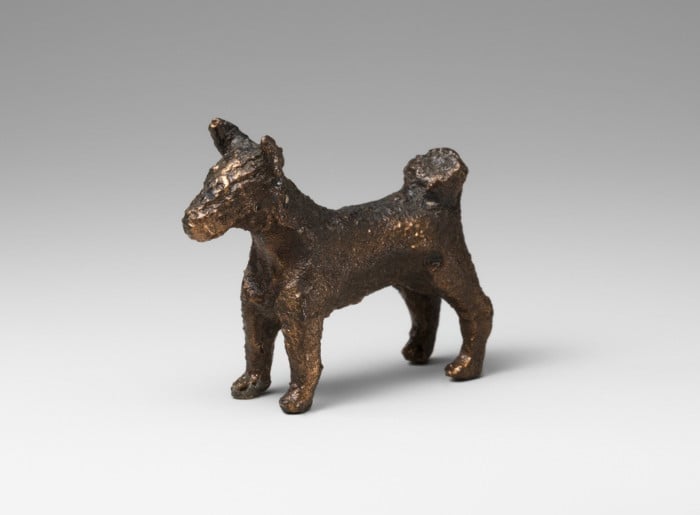
Bronze statuette of a dog, part of the Nimrud dogs, a Neo-Assyrian (circa 8th-century BC) collection of dog figurines found at Nimrud. (© Metropolitan Museum of Art)
The Dual Nature of the Goddess
Although Gula's power to heal and help women in childbirth made her a world-renowned goddess (at least in the known ancient world), she was also regarded with considerable trepidation. Like many ancient gods and goddesses, Gula exhibited dualism in her nature; she had the same potential to cause severe illness to a person who angered her or broke an oath as she had to cure that same person of their ailment. Many kings invoked the name of Gula to punish their enemies by sending disease and calamity to those who defaced monuments and/or breached treaties.
In an effort to appease Gula, her devotees frequently visited the temples dedicated to her, carrying gifts and offerings. The most common votive offerings made to Gula were small terracotta dog sculptures created by patients who had been healed. Many such sculptures have been discovered by archaeologists, particularly the well-known Nimrud dogs, which are thought to have been placed under the doorways of homes and temples as a means of repelling evil spirits and keeping illness at bay. The enduring worship of the Mesopotamian healing goddess highlights the profound human desire for health and protection in an unpredictable world.
Top image: Representation of Gula in stylized profile, wearing a tiered crimson robe and horned divine crown, holding a serpent-entwined staff — a precursor to the modern medical symbol. Her sacred dog stands beside her. Source: AI Generated – Ancient Origins
By Gary Manners
References
Mark, J. J. 2017. Gula. World History Encyclopedia. Available at: https://www.worldhistory.org/Gula/
Mark, J. J. 2014. The Nimrud Dogs: The Security System of Ancient Mesopotamia. World History Encyclopedia. Available at: https://www.worldhistory.org/article/1001/the-nimrud-dogs/
Timeless Myths. Date Unknown. Gula Goddess: The Healing Goddess of the Ancient World. Timeless Myths. Available at: https://timelessmyths.com/stories/gula-goddess/