
A remarkable 12th-century wild boar tusk has been discovered in Veliky Novgorod, Russia, along with a beautifully engraved metal casing. The unusually rare find was probably used either as an amulet or as a hunting trophy by a noble Kievan Rus' warrior.
An Extraordinary Archaeological Find
The impressive tusk, measuring almost 4 inches (10 cm) in length and more than 1 inch (2.8 cm) in width was found in the Troitsky XVI excavation place at Veliky Novgorod, which is claimed to be one of the oldest Russian settlements. The study conducted by the Lomonosov Moscow State University researchers reveals that this tusk belonged to an extremely big wild boar which was older than 8 years and weighed more than 220 lbs.
"It's extraordinary because of its size. It's extremely big," Natalia Eniosova, a metal scientist and co-author of the study, explained. The sheer size of the animal indicates it was not hunted merely for food, especially since domestic pigs were common at the time. Instead, the hunt was likely a prestigious event.
- Medieval Rus Warrior Burials Discovered in Russia
- New Study Finds Roots of Modern Russia in its Viking Style
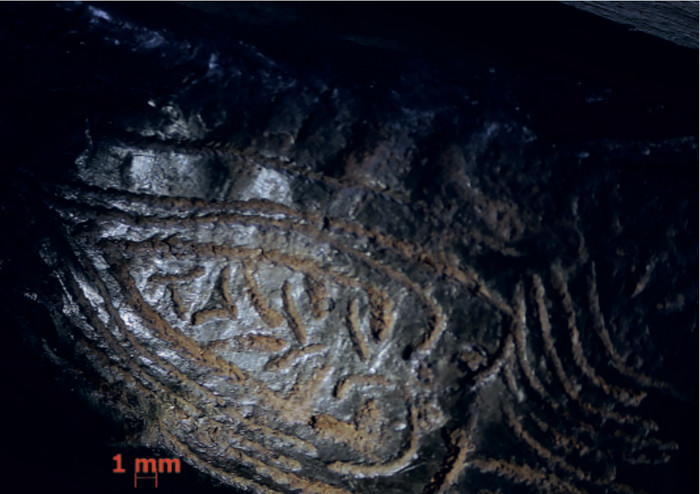
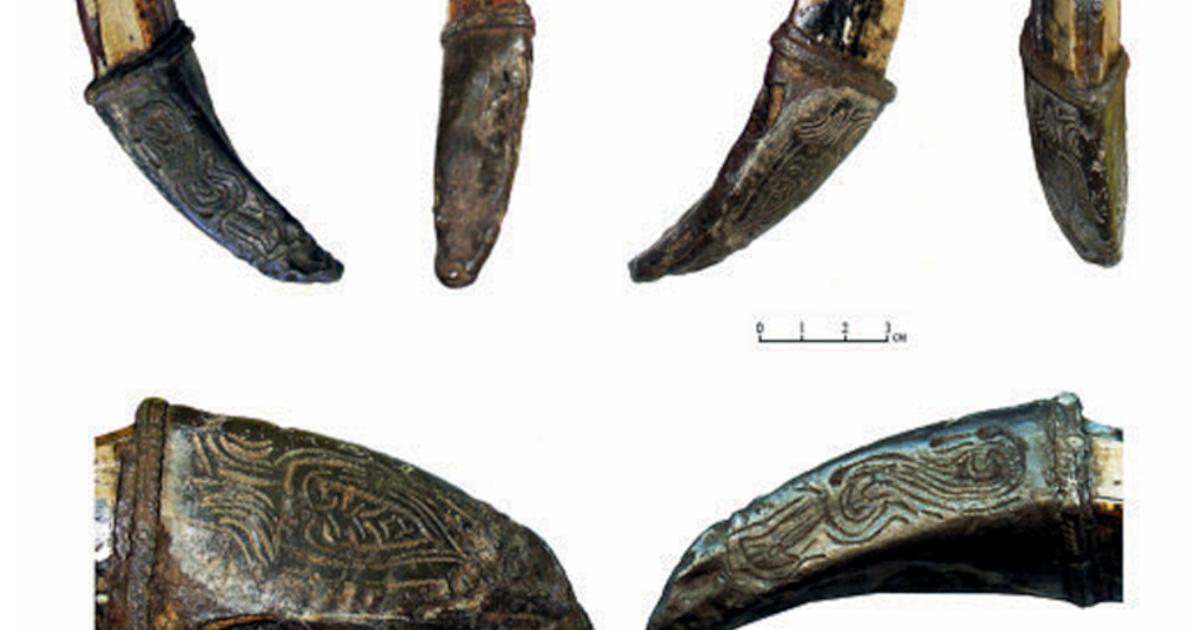
Close-up of the engraved tin-lead alloy mount on the boar tusk. (Tyanina, E. A., et al., 2026/The Volga River Region Archaeology)
The Illusion of Silver
What makes this amulet truly unique is its metal mount. Initially thought to be silver due to its bright appearance, laboratory analysis revealed it is actually a tin-lead alloy designed to imitate silver. In the 12th century, tin was rare in Europe, making the material choice significant. The mount was likely cast using a clay mold of the tusk's tip, and the elaborate engravings were added afterward.
Creating such detailed engravings on a soft metal like tin required considerable skill. The craftsmanship suggests the amulet was a prized possession, not an everyday item. This aligns with the location of its discovery, an area of Veliky Novgorod known to have been inhabited by wealthy landowners and elite members of society.
- The Kievan Rus' – When Vikings and Slavs Cooperated
- Birch Bark Letters Found in Russia are an Ancient Time Capsule
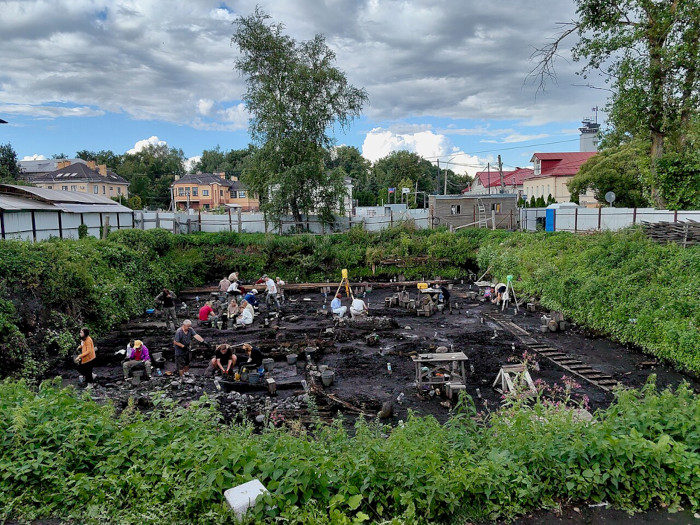
Archaeological excavations at the Troitsky dugout in Veliky Novgorod, where the amulet was found. (Александр Сигачёв/CC0.1)
A Symbol of Power and Protection
In medieval Russia, wild boar hunting was a dangerous and exclusive activity reserved for the nobility and the druzhina, the elite military retinue. The researchers propose that the mounted tusk served as a martial or hunting talisman. By wearing or keeping the tusk, the owner may have believed they were inheriting the physical prowess and ferocity of the beast, while also using it as a charm for good fortune in battle or future hunts.
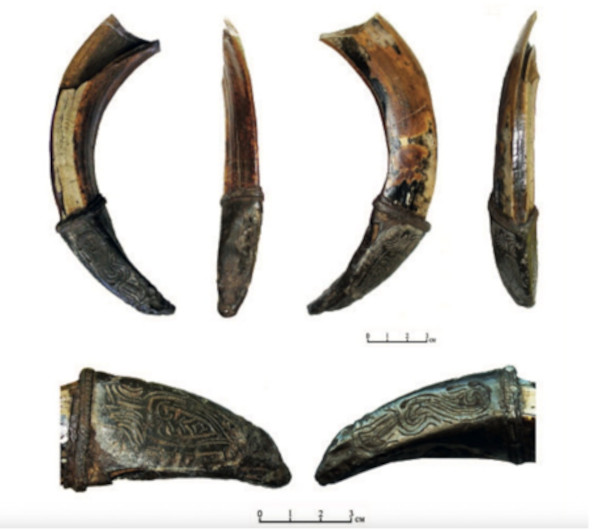
A full view of the medieval wild boar tusk amulet found in Veliky Novgorod. (Tyanina, E. A., et al., 2026/The Volga River Region Archaeology)
While animal-tooth amulets were popular in Veliky Novgorod, they were typically more common in earlier centuries. Finding a boar tusk amulet from the late 12th or early 13th century is exceptionally rare. Some experts hypothesize a connection to Scandinavian mythology, given the Norse influence on early Kievan Rus' culture, though the specific pagan meaning may have evolved by the time this amulet was crafted in the Christian city.
The discovery provides a fascinating glimpse into the beliefs and status symbols of the medieval Rus' elite, demonstrating how ancient traditions of animal magic persisted and adapted over time.
Top image: A full view of the medieval wild boar tusk amulet found in Veliky Novgorod. Source: Tyanina, E. A., et al., 2026/The Volga River Region Archaeology
By Gary Manners
References
Bassi, M. 2025. Decorated wild-boar tusk found in Russia may have been medieval warrior's good-luck charm. Live Science. Available at: https://www.livescience.com/archaeology/decorated-wild-boar-tusk-found-in-russia-may-have-been-medieval-warriors-good-luck-charm
Tyanina, E. A., et al. 2026. A Wild Boar Tusk in a Metal Mount from the Troitsky XVI Excavation Area in Veliky Novgorod: a comprehensive study. The Volga River Region Archaeology. Available at: https://archaeologie.pro/en/archive/56/1097/
Spitz, E., 2026. Researchers believe the rare amulet will shed light on the beliefs and practices of the elite in medieval Russia. All That's Interesting. Available at: https://allthatsinteresting.com/russia-medieval-boar-tusk-amulet
Altunas, L., 2026. Rare Metal-Mounted Boar Tusk Amulet Found in Medieval Novgorod Is Unlike Any Known Example. Arkeonews. Available at: https://arkeonews.net/rare-metal-mounted-boar-tusk-amulet-found-in-medieval-novgorod-is-unlike-any-known-example/