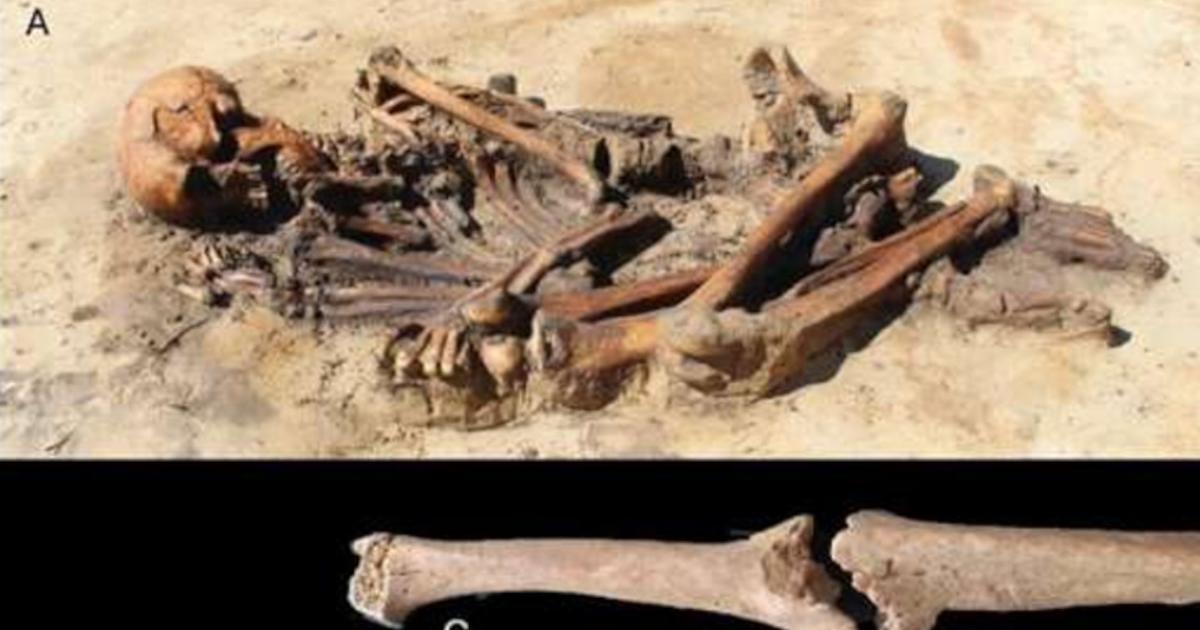

Fragmented human bones built into floors, hearths and walls across Scandinavia have been quietly holding evidence the cemeteries never recorded: the victims of violence who never got a proper grave. A new study in the Journal of Archaeological Method and Theory has identified 12 people carrying 19 serious injuries among 192 individuals whose remains were placed in and around homes in Denmark, Norway and Sweden. At least eight were attacked deliberately, and at least six died of their wounds. The most unsettling case is a small child whose damaged skull was buried in a house floor in North Jutland.
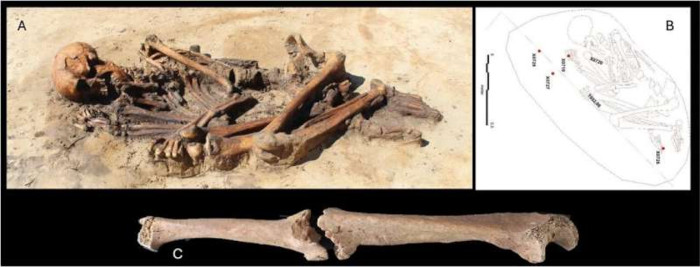
Adult male with stress markers and a non-union "parry" fracture on the midshaft of the left ulna — the kind of wound taken while warding off a blow. (Journal of Archaeological Method and Theory/CC BY 4.0)
A Blind Spot in the Burial Record
Scandinavia's Iron and Viking Ages are famous for their warrior ideology, yet the skeletons archaeologists actually recover from cemeteries rarely match the sagas. Depending on the sample, only about 0.7 to 6 percent of Viking Age cemetery populations show signs of physical trauma — a figure that has never sat comfortably with the raiding and feuding described in the written sources. The problem, the new paper argues, lies in the sample itself: a formal grave was a privilege, and not everyone received one.
The BODY-POLITICS project, led by archaeologist Marianne Hem Eriksen at the National Museum of Denmark, was built to examine a dataset most excavators treat as an afterthought: disarticulated human remains found in longhouses, pits, wells, postholes and hearths. Its synthesis, published in September 2026, gathers 192 individuals from 197 such deposits in Denmark, Norway and Sweden, spanning the Late Bronze Age to the end of the Viking Age. The bones were analyzed with osteological, biomolecular and digital imaging methods, as the phys.org report notes.
- Viking Raids: What It Was Like to Be On the Front Lines (Video)
- Tollund Man – the preserved face from Prehistoric Denmark and the tale of ritual sacrifice
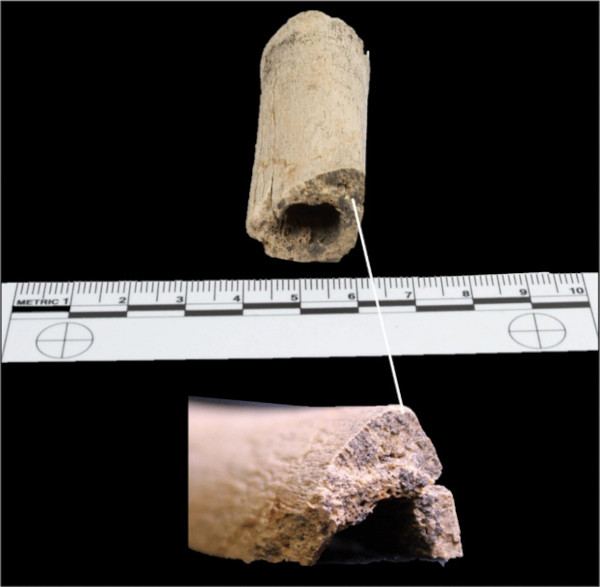
Fragment of the left tibia of a young adult female, chopped at the midshaft. (Journal of Archaeological Method and Theory/CC BY 4.0)
Nineteen Injuries and One Small Victim
Twelve of those individuals carried injuries severe enough to be read on the bone: 19 traumas inflicted before or around the time of death. At least eight resulted from deliberate violence, and at least six of those people died from their wounds — a homicide rate of three to four percent against an overall trauma frequency of 6.25 percent. Four had been hurt repeatedly over their lives. One Viking Age man survived three separate blows to the skull, plus fractures to his forearm and collarbone, before he finally succumbed.
The child has travelled furthest in the coverage. Aged between two and four, he had been cut down with a sword or similar sharp weapon, and his partial cranium ended up beneath a floor where people continued to live. Eriksen told Videnskab.dk: "The child's cranium was laid into the floor of a house where people continued to live... It means that someone has walked over a child's skull day after day." She added that the work "opens up a completely new understanding of Iron Age society, of the occurrence of violence and of the handling of the dead," as Gizmodo reported.
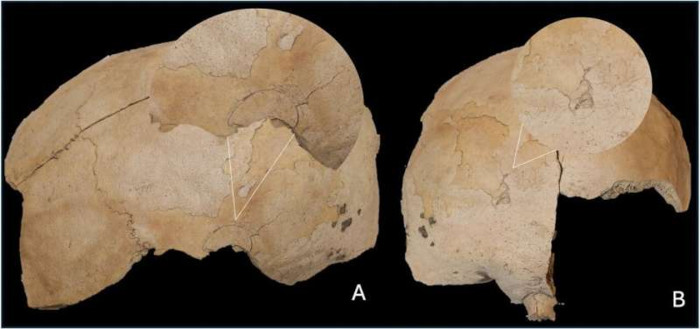
Incomplete cranium with two blunt force injuries, deposited in a pit rather than a grave. (Journal of Archaeological Method and Theory/CC BY 4.0)
Accident, Execution or Sacrifice?
The paper sets out several explanations for how these people were hurt. One is war-like violence between communities; another is fighting inside the household or settlement; a third is ritual violence, including possible human sacrifice, a practice long documented in the region's bogs. The authors also note that some of the dead may have been captives with no kin to bury them.
Alongside the obvious blows, the team recorded fractures, dental disease and markers of chronic physical stress, which they argue point to structural or "slow" violence: hardship that accumulated over a lifetime rather than arriving in a single attack. Not every specialist accepts the emphasis. Pernille Pantmann, a PhD in archaeology and research coordinator at Museum Nordsjælland, told Videnskab.dk that 180 of the 197 deposits show no clear signs of violence and that the injuries could "just as easily be accidents or work injuries."
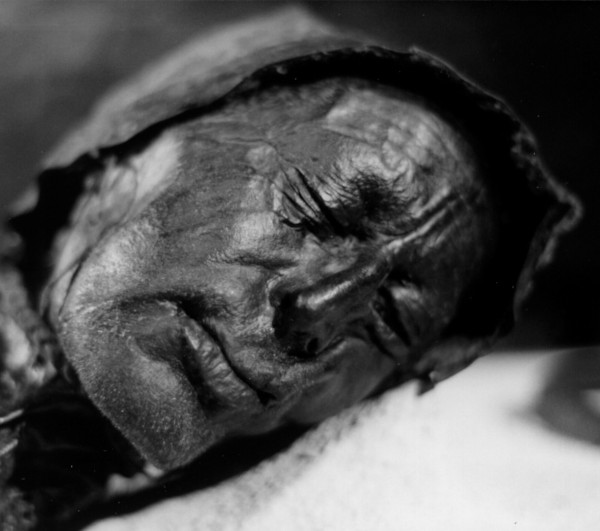
The head of Tollund Man, a Danish Iron Age bog body widely interpreted as a ritual sacrifice. (Sven Rosborn/Public Domain)
Houses That Kept Their Dead
What happened after death may be the study's most consequential finding. These people were not buried in cemeteries. Their remains were cut, worked and modified before being placed in the fabric of buildings where the living ate, slept and worked, and some were turned into amulets or tools. The team rejects the standard explanations — bones lost down a well, or graves disturbed by later building work — because the pattern repeats across hundreds of settlements through the whole Iron Age.
Eriksen is careful not to reduce the practice to violence alone. She told Videnskab.dk that the manner of death may have been one motive, but "it could also be about preserving the power of ancestors or protecting the house." As the researchers put it, "Whatever the logic, these bodies were purposefully processed and transformed in and after death."
Top image: Adult male skeleton recovered from ancient Scandinavian home with the kind of wound taken while warding off a blow. Source: Journal of Archaeological Method and Theory/CC BY 4.0
By Gary Manners
References
Arnold, P. 2026. Broken bones in ancient homes shed new light on Viking violence. Available at: https://phys.org/news/2026-10-broken-bones-ancient-homes-viking.html
Body-Politics. 2026. Body-Politics: Personhood, Sexuality and Death in the Iron and Viking Ages. Available at: https://body-politics.com/
Eriksen, M.H., Tamorri, V., Louka, V., Tollefsen, E., Kay, K. and Appleby, J. 2026. Broken bodies in Domestic Spaces: Direct and Structural Violence in an Atypical Mortuary Dataset from Iron and Viking Age Scandinavia. Journal of Archaeological Method and Theory. Springer. Available at: https://link.springer.com/article/10.1007/s10816-026-09817-w
Felholt, L. 2026. Fund fra jernalderen: Barnekranie under stuegulvet og døde i væggen. Available at: https://videnskab.dk/kultur-samfund/fund-fra-jernalderen-barnekranie-under-stuegulvet-og-doede-i-vaeggen/
Lee, G. 2026. Iron and Viking Age Scandinavians Kept Their Victims' Bones Around the House. Available at: https://gizmodo.com/iron-and-viking-age-scandinavians-kept-their-victims-bones-around-the-house-2000823564