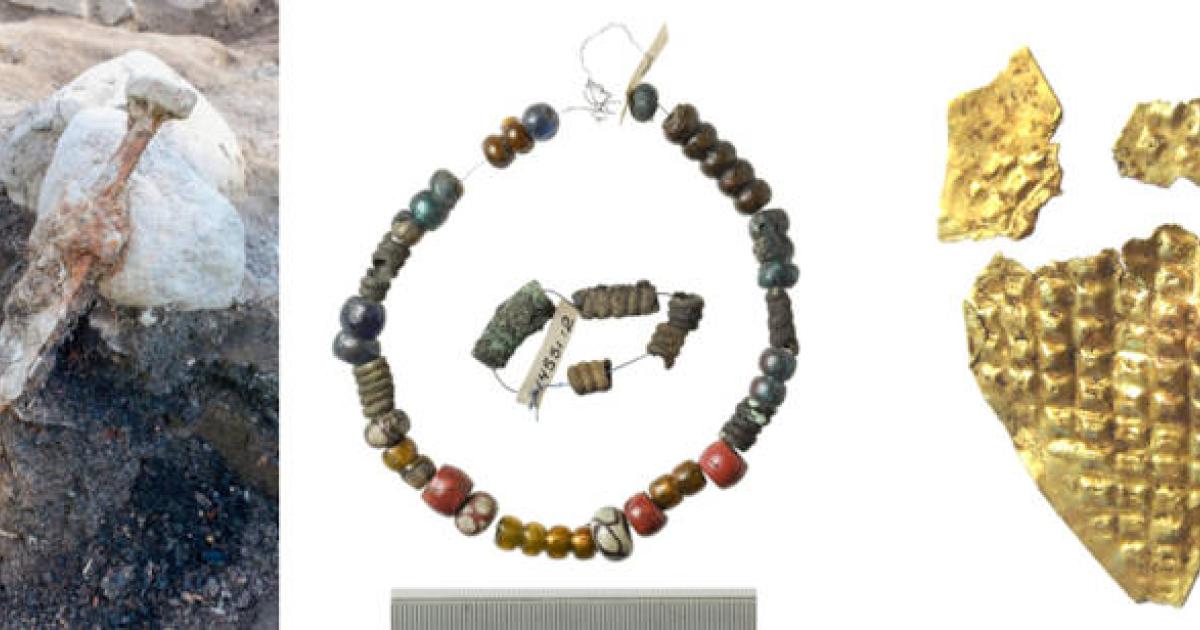

Archaeological excavations along the E18 motorway in Västmanland, Sweden, have revealed extraordinary Viking Age treasures and burial sites that are rewriting our understanding of Iron Age and Viking society in central Sweden. Between 2021 and 2022, Arkeologerna (The Swedish National Historical Museums' archaeological division) investigated nine locations, uncovering everything from cremation platforms visible across the landscape to rare warrior burials marked by standing swords thrust into the earth.
"The sites are exciting, but the overall picture is most interesting," explains Fredrik Larsson, archaeologist and project leader at Arkeologerna. "We have a long cross-section through several districts simultaneously, which gives us the opportunity to understand how society and the landscape changed over generations." The findings, now detailed in a new book titled Människor, möten och minnen – arkeologi längs E18 i Västmanland (People, meetings and memories – archaeology along E18 in Västmanland), exceeded all expectations.
- Shipwrecks, Treasure, and 139 Viking Graves: Vast Cemetery Discovered in Sweden
- Viking Swords and Bear Claws Discovered in Sweden
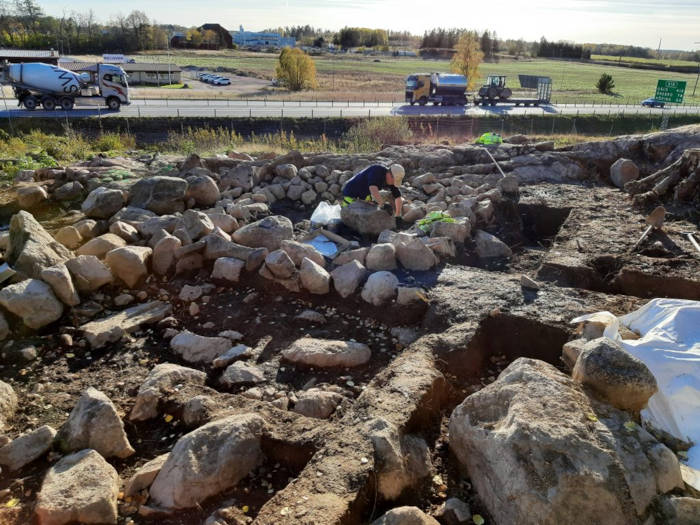
Ongoing excavations at the site. (Arkeologerna)
Cremation Platforms That Commanded the Horizon
Among the most spectacular discoveries was a Viking Age cremation site at Rallsta near Hallstahammar. Here, ancient communities reshaped a small mountain to create two massive pyre platforms where the dead were cremated during the Viking Age. "This was a place designed to be seen from far away," Larsson emphasizes. The monumental nature of the site suggests the cremations were public spectacles, possibly reserved for chieftains or other elite members of society whose passing needed to be witnessed across the landscape.
The discovery aligns with what archaeologists know about Viking funeral practices, which often involved elaborate ceremonies designed to honor the deceased and mark their passage to the afterlife. The location's prominent position suggests these weren't merely functional cremation sites but ceremonial monuments that reinforced social hierarchies and community identity.
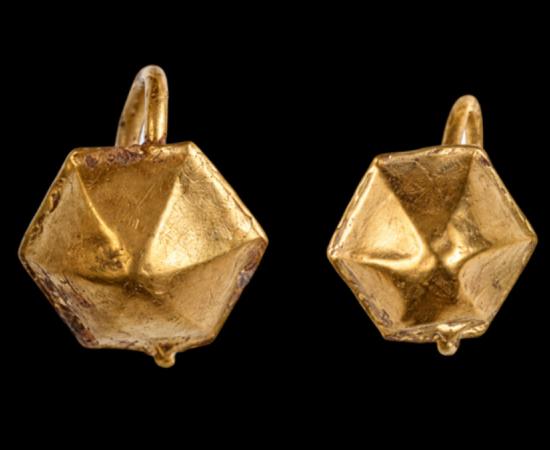
Among the cremation remains, archaeologists discovered beautiful glass bead necklaces, gold sheet metal with waffle patterns that once adorned garnet inlays, and game pieces crafted from whale bone and fired clay - objects that speak to both the wealth and leisure activities of Viking Age Västmanland.
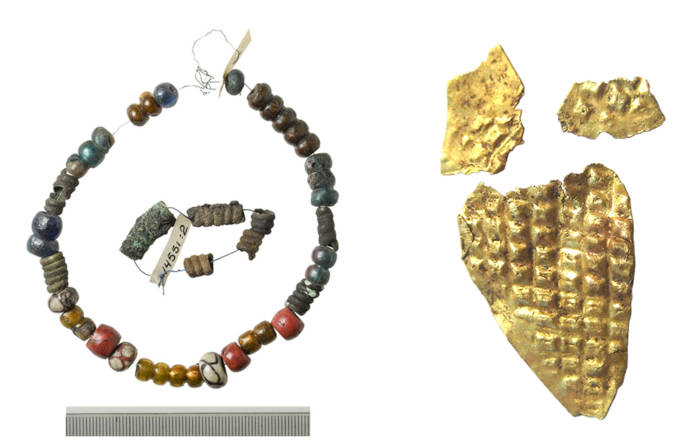
Beautiful bead necklace and gold sheet recovered at the site. (Arkeologerna)
Warriors Marked by Standing Swords
Moving westward to Viby/Norrtuna in Munktorp parish, excavators encountered something even rarer: Viking Age stone settings built into an older Vendel Period burial mound, creating a composite monument. Within these graves lay two swords, thrust vertically into the ground with such force that the blades had snapped. "There are only a handful of such sites in Sweden, so it's very unusual," notes Larsson.
- What Really Happened at Viking Funerals? It's Not What You Think!
- South-Pawed Viking's Sword Discovered In 1000-Year-Old Burial
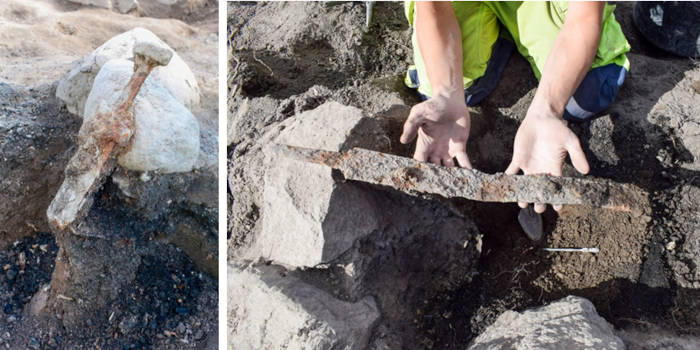
Two standing swords found in graves at the extensive E18 motorway excavation site in Västmanland, Sweden. (Arkeologerna)
One grave contained both a man and a woman, though their relationship remains unclear. Were they both members of a specialized armed group? Did one die in service to the other, perhaps as a sacrifice accompanying the burial?
"It's probably a specific armed group in society buried here," Larsson suggests. "It could also be about kinship, that it's part of a dynasty we're seeing."
The practice of placing swords upright in graves represents a powerful symbolic gesture. Unlike the more common Viking Age practice of ritually breaking or bending weapons before burial, these standing blades may have served as grave markers, visible reminders of the warrior status of those interred beneath.
Horses, Bells, and the Viking Elite
At Sylta, outside Köping, archaeologists excavated a Viking Age cemetery spanning from the 800s to around 1200 AD - some of the latest cremation burials discovered in Sweden. Nearly 30 graves from the 1000s contained horses cremated alongside their owners, complete with spectacular equestrian equipment.
"They are found in both men's and women's graves and are very rich and well-preserved," Larsson explains. "You can wonder if the horse equipment functioned as a kind of local costume, because even the horses had their trappings." The finds include decorative hanging fittings in various shapes and numerous bells, ensuring that horses and riders would be both seen and heard - a display of wealth and status that continued even in death.
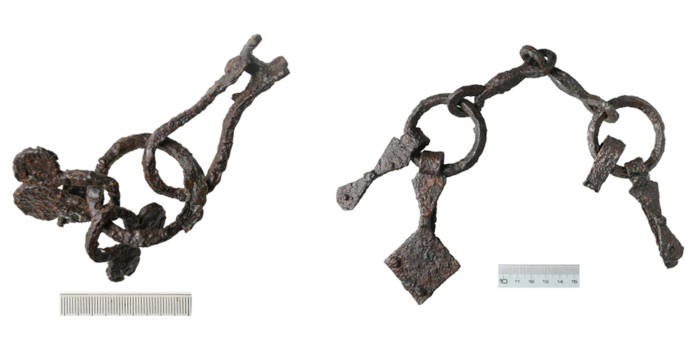
Some of the equestrian equipment found in the burials of horses and owners. (Arkeologerna)
The presence of horse burials in both male and female graves challenges simplistic interpretations of Viking Age gender roles. These elaborate equestrian burials suggest that horsemanship and the wealth to maintain such animals were markers of elite status regardless of gender.
Viking-Inspired Wooden Jewelry Box from the Ancient Origins Store.
A Window Into Generations of Change
The E18 project's true significance lies in its breadth. By cutting across multiple districts simultaneously, it provides archaeologists with what amounts to a time-lapse view of societal transformation. The sites document the shift from pagan cremation practices to Christian inhumation burials, the evolution of settlement patterns, and the daily life of communities engaged in farming, bread-making, and iron production.
One particularly evocative site included a farm adjacent to Västmanland's largest rock carving in Häljesta, connecting domestic life directly to ancient ritual landscapes. Together, these discoveries paint a picture of Viking Age Västmanland as a dynamic region where tradition and innovation, ritual and daily life, intersected in complex ways.
The findings are now accessible to the public through a downloadable book funded by Trafikverket (the Swedish Transport Administration), with physical copies available at Västmanlands läns museum and Köpings stads museer och utställningshall.
Top image: Horse equipment bit discovered in Viking Age grave at Sylta. Source: Arkeologerna
By Gary Manners
References
Arkeologerna. 2025. Västmanlands forntid väcks till liv. Available at: https://arkeologerna.com/bloggar/undefined/vastmanlands-forntid-vacks-till-liv/