
A Garden Surprise
The resident made the find by pure chance when he struck metal while clearing stones, grass and gravel to build a new terrace at his home. He thought he had unearthed pieces of fence or iron but started digging and found, jewelry, coins and silver bars.
"It should have just been a few hours of hard gardening to remove stubborn grass, stones and gravel in connection with a new tiled terrace, but it was the biggest surprise of my life," says the finder, according to Nordjyske Museer.
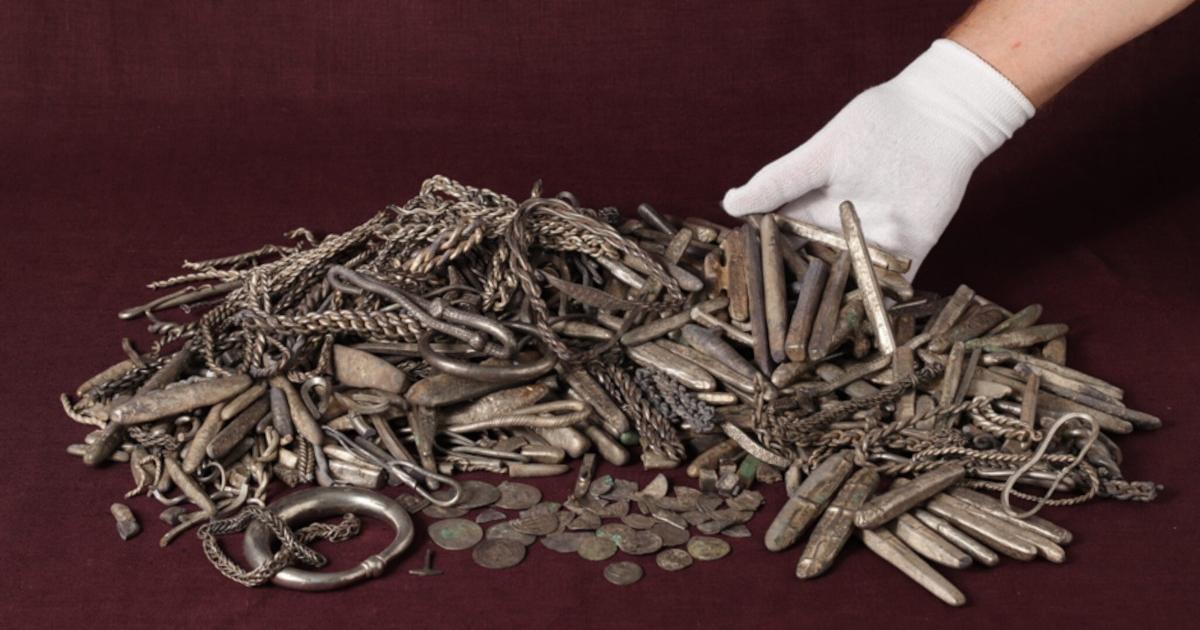
The treasure comprises around 700 individual items, including the quantity of silver ingots, arm rings, whole coins and coin remnants, cut silver items, and a small Thor’s hammer. Roughly 320 items, weighing a total of 6.4 kilograms, were found within the original unbroken ceramic vessel. The treasure is thought to have been buried somewhere around the 10th century.
- Untouched Viking Silver Treasure Unearthed in Norway
- The Vale of York Hoard: The Finest Silver Viking Treasure
The silver hoard, including ingots, coins, chains and bands. (North Jutland Museums)
Silver as Currency
The finding is described by Torben Sarauw, archaeologist and head of cultural heritage at Nordjyske Museer as a rare chance to learn how wealth was accumulated and managed by Vikings.
"This is a find of great importance for our understanding of the Viking Age in Denmark. Not just because of its size, but also because the treasure so clearly shows how silver functioned as wealth and means of payment in the Viking Age. It's like finding a safe from the Viking Age," says Sarauw quoted by Nordjyske Museer.
The fact that the hoard is mainly comprised of ingots, jewelry and hacksilver, and less of coins shows that Viking silver acted as a currency whose value was determined by weight. That means that pieces of silver could be cut depending on the amount of silver needed for a transaction. Some of the ingots and silver pieces are of a certain weight, proving that the treasure was organized rather than being just a random accumulation of valuable metal.
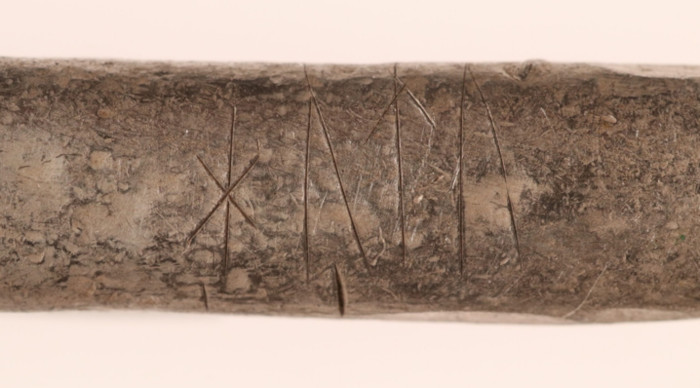
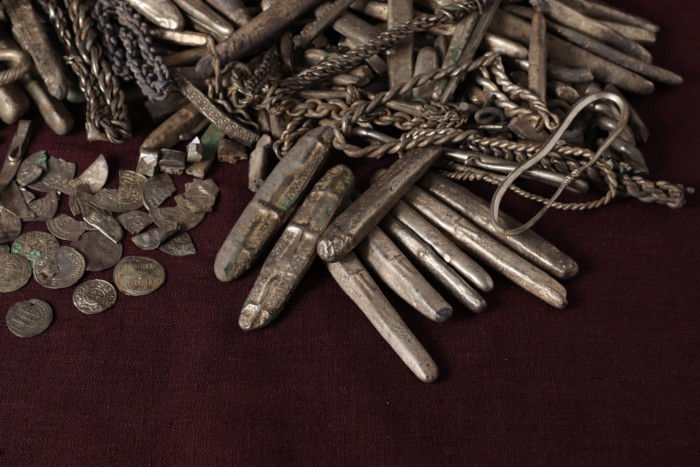
On one of the silver bars in the hoard, runes are carved. It may say "hutu" and may be a name, an owner's mark or some other significant marking. (North Jutland Museums)
Mysterious Runes and Global Connections
Two Anglo-Saxon silver pennies were minted during the reign of Edward the Elder, who ruled from AD 899 to 924. Their presence provides archaeologists with an important chronological clue, since the treasure must have been buried after the coins entered circulation.
One of the more intriguing items in the hoard is a silver bar with a runic inscription. The inscription possibly spells out "hutu", although its meaning is unclear. The experts examining it think it could refer to a person's name, an ownership stamp, or some other way of identification.
The treasure also includes coins from the far-off corners of the world – Arabic dirhams and Anglo-Saxon coins have been found here, too. Such a find suggests that even though Denmark was a Viking settlement, its trade ties were established with the Islamic world and other parts of Europe.
- Norway's Largest Viking Hoard Found With 3000 Silver Coins
- Yorkshire Hoard Reveals Silver Trade Took Vikings to the Middle East
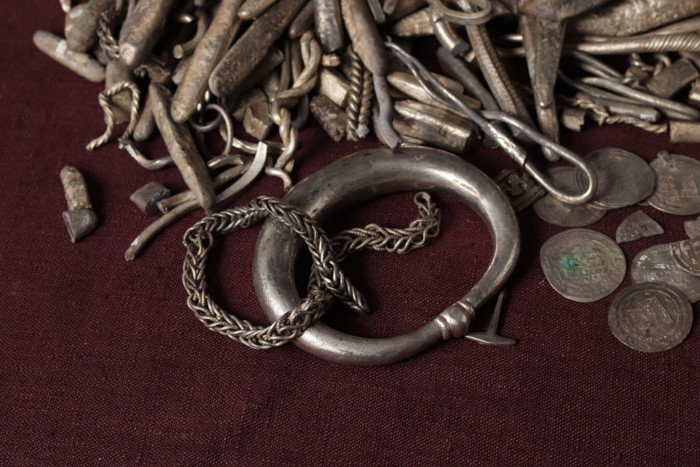
The hoard contains both Arab and Anglo-Saxon coins, evidence of connections with Europe and areas far to the east in the Viking Age. (North Jutland Museums)
Rebild: A Viking Wealth Centre
This huge hoard is not the first major Viking discovery made from the Rebild area. In 1971 another silver hoard dating back to the 10th century was found in this area; it contained about four kilograms of small ingots of smashed jewelry as well as pieces of silver. Moreover, a few years ago, six Viking gold arm rings weighing 762.5 grams were discovered in the nearby area known as Rold site. Researchers believe the high concentration of valuable discoveries will allow us to support the theory that the Rebild area was deeply integrated into the network of trade and culture including countries like Scandinavia, Baltic states, England, and Islamic states.
Just why the newly found hoard was buried is unknown, and further archaeological investigations are limited as the area is built-up. Under Danish law, the treasure is classified as Danefæ, meaning it belongs to the state, thus it will be studied by National Museum of Denmark. As for the finder, he will be rewarded according to the current market value of the silver plus a finders’ payment.
Nordjyske Museer hopes that the find will eventually be shown at Fyrkat Viking Museum together with other Rold find and thus they will be able to fit in these finds into the larger picture of Viking Age in North Jutland and activities of Harald Bluetooth and forming of Denmark in the 10th century.
Top image: Largest Viking silver hoard discovered in Rebild, Denmark. Source: Nordyske Museer
By Gary Manners
References
Milligan, M. 2026. Homeowner stumbles upon Denmark's largest-ever Viking silver hoard. Heritage Daily. Available at: https://www.heritagedaily.com/2026/08/homeowner-stumbles-upon-denmarks-largest-ever-viking-silver-hoard/159136
Nordjyske Museer. 2026. Havearbejde afslører Danmarks største vikingesølvskat. Available at: https://nordjyskemuseer.dk/havearbejde-afsloerer-danmarks-stoerste-vikingesoelvskat/