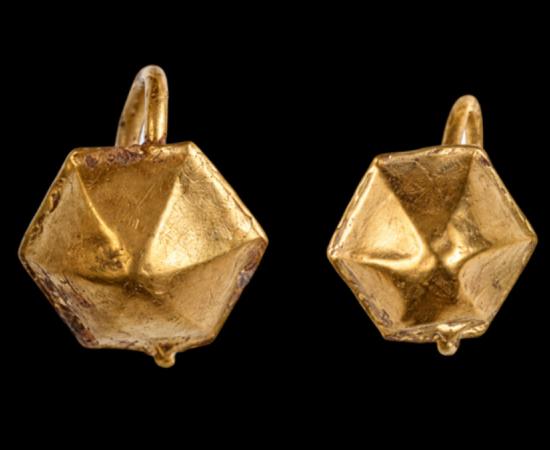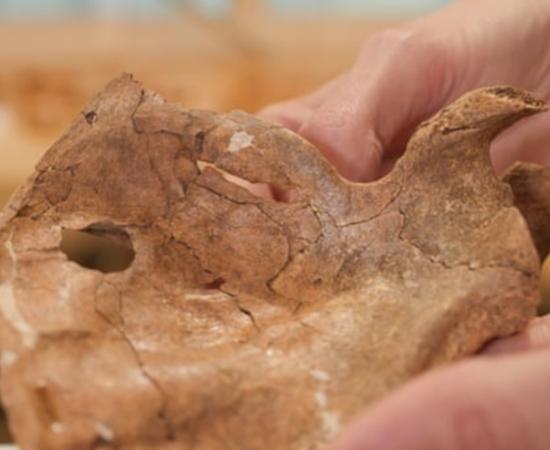

A young Viking woman was buried at Skonager, close to Varde in Western Jutland, a find that has revealed something very rare in Danish archaeology: pieces of her clothes that have survived for nearly 1,300 years. The burial dates from the 8th century has been excavated by Arkæologi Vestjylland. It is exceptional in that it not only includes very rare textiles but also the woman's teeth, making it possible to learn much about her health, clothing and other elements of her life.
Viking graves are very rare in this area of Jutland, and the acid soil of the region usually destroys organic materials after a few decades. Therefore, the preserved clothing in found this grave, called ARV 661 by archaeologists, is almost unprecedented. According to an Archaeology Magazine report, the burial shows that the woman was in a coffin placed in a ditch, her head resting carefully on a stone pillow.

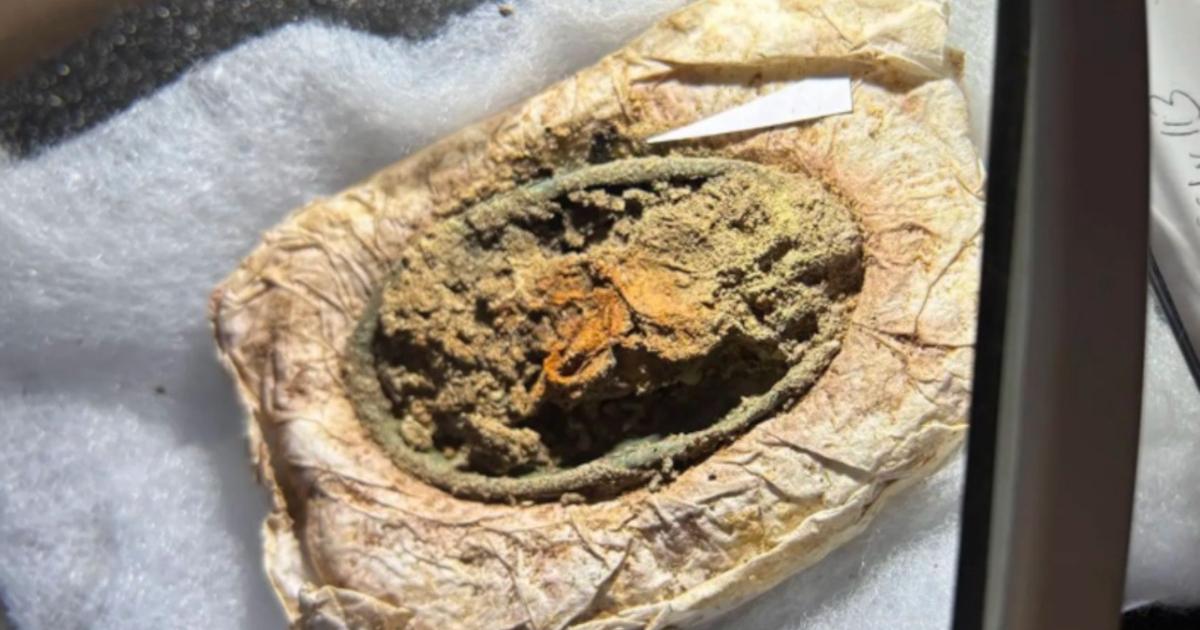
Finds recovered from the Skonager tomb, including the brooches and preserved textile fragments. (Arkæologi Vestjylland)
Metal Salts Shielded the Viking Dress from Decay
So why did this fabric survive when others have rotted away? The answer lies in the two concave brooches, made from silver and bronze, which were part of this particular Viking apparel. These brooches are called skålspænders in Danish and were the most popular attachments for Viking women. They were used to hold the shoulder straps of the apron dress worn over a linen or woolen undergarment. As explained by the National Museum of Denmark, there used to be strings of beads often hung from the brooches and the dress could also be covered with woven patterns.
Although the metallic brooches corroded over the period of thirteen centuries, they released metallic salts creating a chemical micro-environment that inhibited microbes that would normally cause decay. The metallic surfaces formed preventive shield for any inner fibers touching it. As a result, pieces of fabric were found on both sides of the brooches and could be studied on both sides, crucially including the layer that rested against her skin.
Similar preservation has allowed rare glimpses of Viking-era jewelry and textiles elsewhere in Scandinavia, but seldom in Denmark itself.
- Vast Viking Factory Find Challenges Narrative of Barbaric Society
- Elite Danish Vikings Wore Beaver Fur as a Status Symbol
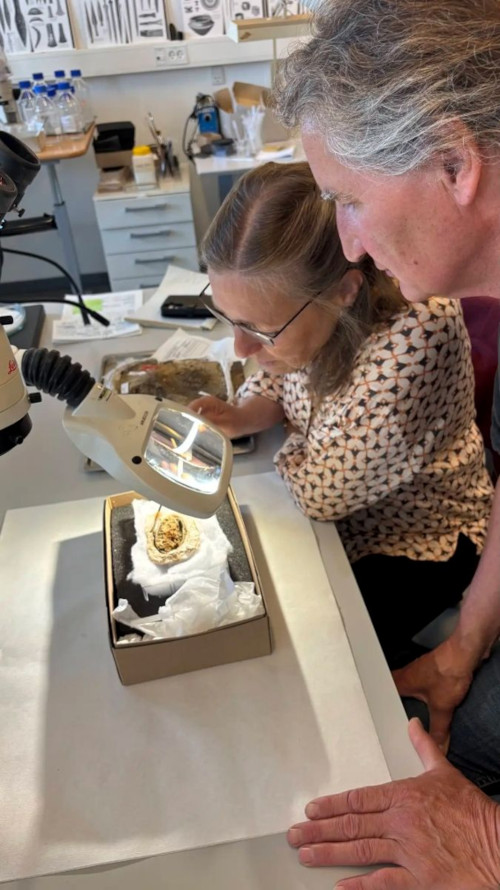
The researchers examining one of the brooches recovered from the tomb. (Arkæologi Vestjylland)
A Heirloom Brooch and the Colors of the Viking Age
A complete team of experts has come together about the discovery. The Vejle Conservation Center is examining the funeral assemblage grain by grain, while the textile expert Lise Ræder Knudsen is working with the surviving fibers, examining the weave, patterns, thread spinning, and quality of the cloth. The samples will be taken for radiocarbon dating and will reveal if the brooches and the dress were made at the same time. This is important, because one of the brooches shows traces of an old repair indicating that the object could have been passed from generation to generation in the family before being buried with the young woman.
Working with the Textile Colors of the Viking Age Project, researchers Ulla Mannering and Charlotte Rimstad, are conducting dye analyses to find out the original colors used in the fabric. Color had a certain social and economic value in Viking Age clothing. For instance, blue obtained either from woad or imported indigo was expensive and used mainly in the burials of members of wealthy families. The project is supported by the Agnes Geijers Foundation for Nordic textile, research set up in honor of Agnes Geijers, a Swedish scholar whose studies of scoop brooches and Viking Age clothing laid the foundations of the field. Her classic drawing of a dress fastened with scoop brooches now serves as a reference point for the team.
- Viking Woman and Her Dog Found in Boat Burial in Norway
- Massive 10th Century Viking Burial Site From King Harald Bluetooth's Time Unearthed in Denmark
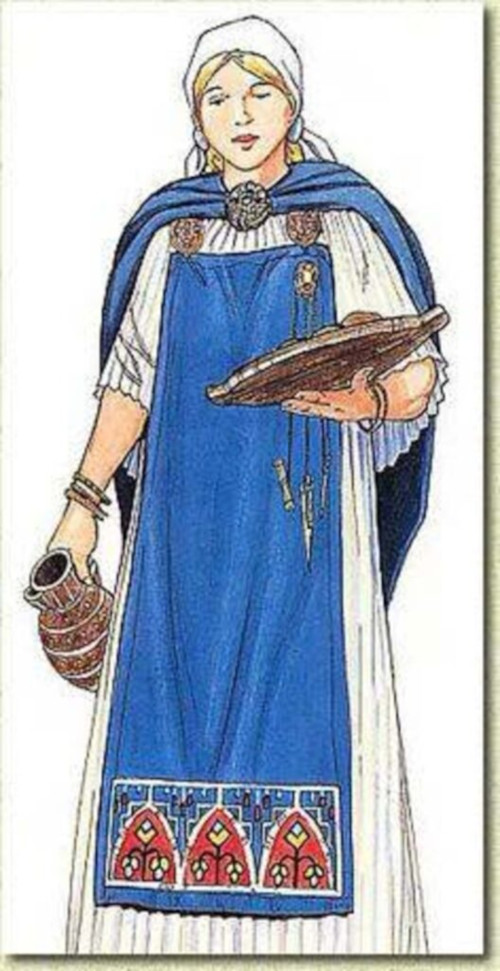
Artist’s impression of a Viking woman in dress similar to the one that has been found. (Arkæologi Vestjylland)
Teeth That Tell the Story of a Viking Girl's Life
The woman herself is also being brought into focus. The Anthropology Unit at the University of Southern Denmark will study her teeth for evidence of her age, health, diet, and possible migration, as well as signs of physical stress during childhood or adolescence. Isotope analysis and dental enamel defects may give information for establishing the woman’s place of origin, famine, and illnesses endured by her in the course of life.
The Skonager burial joins a growing series of finds reshaping our understanding of Viking women, from the female warrior confirmed at Birka to the noblewoman buried with her dog in a Norwegian boat grave. As the analyses progress, archaeologists hope eventually to reconstruct the dress this young West Jutland woman wore, and perhaps to redraw Agnes Geijer's famous interpretation with her in mind. For a region where Viking burials so seldom survive, the girl with the scoop brooches is already a treasure.
Top image: One of the scoop brooches from the Skonager tomb, still holding traces of 1,300-year-old textiles. Source: Arkæologi Vestjylland
By Gary Manners
References
Arkæologi Vestjylland. 2026. Pigen med skålspænderne. Available at: https://www.facebook.com/arkaeologivestjylland/posts/pfbid0255pvxYwQEhDf8ZSutqPLBceg4MR4gckjGqNXkdTVP7GkLF9KwQvMLsD4cwKpenFJl
National Museum of Denmark. n.d. The Clothes and Jewellery of the Vikings. Available at: https://en.natmus.dk/historical-knowledge/denmark/prehistoric-period-until-1050-ad/the-viking-age/the-people/clothes-and-jewellery/
Radley, D. 2026. Young Viking Woman's Tomb with 1,300-Year-Old Textile Fragments Found in Denmark. Available at: https://archaeologymag.com/2026/08/viking-womans-tomb-with-dress-fragments-in-denmark/