
A six-page manuscript section unearthed in a Brighton archive has now been digitally reunited with a medieval bestseller stored in Yale University’s library, exposing another interesting connection to Sir John Gage, one of King Henry VIII’s officials who was charged with destroying monasteries.
The section is part of Nicholas Love’s Mirror of the Blessed Life of Jesus Christ, a Catholic book that became politically explosive in the period of the English Reformation. Gage’s signature reveals that the book was protected by the Tudor official in question, thus saving the Catholic book from destruction, even though he was was generally aiding the Crown with the destruction of the Catholic Church in England. The discovery highlights the role of personal loyalties in preserving books in the period of state-sanctioned destruction.
A fragment hiding in plain sight
The University of Cambridge reports that researchers Katie Walter of the University of Sussex and James Wade of Girton College, Cambridge, have managed to identify six pages found in The Keep archive, located in Brighton, UK with Yale's Takamiya MS 20. The pages were kept in a box which was handed to the Sussex Archaeological Society in 1929 but did not appear in their content list. Hence, for many years the pages remained unconsidered due to this cataloguing mistake.
The researchers compared the handwriting and text with a gap in the digitized Yale manuscript, just before a passage defending oral confession to a priest. Their study, published in Notes and Queries, identifies the pages as part of the same early fifteenth-century copy of Love’s work.
- How Henry VIII Accidentally Changed the Way We Write History
- 90% of Medieval Manuscripts Have Not Survived
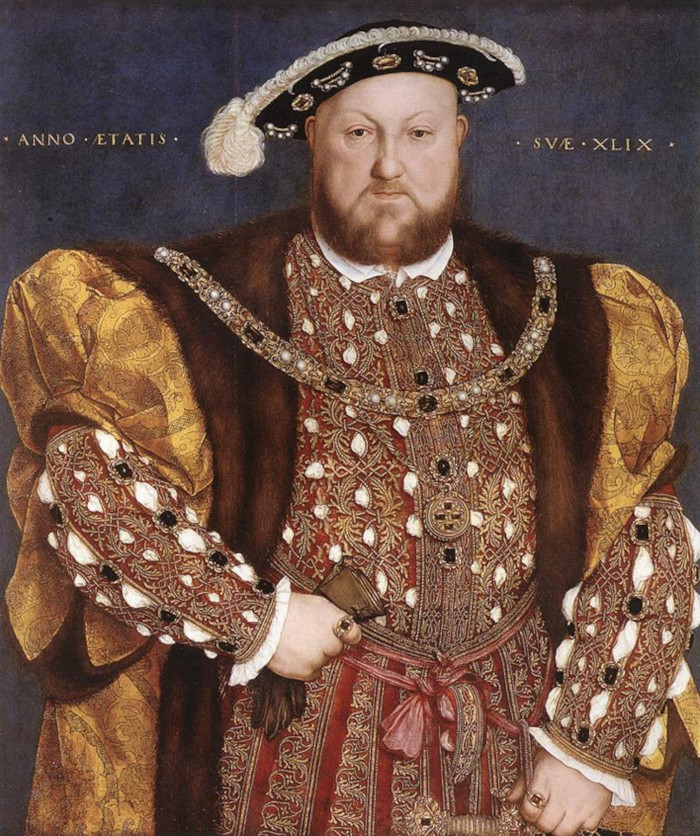
Portrait of Henry VIII, whose break with Rome set the dissolution of the Catholic Church in England in motion. (Hans Holbein the Younge /Public domain)
Why the manuscript became dangerous
By approximately 1409, Love finished his adaptation and translation of a Latin devotional text into the English language. It was initially an approved orthodox alternative to Bible translations associated with the Lollards, who challenged clerical authority and the Pope. The volume later had detrimental consequences for the author due to promoting Catholic views on the Eucharist and gathering information regarding confession and other sacramental rites that were disputed under the reign of Henry VIII.
According to the scholars, only about 65 copies of the book survived. There was also a printed version published by William Caxton in 1486, but it was withdrawn from publication soon after the Reformation started. As Ancient Origins has previously reported, books from the period can preserve evidence of a gradual and uneven religious transition.
- Secret Notes Found Hidden in a Bible Reveal Unexpected Details of the Reformation
- Why is Henry VIII’s Tomb So Small When His Life Was So Very Large?
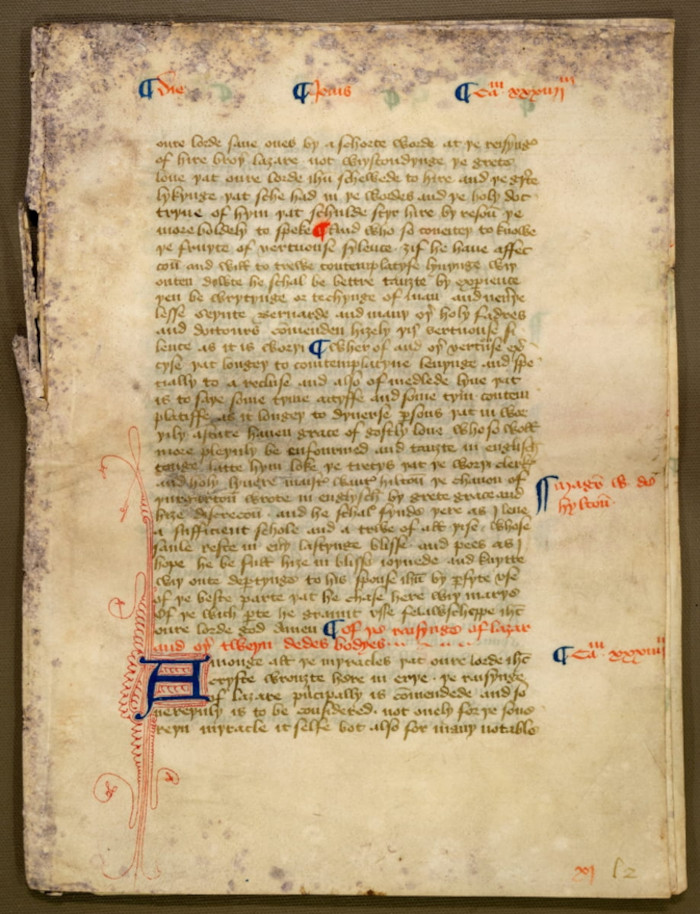
First page of The Keep fragment of Nicholas Love’s early 15th-century Mirror of the Blessed Life of Jesus Christ. It shows the beginning of Chapter 34, on the Raising of Lazarus. (Courtesy of The Trustees of the Firle Estate Settlement and the University of Sussex)
Gage’s divided loyalties
John Gage (1479–1556) was a prominent individual at the Tudor court and was responsible for overseeing the dissolution of monasteries in Surrey, Kent, and Sussex beginning in 1536. His work consisted of managing the inventory of monastic property and its disposal on behalf of the Crown. As a result, libraries were broken up and religious texts found their way into the hands of various officials, buyers, and collectors.
Gage's signature on the last page of Takamiya MS 20 appears with those of earlier owners, including the names of two religious women. Walter told the BBC that this may indicate that at some point the manuscript was kept in a monastic community. Wade believes that Gage either took it out of a monastic library or that it travelled through a wider informal network before reaching him.
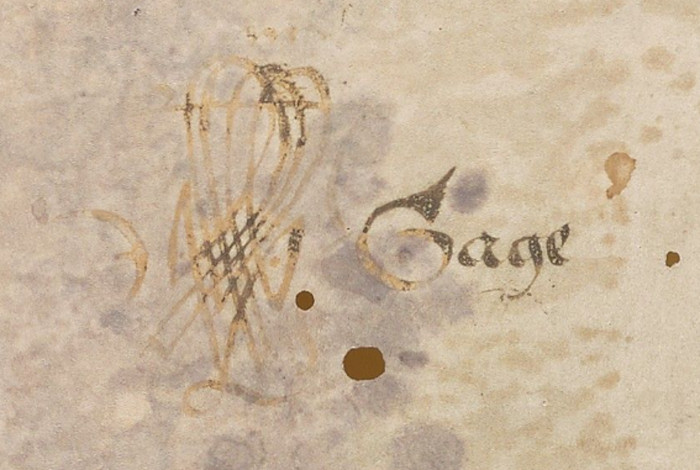
John Gage's signature in Takamiya MS 20. (Beinecke Rare Book and Manuscript Library, Yale University)
The evidence does not prove exactly how Gage acquired the book, but it does connect a royal dissolution official to the survival of a Catholic text. “The key thing is – he kept it safe when he was meant to destroy books precisely like this one,” Wade said in the Cambridge report.
The manuscript stayed with the Gage family in Sussex until the twentieth century. Its six pages became detached before a nineteenth-century rebinding, while the main volume was sold in 1976 and transferred to Yale in 2017. The fragment therefore completes more than a damaged book: it records the difficult choices made by people who navigated public conformity and private belief.
Top image: Dr Katie Walter and Dr James Wade in The Keep archive, Brighton, with the fragment of Nicholas Love’s early 15th-century Mirror of the Blessed Life of Jesus Christ. Credit: Courtesy of the University of Sussex
By Gary Manners
References
BBC News, S. 2026. Lost pages of book saved by Henry VIII aide found. Available at: https://www.bbc.com/news/articles/c38xk9w2geywo
Goyeau, R. 2024. How Henry VIII Accidentally Changed the Way We Write History. Available at: /news-history-archaeology/medieval-manuscript-loss-0021383
Walter, K. and Wade, J. 2026. Nicholas Love’s “Mirror of the Blessed Life of Jesus Christ: A missing fragment from Takamiya MS 20 in the holdings of The Keep.” Notes and Queries. Oxford University Press. Available at: https://doi.org/10.1093/notesj/gjag103
University of Cambridge. 2026. Henry VIII’s dissolution enforcer stashed a dangerous Catholic manuscript. Available at: https://www.cam.ac.uk/stories/henry-viii-dissolution-enforcer-stashed-catholic-manuscript