
A Body Marked by one Devastating Blow
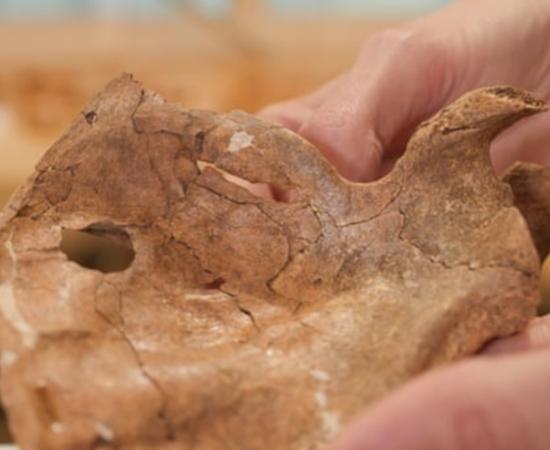
The discovery began in 1997, when excavations beneath the castle’s chapel uncovered nine burials. Jo Buckberry of the University of Bradford and Patrick Randolph-Quinney of Uppsala University re-examined all nine individuals, presenting the Skeleton 150 study at the 25th European Paleopathology Meeting in Berlin on 5 August 2026. The wider group was examined for trauma linked to the Scottish Wars of Independence.
Their analysis used radiography, microscopy and micro-CT scanning alongside conventional examination. Skeleton 150, a male, had more than 160 peri-mortem fractures running from the top of the cranium to the knees; the heaviest damage clustered around the right shoulder and the back of the skull. The pattern, the researchers say, is consistent with a single impact on a living person whose forearms were held in front of his body and whose weight was carried through his legs and feet.
- The Deadly Impact of Trebuchets and Longbows (Video)
- Catapult: The Long-Reaching History of a Prominent Medieval Siege Engine
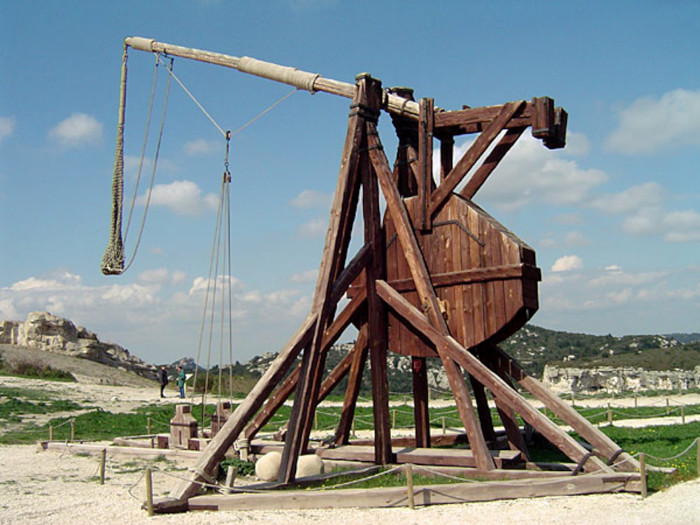
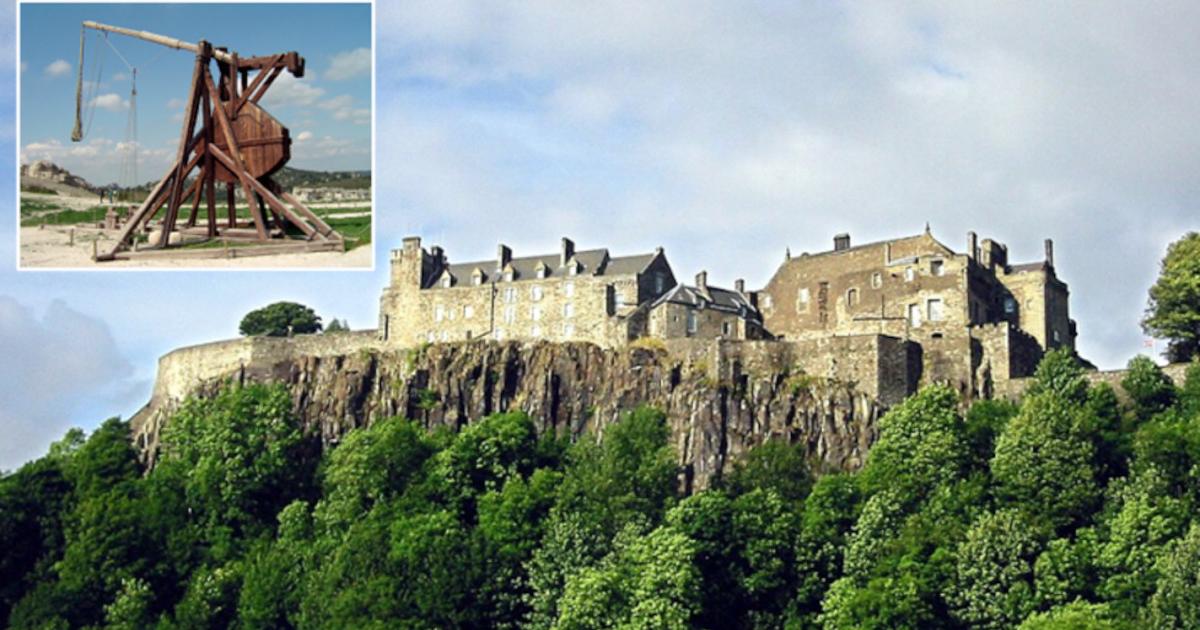
A reconstructed trebuchet at Château des Baux, France. (ChrisO / CC BY SA 3.0)
When Archaeology Looked Like a Car Crash
The injuries initially reminded Buckberry of modern victims of car crashes or train strikes. “It looks like he was hit from behind by something traveling at a great velocity,” she told Science, adding that the nearest comparisons she found were “car crashes and people hit by trains.” The study’s authors stress that the lack of directly comparable forensic cases remains a limitation, but the damage is difficult to explain through ordinary combat.
The fracture pattern also argues against a fall from the castle walls, trampling by horses or damage after burial. The conference abstract describes the trauma as entirely blunt-force and peri-mortem, meaning it occurred around the time of death. That distinction matters in bioarchaeology, where later breaks caused by soil pressure or excavation can otherwise be mistaken for evidence of violence—an issue also explored in Ancient Origins’ report on Skeletal Trauma Reveals Class Inequality in Medieval Cambridge.
- Rare Find of Stone Catapult Ball Fired During Medieval Siege Unearthed
- Trebuchet Dubbed ‘Britain’s Biggest Siege Machine’ Takes Aim
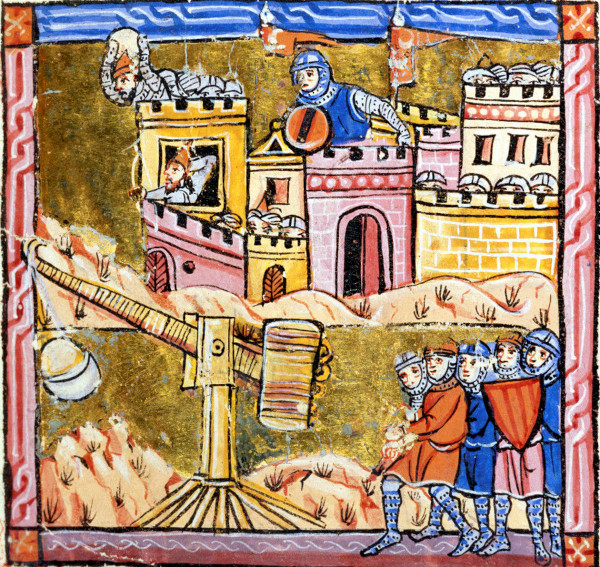
A medieval manuscript depiction of the Siege of Antioch, from Bibliothèque municipale de Lyon, Ms 828 f. 033 (Public Domain)
The War Wolf at Stirling
The historical setting supplies a remarkably close explanation. In 1304, Edward I’s English army besieged Stirling Castle, the final major Scottish stronghold still resisting his campaign. Historic Environment Scotland records that thirteen catapults and trebuchets bombarded the castle, while workers assembled the enormous counterweight engine later called the War Wolf.
The siege weapon reportedly launched a missile weighing about 140 kilograms and shattered the castle’s curtain wall. The researchers cannot identify the exact machine from bone evidence alone, but an English siege engine launching a stone into the castle is consistent with both the date and the direction of the injuries. The wider setting is also reflected in Ancient Origins’ account of the Most Important Road in Scottish History Found in Stirling, which discusses the strategic importance of the area during the 1304 siege.
A Cautious First in the Record
Buckberry and Randolph-Quinney describe Skeleton 150 as the first evidence of trebuchet trauma in the archaeological record, rather than claiming that every detail of his death can be reconstructed with certainty. Their conclusion rests on the unusual concentration, direction and timing of the fractures, combined with the documented use of siege engines at Stirling.
The find gives a physical example to a weapon usually encountered through chronicles and reconstructions. It also adds a grim human dimension to the history of medieval fortification, much as Ancient Origins’ coverage of Fractured Bones Tell Us About Disability and Care in the Middle Ages shows how bones can preserve experiences absent from written records.
Top image: Stirling Castle viewed from the King’s Knot, Scotland. Source: Finlay McWalter/CC BY-SA 3.0
References
Buckberry, J. and Randolph-Quinney, P. 2026. Skeleton 150 from Stirling Castle, Scotland: The First Evidence of Trebuchet Trauma in the Archaeological Record. 25th European Paleopathology Meeting, Deutsches Archäologisches Institut. Available at: https://cfp.dainst.org/25th-european-ppa-meeting/talk/GHF9V8/ and abstracts PDF
Curry, A. 2026. Shattered skeleton in Scottish castle is first confirmed death from trebuchet. Available at: https://www.science.org/content/article/shattered-skeleton-scottish-castle-first-confirmed-death-trebuchet
Macivor, J. 2024. The War Wolf at Stirling Castle. Historic Environment Scotland Blog. Available at: https://blog.historicenvironment.scot/2024/04/the-war-wolf-at-stirling-castle/
Solly, M. 2026. A Medieval Man’s Injuries Reminded One Archaeologist of Modern-Day Car Crash Victims. They Turned Out to Be the Work of an English Trebuchet. Available at: https://www.smithsonianmag.com/smart-news/a-medieval-mans-injuries-reminded-one-archaeologist-of-modern-day-car-crash-victims-they-turned-out-to-be-the-work-of-an-english-trebuchet-180989346/