
For many years, researchers supported the Toba catastrophe hypothesis, which proposed that the eruption caused a volcanic winter lasting up to six years. According to this view, the environmental collapse pushed the global human population down to fewer than 10,000 individuals, creating a severe genetic bottleneck. However, recent archaeological discoveries are challenging this narrative, revealing a story of incredible human resilience and adaptability.
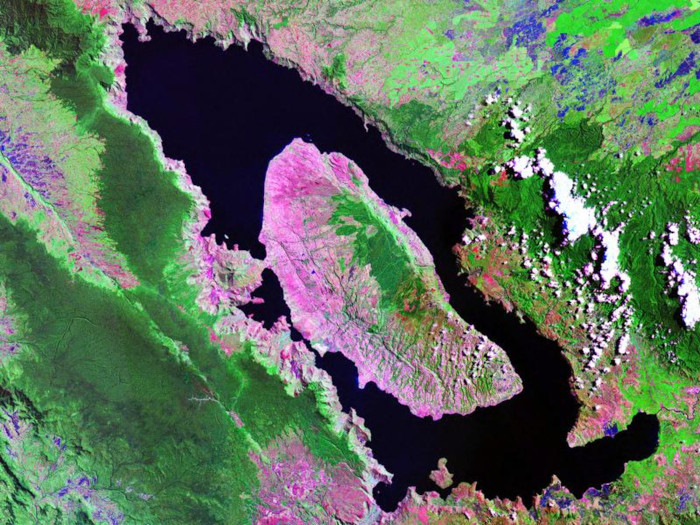
Aerial satellite view of the Toba caldera in Sumatra, Indonesia, site of the most powerful volcanic eruption in the last 2.5 million years. (NASA Landsat/Public Domain)
Microscopic Clues to Ancient Survival
To understand how our ancestors weathered this storm, scientists have turned to cryptotephra - microscopic shards of volcanic glass that travel vast distances during an eruption. These tiny fragments, invisible to the naked eye, carry distinct chemical signatures that allow researchers to trace them directly back to the Toba supervolcano. By sifting through dirt samples at ancient sites, archaeologists can pinpoint exactly when the eruption occurred in relation to human occupation. Finding Toba ash is just the first step; scientists then compare evidence of human activity from before and after the disaster.
- Volcanic Super-Eruption Didn't Scare Away Humans 74,000 Years Ago
- Ancient Humans Survived the Last Ice Age Without Migrating
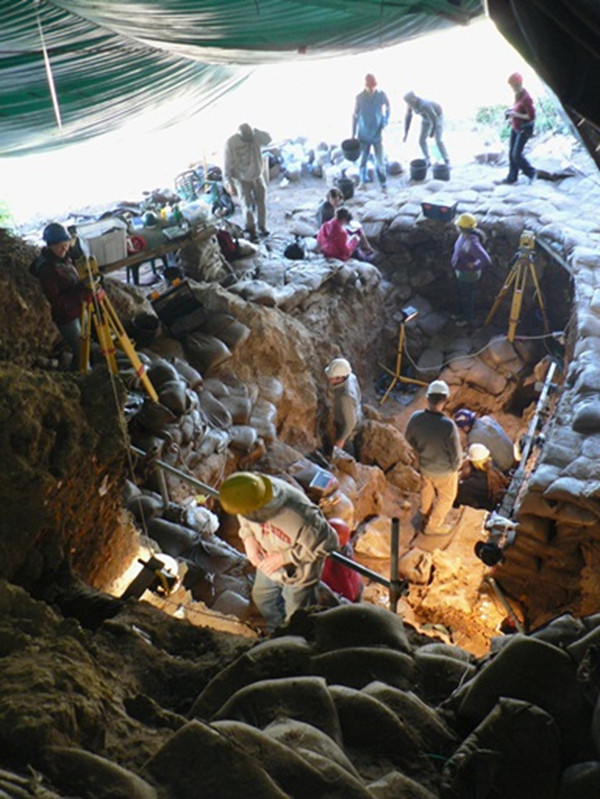
Excavations taking place at Pinnacle Point, South Africa, where evidence of continuous human occupation before, during, and after the Toba eruption was found (Andrew Hall/CC BY-SA 3.0)
Thriving in the Face of Catastrophe
The findings from these investigations have been astounding. At Pinnacle Point 5-6 in South Africa, researchers discovered Toba cryptotephra in layers that showed continuous human occupation before, during, and after the eruption. Human activity at this site actually increased following the disaster, accompanied by new technological innovations — a sign not of collapse, but of adaptation.
This resilience was not isolated. At the Shinfa-Metema 1 site in the lowlands of Ethiopia, similar evidence emerged. Past humans adapted to harsh arid conditions by following seasonal rivers and fishing in shallow waterholes during long dry periods. Around the same time, humans in the region adopted bow-and-arrow technology, demonstrating a behavioral flexibility that proved crucial for survival.
- Genetic Study Reveals Hidden Chapter in Story of Human Evolution
- Human Mastery Over Extreme Environments: A Tipping Point 70,000 Years Ago
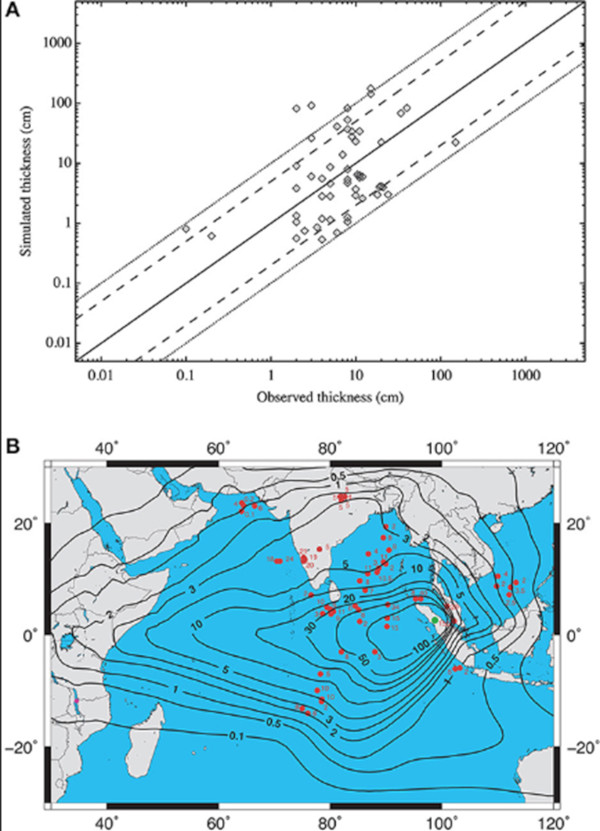
Map showing the dispersal of volcanic ash from the Toba supereruption across the Indian Ocean region and beyond (Victoria Christina Smith et al./CC BY 4.0)
A New Understanding of Human Resilience
Comparable evidence has also emerged from sites in Indonesia, India, and China, painting a picture of a species far more adaptable than previously thought. Many scientists now believe that humans were able to survive and remain productive after the Toba supervolcano erupted, and that the eruption may not have been the primary cause of the population bottleneck identified in modern human DNA.
While the disaster undoubtedly caused immense suffering, it also forced early humans to innovate. The story of the Toba supereruption is no longer just a tale of near-extinction; it is a testament to the ingenuity and toughness of Homo sapiens. By studying how ancient people responded to catastrophic events, scientists are gaining valuable insights into the survival strategies that allowed our species to endure — and the lesson for today is clear: human adaptability has always been our greatest strength.
Top image: A volcano erupting. Source: AI generated
By Gary Manners
References
Hirniak, J. N. 2025. A massive eruption 74,000 years ago affected the whole planet – archaeologists use volcanic glass to figure out how people survived. The Conversation. Available at: https://theconversation.com/a-massive-eruption-74-000-years-ago-affected-the-whole-planet-archaeologists-use-volcanic-glass-to-figure-out-how-people-survived-254782
The Conversation. 2026. A supervolcano nearly wiped out humanity 74,000 years ago, but humans did something incredible. ScienceDaily. Available at: https://www.sciencedaily.com/releases/2026/05/260510234711.htm