
In the dry environments of southern Peru, researchers found mummified dogs that had been buried with care alongside normal homes over 1,100 years ago. These mummified dogs provide a rare opportunity to understand how ancient dogs lived and what their relationship with humans was. The findings indicate that centuries before dogs had been treated as status symbols in Andean culture, they were also treated as beloved family members. The discovery provides evidence that challenges earlier views as to how dogs were regarded in ancient Tiwanaku society, and demonstrates that there was a strong emotional bond between humans and their pets.
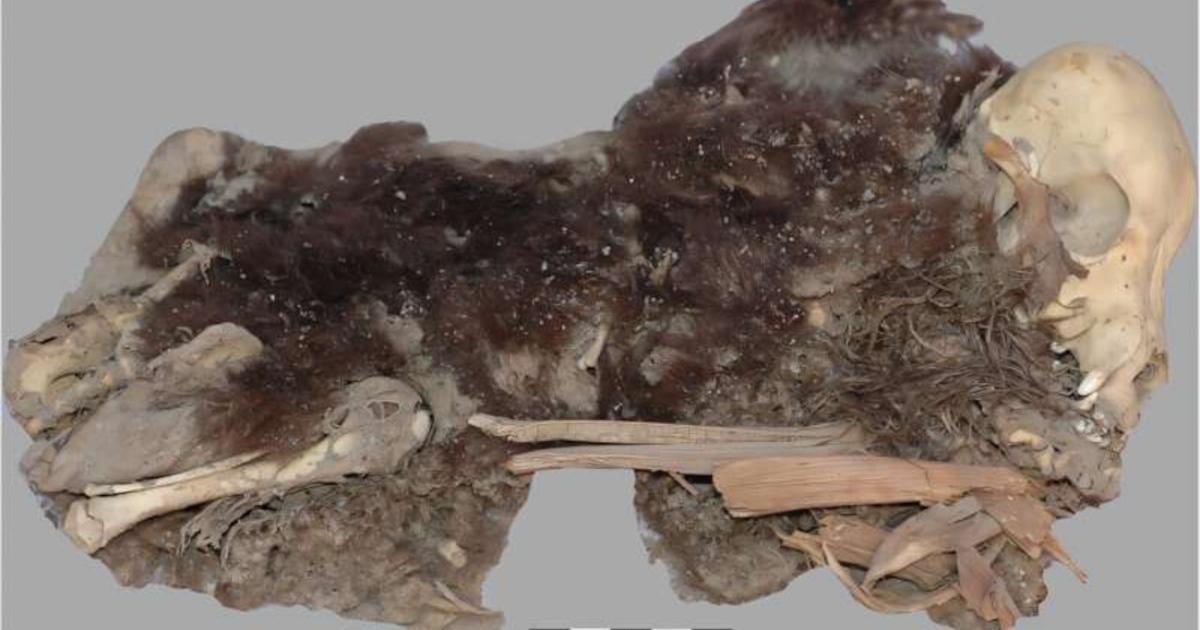
The mummified dogs, found at the Rio Muerto and Omo archaeological sites in the Moquegua Valley region of Peru, consist of a brown-and-white female dog that was less than one year old, and a puppy that was less than three months old. The older dog was interred in a small pit, lying on a woven mat and presented in what appeared to be a sleeping position, possibly with twine wrapped around it. This type of burial shows a level of respect for and love towards animals that is rarely seen in the archaeological record.
"Everyday people living in a Tiwanaku colony had companion animals and treated them with care after death," said Susan deFrance, an archaeologist at the University of Florida and lead author of the study published in the journal Latin American Antiquity.
- Archaeologists discover more than 100 dog skeletons dating back 1,000 years
- Ritual and Burial: The Strange and Elaborate Ways Humans Prepared Animals for the Afterlife
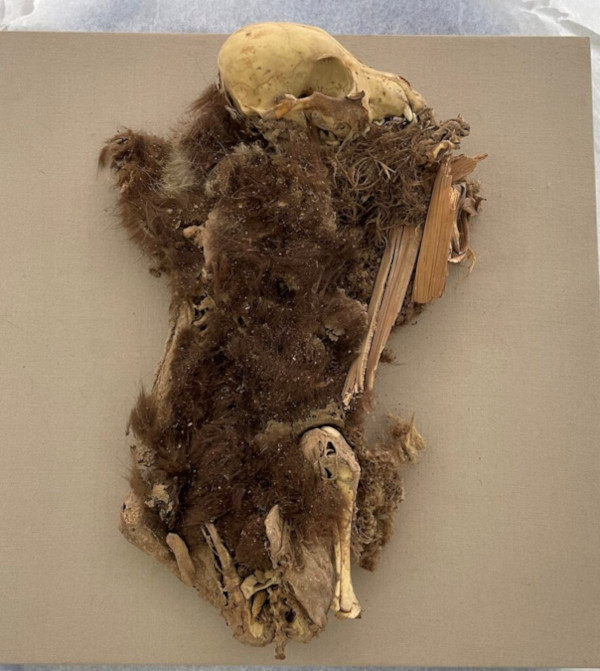
Mummified remains of a female dog from Rio Muerto, Peru. (Susan deFrance et al. / Latin American Antiquity)
Isotopic Clues to Ancient Canine Lives
To understand the lives of these ancient dogs, researchers turned to isotopic analysis, reading the elemental fingerprints left behind in their bones, teeth, and surviving fur. Unlike many dog remains found at Tiwanaku sites, which are often mixed with fox bones and difficult to identify, the preservation of fur on these mummies confirmed their identity and provided crucial data. The strontium isotopic analysis revealed that both dogs were locals, having spent their entire short lives in the Moquegua Valley, unlike the pack llamas that frequently traveled through the region.
The dietary analysis provided further insights into their daily lives. The Rio Muerto dog consumed a mixed diet of plants and meat that closely mirrored the diet of her human neighbors. This overlap suggests she was either fed directly or allowed to scavenge scraps and leftovers, implying she shared the same living spaces as the people. "The people living at Rio Muerto did not have a trash dump in the same way that we think of garbage," deFrance noted, emphasizing that the dog's access to human food indicates a close domestic relationship. The Omo puppy, on the other hand, consumed a diet richer in meat, suggesting it may have scavenged further afield.
- Do All Dogs Go To Heaven? Pet Cemeteries and Belief in an Animal Afterlife
- Young Girl and 142 Dogs Found Buried Together in Elite Egyptian Tomb
Companions Before Status Symbols
The importance of these burials lies firstly in their circumstances and locations. Evidence indicates that, in later Andean cultures, like the Moche and Inca, dogs were often buried in high-status tombs or cemeteries as protectors or guides for the deceased in the afterlife, thus serving as symbols of high social status. Conversely, Tiwanaku dogs were buried at or near "normal" homes. This intermediate placement provides evidence of the evolving valuation of dogs by showing that before they were seen as elite social status, they were valued by average people as very close, almost family-level companions.
While it may also be possible that these dogs were sacrificed as part of ceremonies, the manner in which the dogs were buried indicates there keeper had a bond of affection with them. According to the study, "people valued Tiwanaku dogs both as sacrifices who guarded sacred sites and also as close domestic companions worthy of a caring burial in the home." This duality of function supports the complexity and multiplicity of the role that animals played in ancient societies, fulfilling both practical and emotional needs.
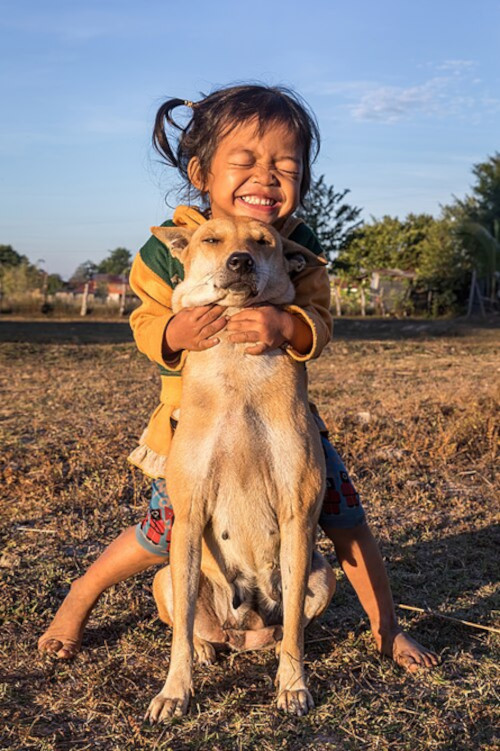
Human–canine friendship - girl hugging her dog tightly in Laos. (Basile Morin/CC BY-SA 4.0)
A Universal Human-Animal Bond
The mummified puppies that were discovered, provide evidence of the strong emotional attachment that exists between people and pets over a large period of time. It provides tangible evidence that the emotional attachment we feel for our pets today is not a modern phenomenon but a deeply rooted aspect of human history. The care and mourning evident in these burials suggest that the ancient Tiwanaku people experienced "companionship, pleasure, joy, emotional attachment, and a sense of loss following death," feelings that resonate universally with dog owners today.
As archaeologists continue to uncover the mysteries of the Tiwanaku civilization and its expansive influence across the ancient Andes, these small, carefully buried dogs serve as a poignant reminder of the everyday lives and emotions of the people who built it. They bridge the gap between the monumental architecture of ancient empires and the intimate, personal connections forged in ordinary homes.
Top image: Mummified remains of a female dog from Rio Muerto, Peru. Source: Susan deFrance et al. / Latin American Antiquity
By Gary Manners
References
deFrance, S. D., Wylde, M., Goldstein, P. S., Lofaro, E., Krigbaum, J. S., & Thornton, E. K. 2026. Dogs in Tiwanaku Society: Life Histories of Companion Animals from the Moquegua Valley, Peru. Latin American Antiquity. Cambridge University Press. Available at: https://www.cambridge.org/core/journals/latin-american-antiquity/article/dogs-in-tiwanaku-society-life-histories-of-companion-animals-from-the-moquegua-valley-peru/9B8FF960B7FDC477F65BBCD1135BA545
Oster, S. 2026. Mummified dogs reveal Tiwanaku people buried companions beside homes long before they became status symbols. Phys.org. Available at: https://phys.org/news/2026-06-mummified-dogs-reveal-tiwanaku-people.html
Archaeology Magazine. 2026. 1,100-Year-Old Mummified Dogs from Peru Analyzed. Archaeology Magazine. Available at: https://archaeology.org/news/2026/07/01/1100-year-old-mummified-dogs-from-peru-analyzed/
Anthropology.net. 2026. Two Mummified Dogs from a Tiwanaku Colony Reveal Ordinary People Burying Their Companions at Home. Anthropology.net. Available at: https://www.anthropology.net/p/two-mummified-dogs-from-a-tiwanaku