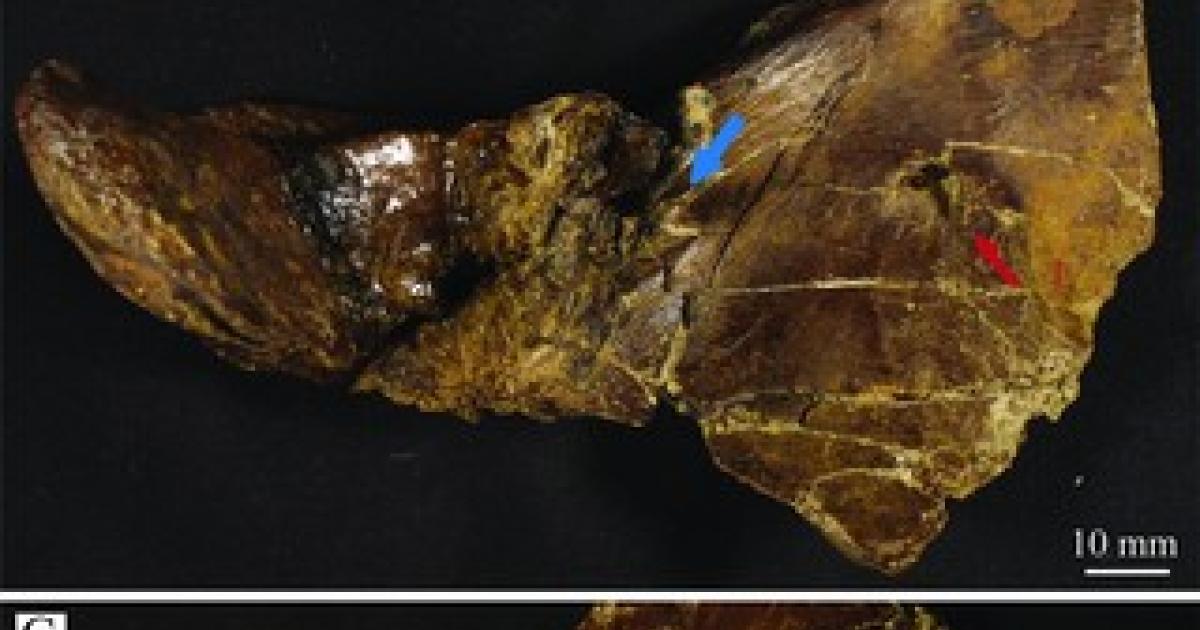

A collection of fossilized dinosaur bones recently discovered in Wyoming features tooth marks that provide evidence that the Tyrannosaurus Rex most likely did some biting. A collection of fossilized dinosaur bones from Wyoming features tooth marks that provide evidence that some bites were likely created by Tyrannosaurus rex.
According to a study in the open-access journal PLOS ONE, Bethania C. T. Siviero from Loma Linda University, USA, and colleagues maintain that tooth marks found on these fossilized bones offer scientists unique insights into ecosystems and animal behavior from millions of years ago. This study describes and identifies several types of punctures, holes, and other marks on fossils that resemble tooth marks. These researchers also developed a guide, based on previously published research and their new findings, to better identify tooth traces on fossils. The research team examined over 3,000 bones from northeastern Wyoming dating to the late Cretaceous, about 72-66 million years ago. Most of the bones were actually from a specific dinosaur known as Edmontosaurus annectens, a large, duck-billed herbivorous dinosaur.
- New Species of Multi-Horned Dinosaur from 78 Million BC Found in Montana
- Pulverized Rock Dust Killed the Dinosaurs, New Study Says
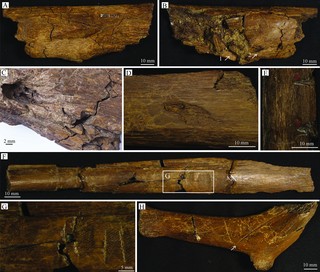
Multiple views of an Edmontosaurus annectens fossil bone from Wyoming showing grooves, punctures, and other feeding traces analyzed as probable Tyrannosaurus rex tooth marks. (PLOS ONE, Bethania C. T. Siviero/CC BY 4.0)
The Signature Bite of a Late Cretaceous Scavenger
Just 13 of the bones had tooth traces. Four of those bones had tooth mark patterns that identified them as distinct from the other eight finds. These patterns were categorized on the spacing of serration marks, and so the researchers know that they come from the T. rex. Contemporaneous carnivores, including other dinosaurs and crocodilians, may have created some of the other tooth traces. Most of the bones with tooth marks show no evidence that these distinct marks are significant, meaning that the marks were most likely made after the animal’s death. Their carcasses may have been exposed to the elements and scavenged before eventually being buried and fossilized.
- Tyrannosaurus Rex Was Born in the USA, 67 Million Years Ago, Study Finds
- It's The Pits! 2.2 Million Year Old African Tooth Fossils Shed Light on Human Family Tree
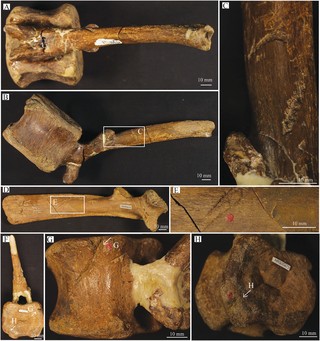
Composite photographs of an Edmontosaurus annectens limb bone from Wyoming showing punctures, grooves, fractures, and other feeding traces interpreted as bite marks left by Tyrannosaurus rex. (PLOS ONE, Bethania C. T. Siviero/CC BY 4.0)
Conclusion
Tooth marks on fossils often look like punctures or furrows, but similar, distinctive marks can also form on bones for a host of reasons, such as joint disease or erosion after the animal had already died. If researchers want to study prehistoric ecology and animal behavior using certain bite marks, they also need to ensure that these are true bite marks. By laying out a specific criterion for identifying tooth marks on fossil bones, this study helps to hone a vital paleontological research tool. Distinguishing between these different types of bone modifications is essential, as they can provide very useful information about an animal’s condition before death, as well as the process that affected its remains after death.
Top Image: Multiple views of specimen HRS0549, an Edmontosaurus annectens neural spine from Wyoming, showing tooth traces interpreted as feeding damage inflicted by Tyrannosaurus rex. Source: PLOS ONE, Bethania C. T. Siviero/CC BY 4.0
By Ramsey Hardin
References
PLOS. "T. rex Was Likely Responsible for Some Tooth Marks on Fossil Bones from Cretaceous-Era Wyoming." EurekAlert!, July 15, 2026.https://www.eurekalert.org/news-releases/1135306
Scott, Anastasia. "T. Rex Tooth Marks Emerged From a Wyoming Bonebed of 3,000 Fossils, Along With One Deceptive Bite." Discover Magazine, July 2026.https://www.discovermagazine.com/t-rex-tooth-marks-emerged-from-a-wyoming-bonebed-of-3-000-fossils-along-with-one-deceptive-bite-49383
Siviero, Bethania C. T., Elizabeth Rega, Matthew A. McLain, Leonard R. Brand, David Nelsen, and Art V. Chadwick. "Identification of Tooth Traces from a Cretaceous (Maastrichtian) Edmontosaurus annectens Bonebed in the Lance Formation, Wyoming, U.S.A." PLOS ONE 21, no. 7 (2026): e0351939. https://doi.org/10.1371/journal.pone.0351939
Wu, Katherine J. "A T. rex Bit a Duck-Billed Dino and We Can Still See the Teeth Marks 66 Million Years Later." Popular Science, July 2026.https://www.popsci.com/science/t-rex-teeth-marks-dinosour-bones/