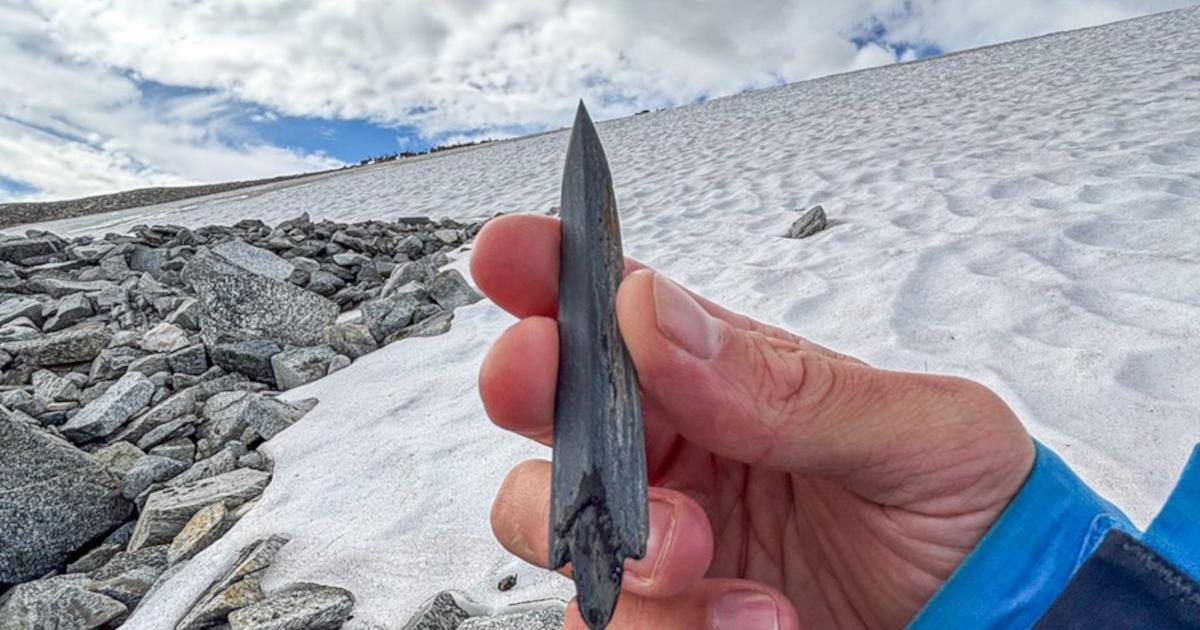

After three weeks in the mountains, the Secrets of the Ice team has announced that 48 prehistoric arrows like the beauty pictured have been revealed in Norway’s Jotunheimen mountains due to melting ice. The arrow shown, having a slate tip and a wooden shaft, is estimated to be 5,000–6,000 years old. However, the broader narrative is one of the loss of the ice that has preserved them over all these millennia.
The Oldest Ice Yields the Oldest Finds
After spending three weeks in the mountains, the team has announced substantial destruction at Langfonne, Storefonne, and Hanklefonne. Very different findings have been revealed compared to earlier in the project, as most of the artifacts disclosed at that time belonged to less than 2,000 years ago, while now many artifacts belong to the Stone Age and the Bronze Age, according to the Museum of Cultural History. The project says its oldest known objects exceed 6,000 years in age, though not every arrow found this year is that old. Earlier arrowheads around Kvitingskjølen hinted at this deeper history.
- Rapidly Melting Norwegian Ice Exposes Land Littered with Ancient Arrows
- Curious Mussel Shell Arrowheads in Norway’s Mountains Confound Archaeologists
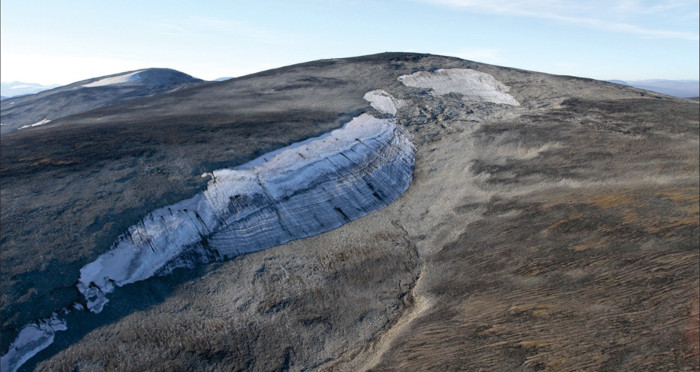
Langfonne ice patch, where earlier investigations recovered 68 arrows. (Lars Holger Pilø / Innlandet County Council / CC BY 4.0)
Langfonne’s Stone Age arrows belong to a much longer hunting record. In a 2020 account of the site, archaeologist Lars Holger Pilø described 68 recovered arrows, the earliest around 6,000 years old. Wood, hide and sinew can survive in cold conditions where they would usually decay; previous finds of Iron and Bronze Age objects show how much detail the mountains can preserve. The 48 new arrows, too, record millennia rather than one hunt.
- 1300-Year-Old 'Perfect' Arrow Found in Norway Ice Patch
- Reindeer Hunting Relics Found On Ancient Mountain Trail in Norway

Rear section of an arrow shaft reinforced with animal sinew and birch bark around the nock. Approximately 3,600 years old. (Frys film, Innlandet County Municipality, Secrets of The Ice)
A Record of Hunting, Not Just Arrowheads
In summer ice fields, reindeer sought respite from insects, which brought hunters into the mountains. The open-access review by Pilø details how arrows could retain the arrowhead, bindings, wooden shaft, and feather fletching. There was also evidence that hunting was highly organized, as another Norwegian find uncovered a large reindeer trapping system. Arrows reveal a little more than these systems: they provide insight about the materials the hunter carried.
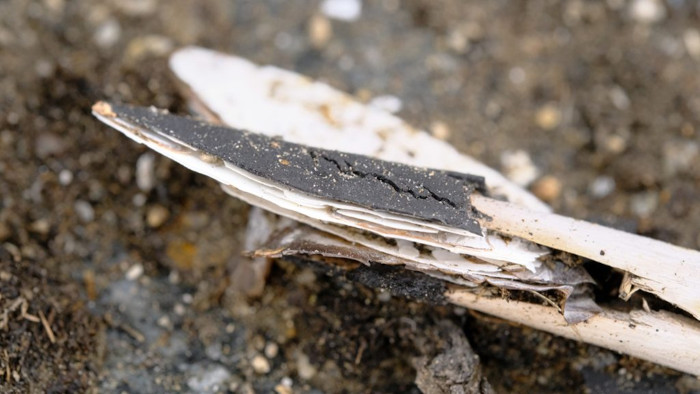
Arrowhead made from freshwater mussel shell. The 3,600 years old arrowhead is fragile and has begun to split. (Frys film, Innlandet County Municipality, Secrets of The Ice)
The museum has picked out items from this season, including a roughly 5,000-year-old bone point and an arrow from the Bronze Age over 3,600 years old with a tip made from freshwater mussel shell. Another shaft with a nock strengthened with sinew and birch bark has survived because ice has preserved the material the shaft is made of, though it is still unclear whether it can help determine where it was fired. A previous study by Pilø at Langfonne indicates that the shot arrows might have changed their place because of moving water and ice.
The Race to Preserve What Emerges
Stone Age arrows is only a piece of the whole story because the program has recorded 73 ice locations and obtained more than 5,000 various artifacts since 2006, including clothes and elements for traveling. Melted ice also revealed a lost mountain path and an ancient horse harness. Secrets of the Ice informs that many archaeological ice patches will be gone in 20 years; however, this period is a prediction the team makes, not a deadline for all locations. Once exposed, fragile wooden objects can deteriorate quickly in the open air.
For now, fieldwork and conservation activities are running hand in hand. Several finds have found their places in a refrigerated display at the Norwegian Mountain Centre located in Lom, where guests can view artifacts retrieved soon after their discovery. The team intends to do additional work before the winter season as Stone Age arrow indicates a hunting story at the point when the ice covering has retreated.
Top image: Slate arrowhead. Approximately 5,000 years old. Reindeer (domesticated reindeer) can be seen on the ice patch in the background. Source: Åsa Rommetveit Celius, Innlandet County Municipality, Secrets of The Ice
By Gary Manners
References
Finstad, E. 23 September 2026. Year of the Arrows – Now the Stone Age Is Melting Out. Available at: https://secretsoftheice.com/news/2026/09/23/year-of-the-arrows-now-the-stone-age-is-melting-out/
Museum of Cultural History. 23 September 2026. Year of the arrows – Now the Stone Age is melting out. Available at: https://www.khm.uio.no/english/news/year-of-the-arrows.html
Pilø, L. 25 November 2020. Prehistoric Arrow Bonanza at Langfonne. Available at: https://secretsoftheice.com/news/2020/11/25/prehistoric-arrow-bonanza/
Pilø, L. 21 January 2026. The archaeology of glaciers and ice patches: The intersection of climate change, glacier retreat and cultural heritage. Annals of Glaciology. Available at: https://www.cambridge.org/core/journals/annals-of-glaciology/article/archaeology-of-glaciers-and-ice-patches-the-intersection-of-climate-change-glacier-retreat-and-cultural-heritage/CA12E07940A446A909FEC220E289B331