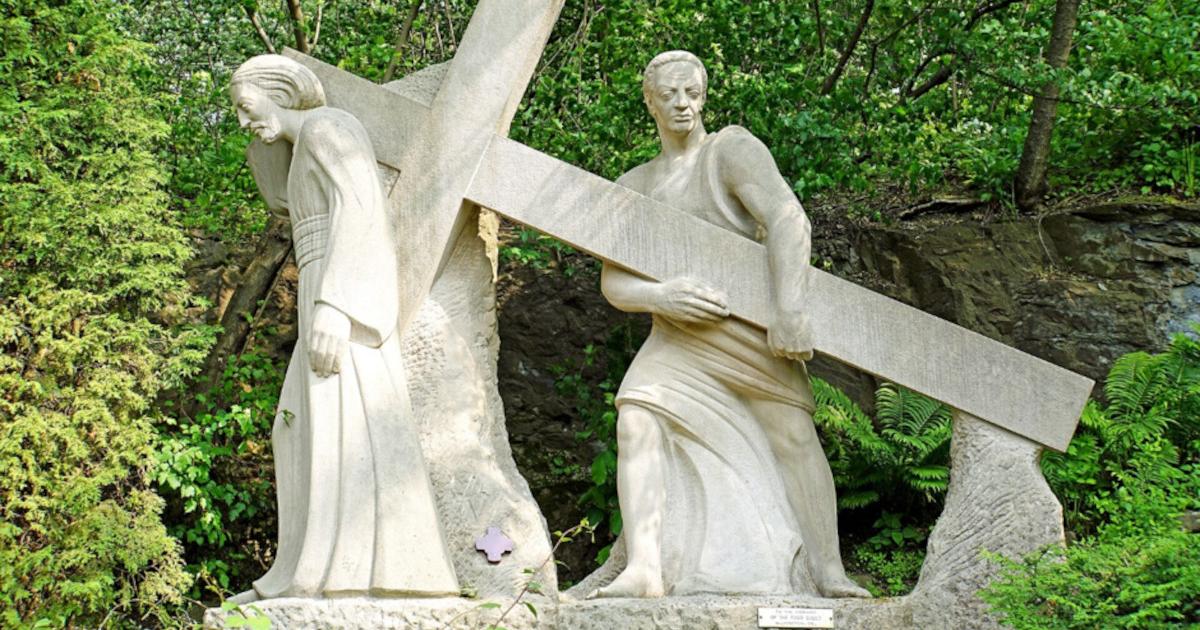

A 2,000-year-old limestone bone box found in a Jerusalem tomb may carry the name of the son of the man who helped Jesus carry his cross, according to a New Testament scholar who has revisited its long-debated inscription. The ossuary, found in a rock-cut family tomb in the Kidron Valley in 1941, is scratched in Greek with the words "Alexander, son of Simon" — the same father-and-son pairing recorded in the Gospel of Mark. Dr Jeremiah Johnston, author of The Jesus Discoveries, now believes the evidence tips towards a genuine link.
The case was set out in a report by the Daily Mail, which spoke to Johnston about the clues he says point to a real connection:
"So we have a Simon, a son named Alexander, and a Cyrenian family, buried in Jerusalem in the right period, before 70 AD," he said. "Is it the same family? I think it is very plausible, if not likely."
Mark 15:21 records that Simon of Cyrene was passing by on his way in from the country when Roman soldiers pressed him into carrying the crossbeam behind Jesus. The evangelist names Simon's sons, Alexander and Rufus, as though his first readers would have known them. It is the kind of small, checkable detail that early Christianity left scattered across the region's archaeology.
- The Ossuary of James: Alleged Bone Box of Jesus' Brother on Display in US
- Ossuary of James the Just: The First Archaeological Evidence of the Existence of Jesus of Nazareth?
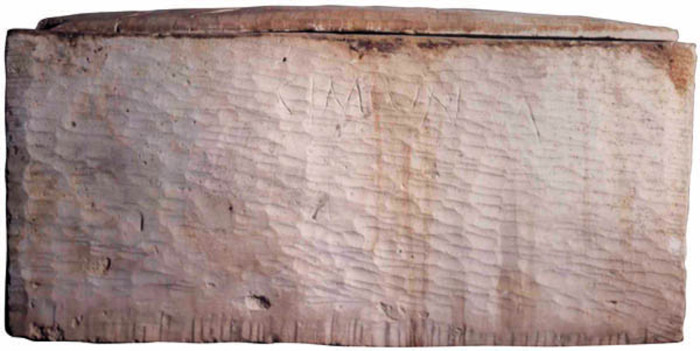
Ossuary inscription that reads ‘Alexander (son) of Simon’, argued to be referring to Simon of Cyrene, who helped carry Jesus’ cross. (BAS Library)
A Tomb Sealed for Two Thousand Years
The cave was opened on 10 November 1941, just south-east of Jerusalem's Old City. It was excavated by Eleazar Sukenik, founder of Hebrew University's archaeology department, and his assistant Nahman Avigad; the entrance was still sealed and unlooted. Eleven ossuaries were recovered, nine of them inscribed in Greek, Hebrew and Aramaic, recording a family archaeologists identified as Jews from Cyrene in North Africa.
Pottery from inside the tomb, including a distinctive Herodian oil lamp, dated its final use to the first century AD, before Roman legions destroyed the city in 70 AD. Avigad published the full excavation report in the Israel Exploration Journal in 1962. He remained doubtful, however, that the box could be tied to the Simon of Cyrene of the gospels.
- New Crucifixion Evidence Sheds Light on the Death of Jesus Christ
- More Hope and Controversy Over Crucifixion Nails Linked to Jesus
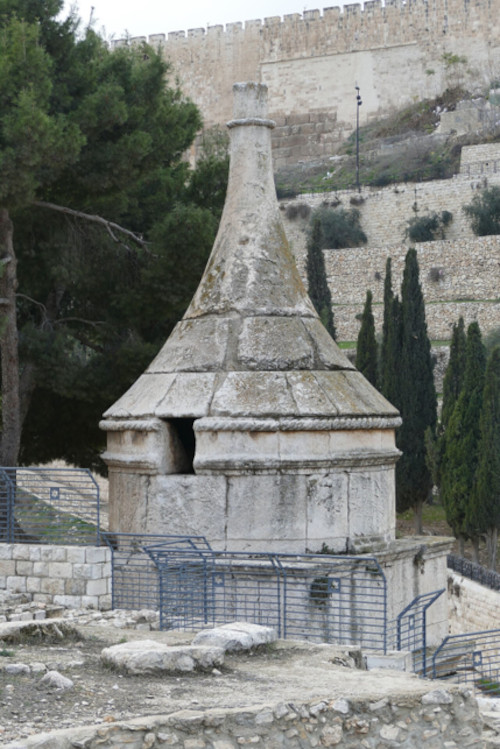
A rock-cut tomb in the Kidron Valley, beneath the walls of Jerusalem's Old City, where the inscribed ossuaries were found in 1941. (Bukvoed/CC BY 4.0)
Reading the Names on the Bone Box
The chest carries three inscriptions, on its front, back and lid, with the names Alexander and Simon appearing more than once. Writing in Biblical Archaeology Review in 2003, contributor Tom Powers described what looks like an engraver's mistake: the writer began adding Alexander's name beside Simon's before starting again on the lines below. The lid is bilingual, its Greek lettering translating as "of Alexander" while the Hebrew letters QRNYT have been read as a reference to Cyrene.
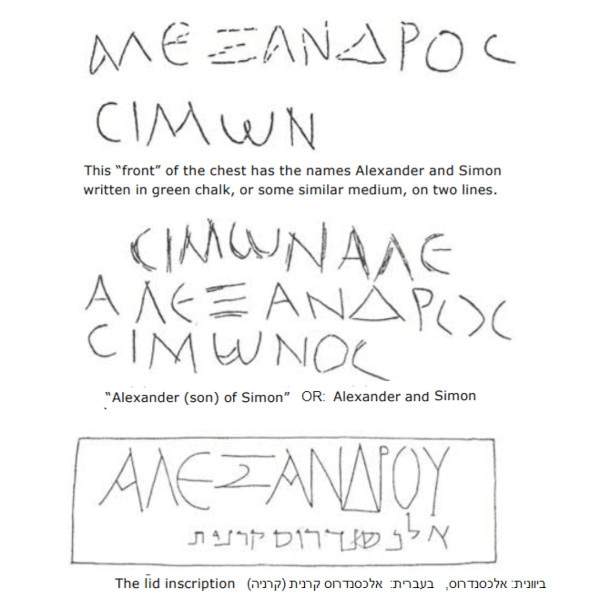
The inscriptions with some translations. (Biblical Archaeology Institute)
Powers reported that Tal Ilan, an Israeli historian who specialises in ancient Jewish names, considered it "very likely" that the box belonged to the Alexander named in Mark's Gospel. In a later study he argued that differences in the depth of the carving showed Simon's name was cut first, with Alexander's added afterwards. That, he suggested, may point to the chest being reused for a second burial.
Why the Identification Remains Unproven
Johnston is the first to urge caution. "Simon was the most common Jewish name of the time, and Alexander was popular too," he told the Daily Mail. The tomb also held no bone box for Alexander's brother Rufus, although Paul greets a Rufus among the Christians at Rome, suggesting the younger son lived on elsewhere.
Powers's suggestion that the chest once held both father and son has been disputed, and the excavation report never recorded how many people the box contained. What is not in doubt, Johnston argues, is the way Mark writes. "He is pointing to living witnesses who could confirm the story," he said. "Ancient legends don't work that way. Eyewitness history does."
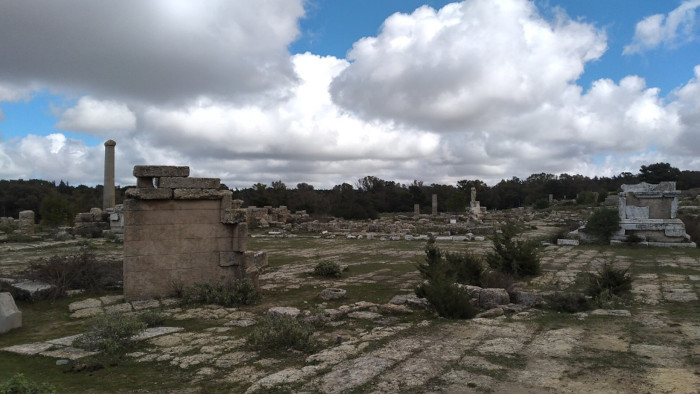
The ruins of ancient Cyrene in eastern Libya, a Greek colony whose Jewish community produced the Simon of the gospels. (Mohamed Benismail/CC BY 4.0)
A Cyrenian Family in Jerusalem
Cyrene, near modern Shahhat in eastern Libya, was a wealthy Greek city with a large Jewish population, and Cyrenian Jews had their own synagogue in Jerusalem, as Acts records. The tomb's other names, among them Sara, Isaac, Philiskos and Thaliarchos, point to one extended diaspora family. Pilgrims came in their thousands for the festivals at the Second Temple, and Simon's relatives were likely among them.
For now the ossuary stays in storage rather than on public display, a limestone box at the centre of a question archaeology may never settle. The tomb of Jesus at the Church of the Holy Sepulchre is a comparable case: reverenced for centuries, yet still a matter of faith rather than proof. What the chest does show is that the names, the family and the city in Mark's account all fit real people in real places.
Top image: Fifth Station sculpture of Simon of Cyrene helping Jesus carry the cross. Source: Dennis G. Jarvis/CC BY-SA 2.0
By Gary Manners
References
Avigad, N. 1962. A Depository of Inscribed Ossuaries in the Kidron Valley. Israel Exploration Journal 12(1). Available at: https://www.jstor.org/stable/27924877
Liberatore, S. 2026. Inscription on ancient tomb chest sheds new light on man who helped carry Jesus' cross. Daily Mail. Available at: https://www.dailymail.com/sciencetech/article-16178951/jesus-crucifixion-engraving-ossuary-jerusalem.html
Powers, T. 2003. Treasures in the Storeroom: Family Tomb of Simon of Cyrene. Biblical Archaeology Review. Available at: https://library.biblicalarchaeology.org/article/treasures-in-the-storeroom/
Tabor, J. 2021. Has Simon of Cyrene's Ossuary Been Found–and Largely Forgotten? Available at: https://jamestabor.com/has-simon-of-cyrenes-ossuary-been-found-and-largely-forgotten/
Whyte, D. III. 2026. Inscription on Ancient Tomb Chest Sheds New Light on the "Black Man" of Cyrene Who Helped Carry the Cross of Jesus Christ. Black Christian News. Available at: https://blackchristiannews.com/inscription-on-ancient-tomb-chest-sheds-new-light-on-the-black-man-of-cyrene-who-helped-carry-the-cross-of-jesus-christ/