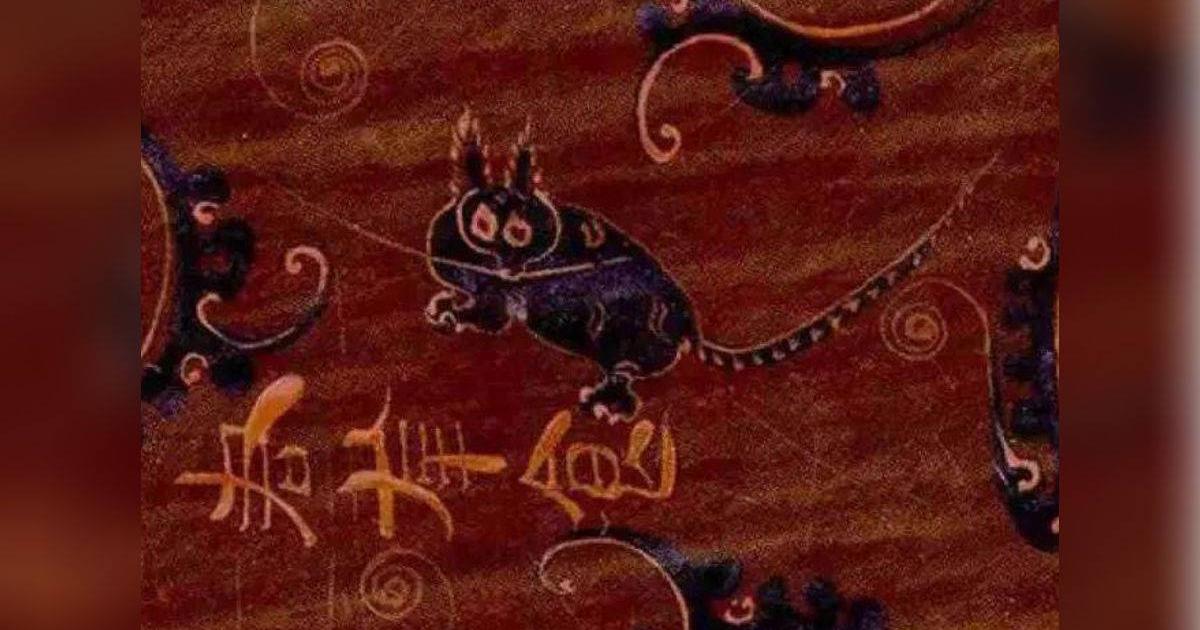

China's first pet cats arrived in the country sometime around the year 600 AD, and it seems they arrived via the famous Silk Road trade route that connected Europe and western Asia with China and all parts in between. Amazingly, this was determined through the study of ancient feline DNA, which revealed the truth about the domestic cat’s long road to the farthest reaches of Asia.
This finding is significant, because it proves that domesticated felines suitable for human companionship reached Asia at a relatively late stage, in comparison to domesticated cattle, sheep, goats and horses, which first appeared in China’s archaeological record between 3,000 and 1,200 BC.
"Cats were initially regarded as prized, exotic pets," study co-author Shu-Jin Luo, a principal investigator at the Laboratory of Genomic Diversity and Evolution at Peking University in China, told Live Science. "Cats' mysterious behaviors, alternating between distant and affectionate, added an air of mystique."
There had been claims that the domestic cat was in China long before 600 AD. But it seems this was based on some confusion about the relationship between ancient Chinese people and a species of wildcat (indigenous to the region) that lived alongside humans in the more distant past.
Modern domestic cats (Felis catus) are descended from African wildcats (Felis silvestris lybica). Previous research suggests these felines first began accepting humans as companions in the Middle East about 10,000 years ago. After that, it took them another 3,000 years or so to spread to Europe.
Around 600 AD, merchants and diplomats first transported domestic cats in small crates and cages from the eastern Mediterranean through Central Asia, Luo said. These individuals brought just a few of them to China in the beginning, marketing them as the perfect pets for Chinese elites.
Long before domestic cats reached China, people residing in the countryside of ancient China were living cooperatively alongside native leopard cats (Prionailurus bengalensis). But this should not be confused with actual cat domestication, the authors of the new study argue in an article about their research published in the journal bioRxiv. And the researchers also debunk the popular theory that cat domestication in China took place during the days of the Han Dynasty, between 206 BC and 220 AD, as no remains from pet cats have ever been found that date to that time period. The cats that arrived with the merchants were the first ones to reach China, they say, based on what they consider conclusive genetic evidence.
- Silk Road Cat Pushes Back Central Asia Domestication to 8th-century AD
- Did Nomads and their Herds Carve Out the Silk Road?
Completing a “Highly Challenging Task”
To settle the question of the cat’s arrival date in China, Luo and her colleagues analyzed genetic materials recovered from the remains of 22 felines unearthed at 14 archaeological sites in China spanning a period of about 5,000 years. They first sequenced nuclear and mitochondrial DNA in the bones to determine the identity of the species, and then compared their results with genetic data obtained from the study of 63 nuclear and 108 mitochondrial DNA samples that have been used to track cat evolution worldwide.
"This is by far the largest and most comprehensive study on small felids living closely with humans in China," Luo noted. "Assembling the archaeological samples of cat remains from China across this time period [was] a highly challenging task."
Fourteen of the 22 feline bones from China belonged to domestic cats, according to the study. The oldest of these pet cat remains originated from Tongwan City in Shaanxi, and this Tang Dynasty feline was radiocarbon dated to around the year 730. Needless to say, this was long after the first domestic cats had supposedly begun sharing living space with humans during the reign of the Han Dynasty.

Sampling sites, species classification, and age determination of small feline specimens from ancient China. (biorxiv/CC-BY 4.0)
The 14 domestic cats in the sample all shared a genetic signature in their mitochondrial DNA known as clade IV-B. This signature is rare among domestic cats from Europe and Western Asia. However, the researchers found a match with an ancient, domesticated feline that had lived in the city of Dhzankent, Kazakhstan sometime between the late eighth century and early 10th century.
- Chinese May Have Loved Cats before Ancient Egyptians
- DNA Analysis Suggests Cats Chose to Be Domesticated
This discovery was revealing for two reasons. First, because it showed a relationship between the first domestic cat remains recovered from archaeological digs in China could be connected to a species living elsewhere in the world during the right time period (meaning the first domesticated cats in China were not indigenous to the region). And second, because the Dhzankent feline is the oldest-known domestic cat found in a location on the Silk Road, which reveals the route cats were following as they made their way eastward. The Silk Road was exceptionally busy between the years 500 and 800, and putting two and two together the researchers concluded that the first cats must have made it to China around this time, as the DNA evidence certainly seems to show.

Cat Merchant in Qing Dynasty China. This photograph captures a cat merchant in Qing Dynasty China, highlighting the trade and cultural significance of cats during that era. (Public Domain)
Honored Guests Welcomed with Open Arms
The cats that merchants and diplomats initially gifted to Chinese aristocrats were likely all-white cats or mackerel-tabby cats with white patches, the researchers believe. DNA from the Tongwan City cat revealed it was a male with a long tail and short all-white or mostly white fur. Notably, the proportion of white cats is higher in East Asia than elsewhere in the world even today.

The earliest domestic cats in China were likely all-white or had white patches. Here is squatting white stray cat, photographed in Xiyuan Temple, Suzhou, in modern-day Jiangsu, China. (Xiaohan Zhou/Adobe Stock)
Domestic cats won a lot of hearts after their arrival in China, becoming so popular that people incorporated them into Chinese folk religion, Luo said.
"Ancient Chinese people even performed specific religious rituals when bringing a cat into their homes, viewing them not as mere possessions but as honored guests," she noted.
Top image: This bowl painting is one of China's earliest cat depictions, dating to 168 BC. The fur markings suggest it’s a leopard cat rather than a domestic cat. Source: Hunan Museum Collection/biorxiv/CC-BY 4.0
By Nathan Falde