
The Black Death did not mark the end of plague in Europe. A new study of ancient DNA reveals that Yersinia pestis resurfaced in multiple waves for well over 350 years, colonizing new territories and, at times, evolving into new strains. The results change the way we look at the Second Plague Pandemic, framing it as a long and complex saga of reintroduction, reservoirs, climate stress, and migration rather than a singular traumatically repeating event.
A pandemic that kept coming back
An Archaeology Magazine report explains that scholars from the University of Tartu reconstructed 26 genomes of the plague from various archaeological sites in Estonia, Russia, England, Netherlands, and Switzerland. The researchers conducted their study on samples dating back to the years ranging from 1349 to 1710 and compared them with 64 previously published genomes to form a comprehensive body of data of 75 genomes from the 14th to 18th centuries.
- The Plague that Sowed Terror and Death in Medieval Europe – Part 1
- Was Medieval Black Death Really That Bad? A New Pollen Study Says No!

Multiple burial of plague victims from Domat/Ems, Sogn Pieder (Switzerland) associated with the Plague of the Thirty Years’ War (c.1629–1631). Analyses of individual 24 yielded a full Yersinia pestis genome. Image credit: Archaeological Service of the Canton of Grisons. (Archaeological Service of the Canton of Grisons/PNAS)
The trend should not be understood as one of just a singular European focus radiating disease outward. Estonia in particular appears to have acquired many new introductions of the disease from the end of the 14th century, while different strains surfaced in different areas. This observation lends a genetic aspect to the migration described in the Ancient Origins article on the Black Death's first spread by means of ships, routes, commerce, and travel.
A better clock for ancient DNA
The primary study, “A refined phylochronology of the second plague pandemic in Western Eurasia,” has been published in Proceedings of the National Academy of Sciences. The main tool of that study, called Phylogenetically Informed Radiocarbon Modelling (or PhIRM) uses the radiocarbon range combined with the position of a genome on Y. pestis’s evolutionary tree, narrowing dates that can otherwise span more than a century.
This improvement in accuracy is a game changer because it lets genetic evidence be compared with specific named outbreaks in chronicles and local records.
“We were able to improve dating intervals for many samples, which allowed us to connect them to specific plague waves and outbreaks that were recorded in the respective towns or regions by chroniclers,” historian Philip Slavin told the University of Stirling.
Previous research had already identified numerous post-Black Death lineages and possible reservoirs, but the new model gives that branching history a more precise timeline, as a 2019 study in Nature Communications showed.
- Details of First Historically Recorded Plague Pandemic Revealed by Ancient DNA
- Young Laborers Hit Hardest By 17th-Century Plague
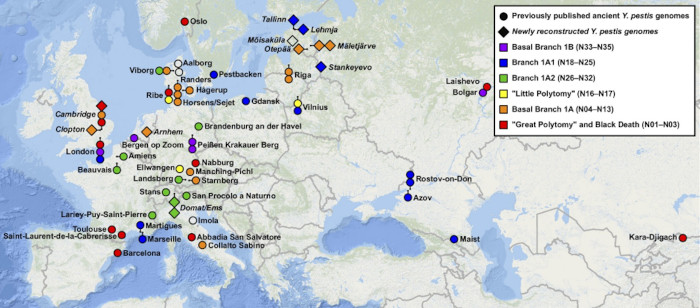
Map of places with palaeogenomic evidence for Y. pestis associated with the Second Pandemic from previous publications and this study. (Keller et al./PNAS)
Climate and conflict changed the routes
The genomes demonstrate a considerable increase in the lineages of the plague around the years 1450-1500, when Y. pestis divided into three major branches. The authors suggest that certain species may have formed new reservoirs by infecting new populations of wild rodents and that climatic changes such as the Great Renaissance drought may have played a role. According to a statement from the Estonian Research Council, it is still just one possibility, and not a single proven cause.
Human conflict provides an alternative explanation. The genetic evidence connects subsequent outbreaks with the Thirty Years’ War and the Great Northern War, when armies, refugees, and traders were using the same routes of transmission; during the siege of Tallinn in 1710, plague infected both troops and civilians. The social impact of these recent outbreaks can be assessed in an earlier study covered by Ancient Origins about plague victims in Basel, which shows that young workers suffered the worst burden.
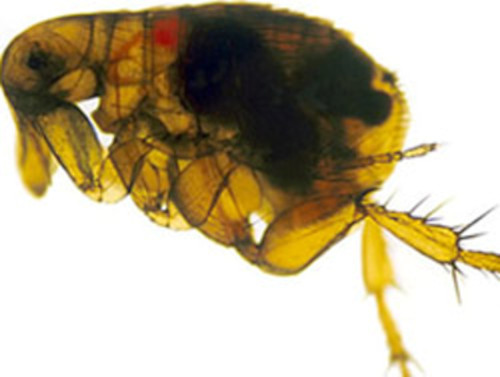
A flea whose foregut is blocked by a Y. pestis biofilm, a condition that enables transmission (National Institute of Allergy and Infectious Diseases / Public domain)
What the past still reveals
Plague is not a serious health threat in Europe today, but the bacteria, Yersinia pestis, still exist in wildlife populations in many places around the world. Therefore, the Second Plague Pandemic is of use in investigating the processes by which zoonotic diseases arise, vanish in one area and reappear in another. The study of Plague of Justinian and the First Plague Pandemic shows that the pattern goes back long before the Black Death.
Future investigations could utilize cemetery data, coins, stable isotopes, and climate records along with the improved dating of the present study. This would enable researchers to determine when humans transmitted the lineage and when it existed within an animal reservoir. Thus, the findings of this study provide more than just a long chronology of plagues: they demonstrate that the story of plague in Europe was repeatedly rewritten by ecology, human migration, and coincidences.
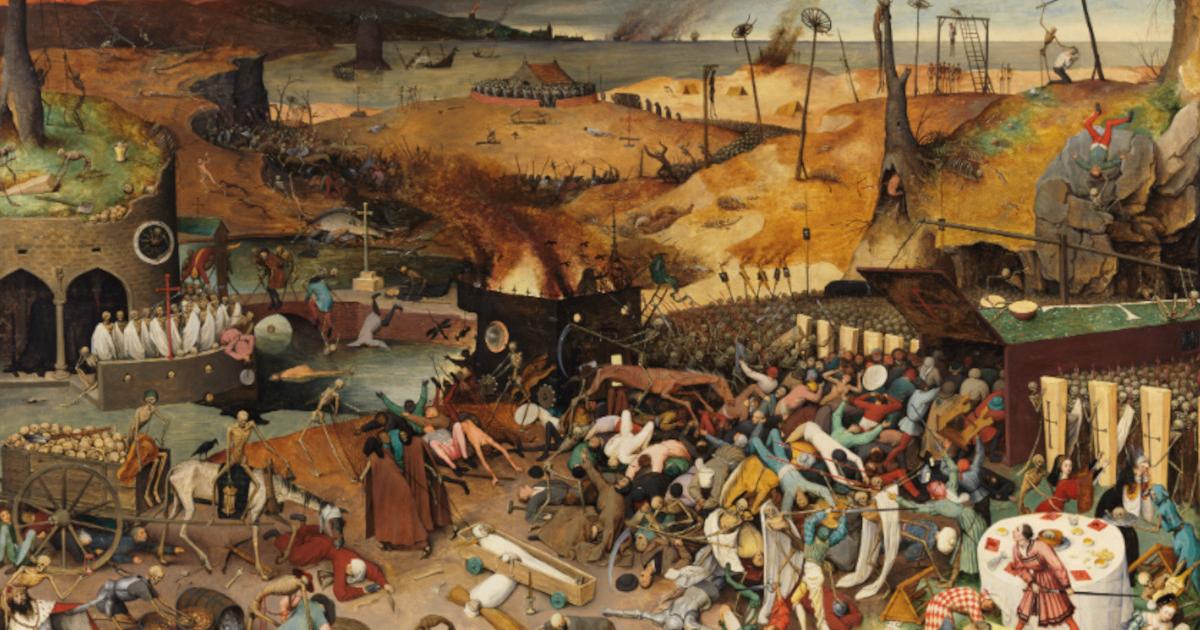
Top image: The Triumph of Death (c. 1562) by Pieter Bruegel the Elder, a public-domain painting depicting Death’s armies overwhelming a European landscape. Source: Museo del Prado/Public domain
By Gary Manners
References
Estonian Research Council. 20 September 2026. Ancient DNA reveals how plague kept returning for 400 years after the Black Death. Available at: https://www.sciencedaily.com/releases/2026/09/260919031025.htm
Flappiefh. 2018. 1346–1353 spread of the Black Death in Europe map. Available at: https://commons.wikimedia.org/wiki/File:1346-1353_spread_of_the_Black_Death_in_Europe_map.svg
Gresham College. 7 October 2015. 1665: London’s Last Great Plague – Professor Vanessa Harding. Available at: https://www.youtube.com/watch?v=e5M42Ie7NK8
Keller, M. 2026. A refined phylochronology of the second plague pandemic in Western Eurasia. Available at: https://doi.org/10.1073/pnas.2534899123
Manners, G. 24 April 2026. Young Laborers Hit Hardest By 17th-Century Plague. Available at: /news-history-archaeology/basel-plague-study-00102728
National Institute of Allergy and Infectious Diseases. n.d. Yersinia pestis. Available at: https://commons.wikimedia.org/wiki/File:Yersinia_pestis.jpg
Radley, D. 19 September 2026. Plague after the Black Death returned in waves across Europe for centuries, ancient DNA shows. Available at: https://archaeologymag.com/2026/09/plague-after-the-black-death-returned-in-europe/
Spyrou, M. A. 2 October 2019. Phylogeography of the second plague pandemic revealed through analysis of historical Yersinia pestis genomes. Available at: https://www.nature.com/articles/s41467-019-12154-0
TA, M. n.d. The Plague that Sowed Terror and Death in Medieval Europe – Part 1. Available at: /history-important-events/black-death-plague-sowed-terror-and-death-medieval-europe-part-1-003821
University of Stirling. 11 September 2026. Study uncovers complex history of plague after the Black Death. Available at: https://www.stir.ac.uk/news/2026/september-2026-news/study-uncovers-complex-history-of-plague-after-the-black-death/