

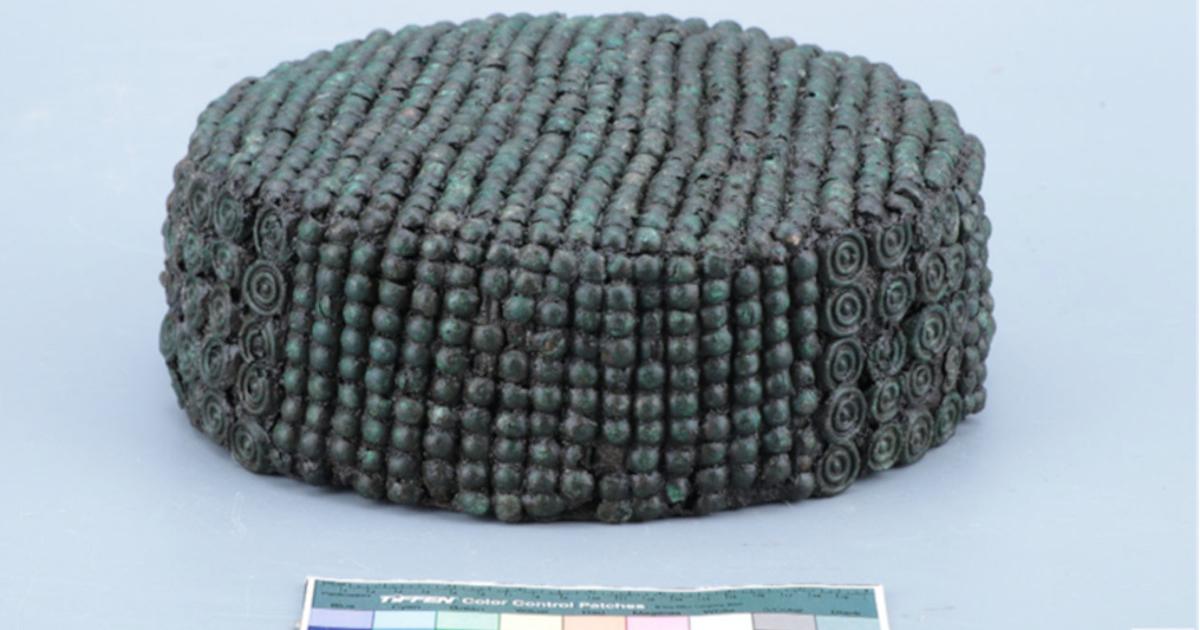

Archaeologists in Ukraine have made a fascinating discovery that sheds new light on the lives of elite women in the ancient world. A rare 2,500-year-old leather cap and belt, decorated with intricate bronze plaques, have been uncovered in a woman’s burial at the Skorobir necropolis near the famous Bilsk Hillfort. This remarkable find offers one of the clearest glimpses yet into elite female dress in the Scythian-era forest-steppe, and its unique design has drawn unexpected comparisons to traditional Croatian headwear.
The objects were originally discovered in 2017 but have only recently entered wider scientific discussion after years of painstaking conservation and study. Researchers say the finds are exceptional because no direct parallels are known from Scythia. Instead, the technique used to create the cap points toward Central European Hallstatt culture Iron Age traditions, hinting at a complex web of cultural exchange in ancient Eastern Europe.
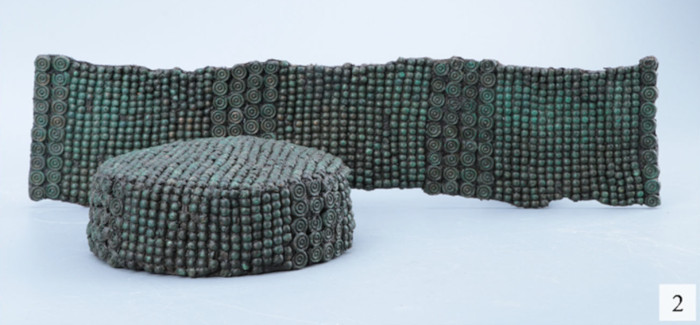
The belt and cap after completion of the conservation work. (Roman S. Horoian/ Shramko, I., 2026/MDPI)
A Rare Survival from the Skorobir Necropolis
The finds came from a burial mound dated to the last quarter of the 6th century BC reports Arkeonews. Archaeologists uncovered a paired burial containing a man aged roughly 30 to 40 and a young woman, probably between 18 and 22 years old. While the grave had been disturbed by robbers in antiquity, who likely removed many of the most valuable objects, the items left behind beside the woman were scientifically exceptional. Near her head and feet lay the remains of a leather cap and belt decorated with bronze plaques.
Recently revealed in the study published Other objects found in the burial included a bronze mirror, gaming bones, a black-polished bowl, a horn dish, and fittings from a wooden vessel. Taken together, this assemblage suggests that the woman held an elevated position in society. The objects also point toward a possible connection with ritual or sacred practices, rather than ordinary domestic life, a theme often seen in elite Scythian burials.
- Grave of Female Scythian Warrior Found in Ukraine
- Scythian Burial With Golden Headdress Found in Russia
Leather That Almost Disappeared After Excavation
Organic material rarely survives well in burial conditions, which makes the Bilsk discovery unusually valuable. According to accounts from the Historical and Cultural Reserve "Bilsk," the leather objects were lifted from the ground inside an earth block. Once exposed to changing conditions, the ancient leather began to deteriorate rapidly. Restorers had to stabilize the material in field conditions before longer conservation work could begin, a process that was technically difficult as the leather continued to shrink.
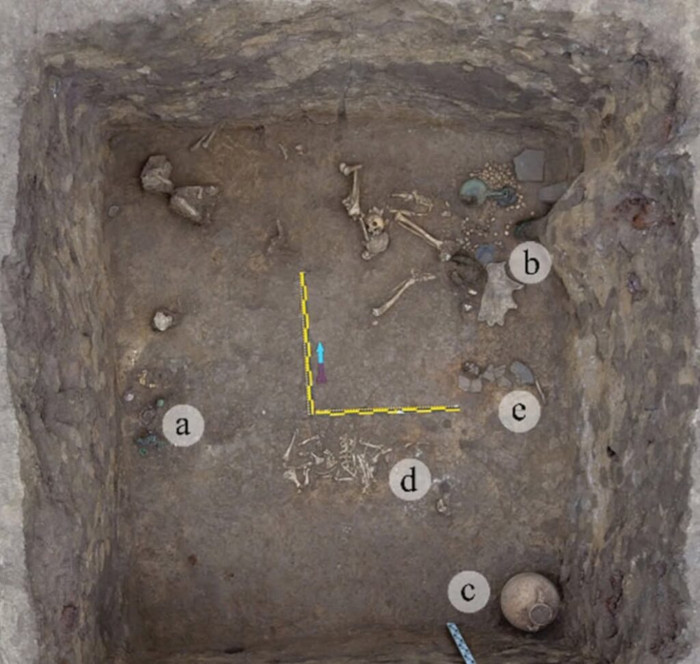
General view of the burial. Photo by Iryna B. Shramko. (Historical and Cultural Reserve “Bilsk”/ Shramko, I. 2026/MDPI))
The cap is especially striking. It had the form of a low cylinder with a flat top and was covered with small bronze decorative plaques. Inside, conservators identified fragments of a thin leather lining, which would have made the object more comfortable to wear and protected the head from the sharp ends of metal fasteners. The belt survived only in fragments, making a full reconstruction impossible, but its preserved parts show that it was made in the same technical tradition as the cap.
Not a Typical Scythian Female Headdress
Elite women’s burials in forest-steppe Scythia are often associated with elaborate headgear, sometimes decorated with gold plaques, similar to those found in Amazon warrior burials. However, the Skorobir cap is different. Instead of gold, it used bronze, and instead of a familiar Scythian decorative system, it was made with many small staple-shaped bronze plates attached to a leather base.
Iryna Shramko, the archaeologist who published the study, argues that this technique is unknown in the Scythian world but has strong parallels in the Hallstatt cultural sphere of Central Europe. The closest comparisons appear to come from the southeastern Alpine zone and related Central European traditions, where small bronze plaques were used to decorate leather belts and headgear. Similar leather belts with bronze fittings were also known in areas such as southern Germany during the Early Iron Age.
- Surprising Truths about the Legendary Scythians Revealed
- Warrior Burial Is Scythian Amazon Girl No Older Than 13
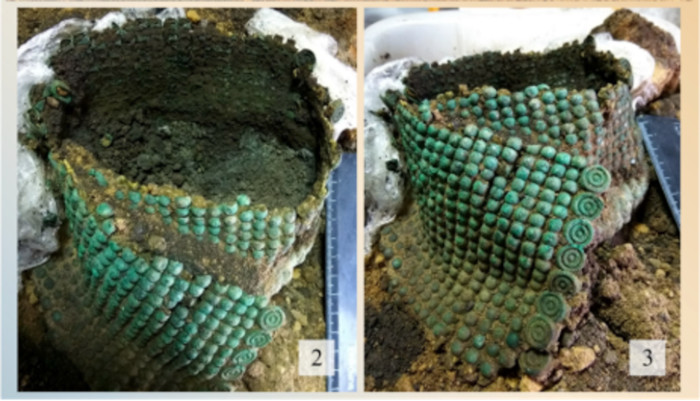
Leather belt from Burial 1, barrow no. 1/2017: (1–3). Views of the belt during cleaning in the laboratory (Photos by Iryna B. Shramko, Stanislav A. Zadnikov). (Shramko, I. 2026/MDPI)
A Woman from the Local Elite, but Not an Ordinary Burial
DNA analysis of teeth and bone remains indicated a genetic affinity with a Central European region associated with the Iapodes, a people linked to the area of present-day Croatia. Researchers have also noted that the cap’s shape recalls the Lika cap, a traditional element of Croatian dress. While this comparison should be treated carefully given the time gap, it adds a notable cultural echo to the archaeological evidence.
The working interpretation is that the young woman was not simply buried with foreign-looking objects as trophies. The cap and belt were parts of a meaningful costume tradition. They may have belonged to her, to her family, or to a group that had moved into the region and maintained older forms of dress in ritual contexts. The use of bronze rather than gold is important, suggesting these items were meant to signify identity, status, ancestry, and ceremonial meaning rather than simply advertising wealth.
This discovery at Bilsk Hillfort, often identified with Gelonus, the city described by Herodotus, shows that the settlement was not culturally uniform. Its population included different groups, traditions, and social identities, with nomadic Scythians, settled forest-steppe elites, Greek contacts, and Central European influences all shaping life around the ancient city.
Top image: A rare 2,500-year-old woman’s leather cap decorated with small bronze plaques, discovered in a Scythian-era burial at the Skorobir necropolis near Bilsk Hillfort in Ukraine. Source: Historical and Cultural Reserve “Bilsk” /Shramko, I. 2026/MDPI
By Gary Manners
References
Altuntaş, L. 2026. Rare 2,500-Year-Old Leather Cap Resembling a Croatian Lika Hat Found in Scythian-Era Burial in Ukraine. Arkeonews. Available at: https://arkeonews.net/rare-2500-year-old-leather-cap-resembling-a-croatian-lika-hat-found-in-scythian-era-burial-in-ukraine/
Shramko, I. 2026. Central European Female Clothing Ensemble from the Burial Mound of the Skorobir Necropolis. Arts. MDPI. Available at: https://doi.org/10.3390/arts15060122






















