
In this interview, we dive into the volatile brew of wartime trauma, religious extremism and community paranoia that fractured a colony and turned neighbors into enemies. Greg delves into how easily people succumb to shadows. Plus, he offers lessons from one of America's effervescent cautionary tales.
Richard Marranca: You are a descendant of the prominent Putnam family, namely Thomas Putnam Jr. and his daughter Ann. What was the discovery that transformed this family history into a motivation to write The Putnams of Salem? Was it difficult to balance historical accuracy and the need to write them as complex characters?
Greg Houle: Despite my family connection on my mother's side and my lifelong passion for history, I never really cared much about the Salem witch trials growing up. I guess it always felt like it was some strange anomaly of history - a bunch of fanatical Puritans accusing people of witchcraft; the sort of thing we look back at and shake our heads.
But when I visited Salem with my then-twelve-year-old daughter (which was the same age as Ann was in 1692) several years ago, I felt particularly drawn to my ancestors. I really wanted to understand what must have been going through their heads when the witch crisis was happening. It's easy for us to say they were just making it up or it was all part of a conspiracy. But none of it is that simple. I found myself strangely compelled to explore that aspect of the witch hunt.
I didn't find it particularly difficult to balance historical accuracy with character development. Essentially, I wanted to place the characters within the accurate historical setting and then write how I believed they would react to the circumstances.
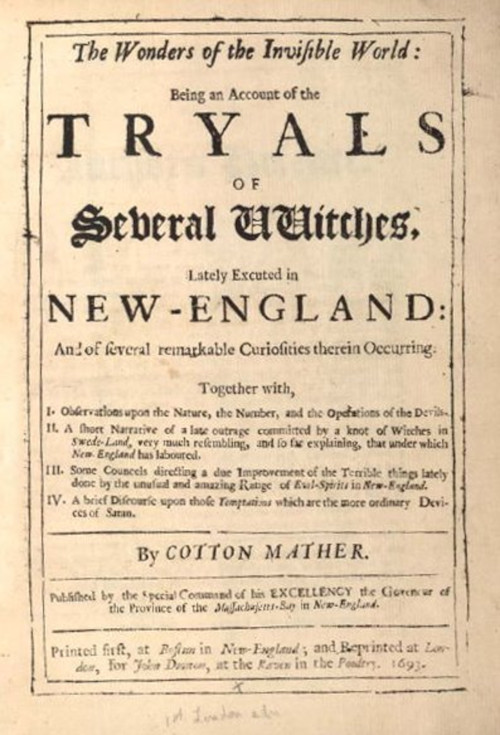
Cotton Mather’s The Wonders of the Invisible World. (Public Domain)
RM: You describe Thomas Putnam Jr. as a patriarch watching his power slip away. Do you believe he genuinely thought his family was under demonic attack, or was he capitalizing on local hysteria?
GH: It's important for us to recognize how people of the late-seventeenth century thought of their world. For them, God and the devil were ever present and active participants in their lives. Nothing happened by chance. And the devil was always lurking around the corner trying to get the best of you. There's no doubt in my mind that Thomas Putnam (and most other people in Salem as well) saw the devil as an existential threat.
However, that doesn't mean that this belief and the desire to take advantage of the situation were mutually exclusive. I certainly think it is plausible that, as the crisis went on, Thomas saw it as an opportunity to assert himself and shore up his position in the community.
RM: How did the economic and social divisions between the agrarian Salem Village (modern-day Danvers) and the wealthy, mercantile Salem Town help create the witch crisis?
GH: There was definitely a growing divide between the traditional agrarian core of the community and the growing mercantile sector. But I'm not sure we can say that it created or even exacerbated the crisis.
What was true, however, is that over time the more "worldly" people in and around the community - and these people tended to be merchants - started to view the growing witch accusations with skepticism. This was the very early days of the Enlightenment and many of these folks, who saw themselves as intelligent and 'enlightened', viewed the growing hysteria as something from another era.
RM: In The Salem Witch Trials Podcast, you emphasize that the trials didn't happen in a vacuum; they were heavily influenced by King Philip’s War and continuing conflicts. How did the physical fear of Native American raids reshape the Puritan mindset to see the literal devil at their doorstep?
GH: Again, for the most part, the Puritans thought everything happened for a reason and that the devil was an active participant in people's lives. Most Puritans believed the natives were in league with the devil and actively trying to destroy the 'shining city on a hill' that they were building in New England. The increasing conflict with native communities around New England played perfectly into that worldview.
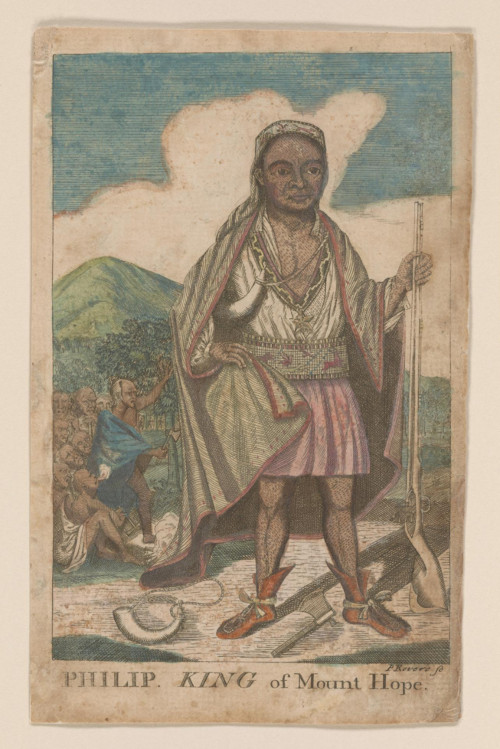
Philip, King of Mount Hope by Paul Revere. (Public Domain)
RM: I recall that one place the crisis ignites is with the household of Reverend Samuel Parris and the forced confession of Tituba. Why does the legal targeting of Tituba, followed by social outsiders like Sarah Good, demonstrate how communities weaponize fear against those on the margins?
GH: The simplest answer is that Tituba, Sarah Good and many others who were accused were scapegoats and easy targets. While the Puritans came to New England to gain the freedom to practice their religion freely, they surely had no interest in freedom of religion in general, and they were deeply skeptical of anyone who didn't fit within their own narrow confines of what makes up a “good” human being.
I would say, however, that many of those who were targeted - perhaps most especially Tituba - were savvy enough to give the authorities what they wanted. Tituba likely knew if she confessed about being aware of witchcraft in the community, and implicated others in the process, the focus would shift away from her, and she was correct about that.
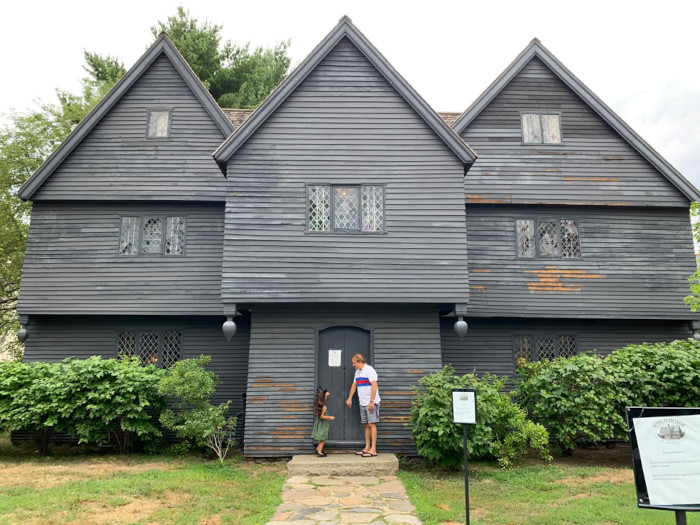
The Witch House (Judge Jonathan Corwin’s House, originally built circa 1675) by Renah Marranca
Note: Judge Jonathan Corwin interrogated Tituba, Sarah Good and Sarah Osborne. He joined the special court that relied on "spectral evidence" to hang 19 innocent people, for which he never apologized. The ‘Witch House’ home of Judge Jonathan Corwin is a time capsule of the 1600s that nearly got demolished in the 1940s. According to the Salem Public Library, it “became the catalyst that launched Salem's modern historic preservation movement.”
RM: The momentum of the trials shifted when pious, respected church members like Rebecca Nurse were targeted. From a narrative and historical standpoint, why was her accusation the moment the community realized no one was safe?
GH: Nearly all of the previous witch accusations in North America involved just one, or maybe two, people. In Salem, there were hundreds of accusations. That's what makes this event so unique and so tragic. Once the hysteria got ginned up, I think it became almost inevitable that the accusations would eventually shift from the so-called "usual suspects" to more 'respectable' members of the community. The momentum (and growing fear) was just too strong to stop.
Rebecca Nurse was a respected member of the church and a so-called “living saint.” She was certainly not a typical witchcraft suspect. She was also initially exonerated by a jury, which the judge essentially overturned. Her eventual execution for witchcraft illustrated that anyone was at risk of being accused and executed, but it also showed how poorly the legal system was at handling the crisis.
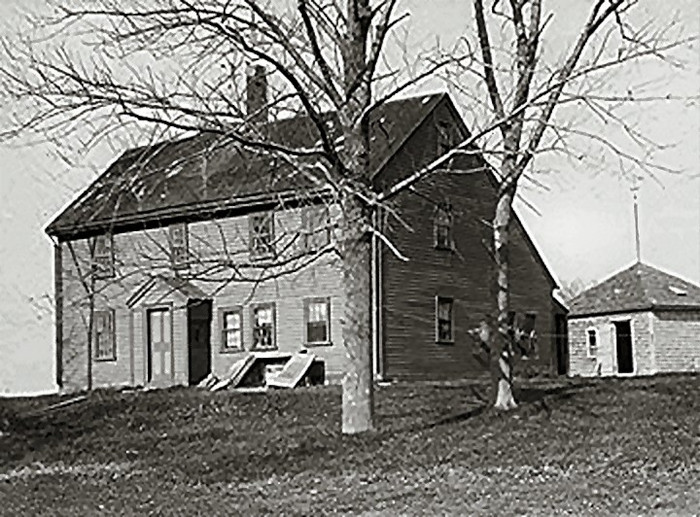
House of Rebecca Nurse (still exists), Danvers, MA. (Public Domain)
RM: In 1706, your ancestor Ann Putnam Jr. became the only "afflicted girl" to issue a written apology to her congregation. How do you read her confession?
Ann's statement is often called a "confession," but the only thing she's confessing to is being tricked by the devil.
In her letter, Ann writes:
"That I, then being in my childhood, should, by such a providence of God, be made an instrument for the accusing of several persons of a grievous crime..."
She later notes that it was "a great delusion of Salem that deceived" her and that she "ignorantly and unwittingly" brought about these horrible events. I find this interesting because it's entirely plausible that she and others believed she was tricked by the devil into making these accusations, just as her letter suggests. At the time, that would have been a totally acceptable explanation. And while we'll never know for certain, I think it also shows that Ann likely believed what she wrote, even years later. She wasn't simply lying. It was something else (such as mass psychogenic illness) that caused her “afflictions.”
RM: The Putnam family wasn't a monolith—some branches actually signed petitions defending the accused or openly opposed the trials at great personal risk, isn’t that true?
GH: Yes, exactly.
In particular, Joseph Putnam, who was Thomas' much younger half-brother and did not seem to have a great relationship with him, was very strongly against the accusations. Also, Nathaniel Putnam, and several other relations, defended Rebecca Nurse. Still others, like one of Thomas' other brothers, Edward, supported the accusations.
In any case, you are correct that the family wasn't a monolith. And this leads to something I think is very important: whenever we try to make simple black-and-white assumptions about history, it usually doesn't work out.
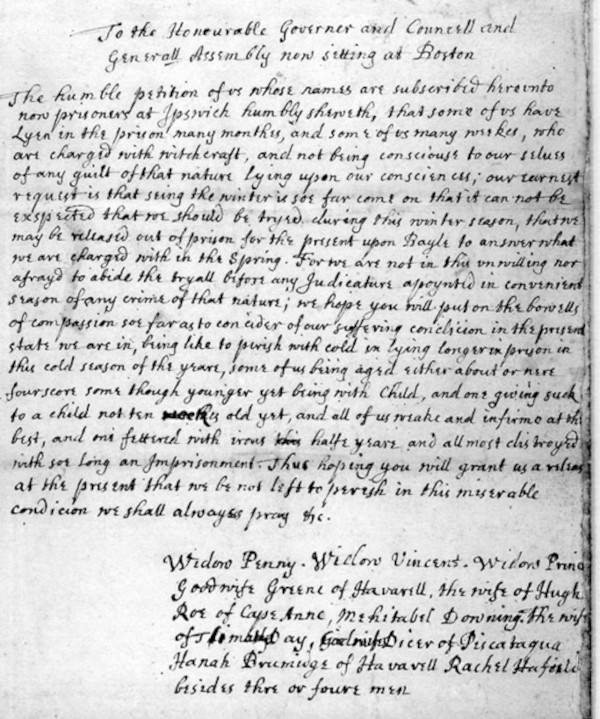
Petition for 11 people accused of Witchcraft from Ipswich. (Public Domain)
RM: Commercial paradox: Today's Salem thrives on "Witch City" tourism, using flying witches on police cars and celebrating a big Halloween economy. Isn’t life strange in that a tragedy from long ago can encourage entertainment and fun?
GH: While I certainly understand the pragmatism of turning Salem into "Witch City," and I fully recognize that it was likely an inevitability, whether or not such a thing was openly embraced by Salem itself, it's also kind of unfortunate.
I would assume that the vast majority of people who visit Salem have no idea what actually happened there 330+ years ago. Moreover, it's likely many of them have beliefs about what happened that are simply not true: the witch crisis wasn't a land grab, nobody was poisoned by ergot, nobody was burned at the stake, there were no actual witches, etc.
Having said that, lots of people visit Salem and if only a few of them come away interested in learning more about what actually happened there, I think that's great.
RM: The legacy of the Witch Trials & the thriving modern witch culture, the beauty of the seaport and historical homes – Salem is just a great place to visit. Peabody Essex Museum, House of Seven Gables – so much to see. We love going there, especially in the fall. Thanks so much for the fascinating conversation.
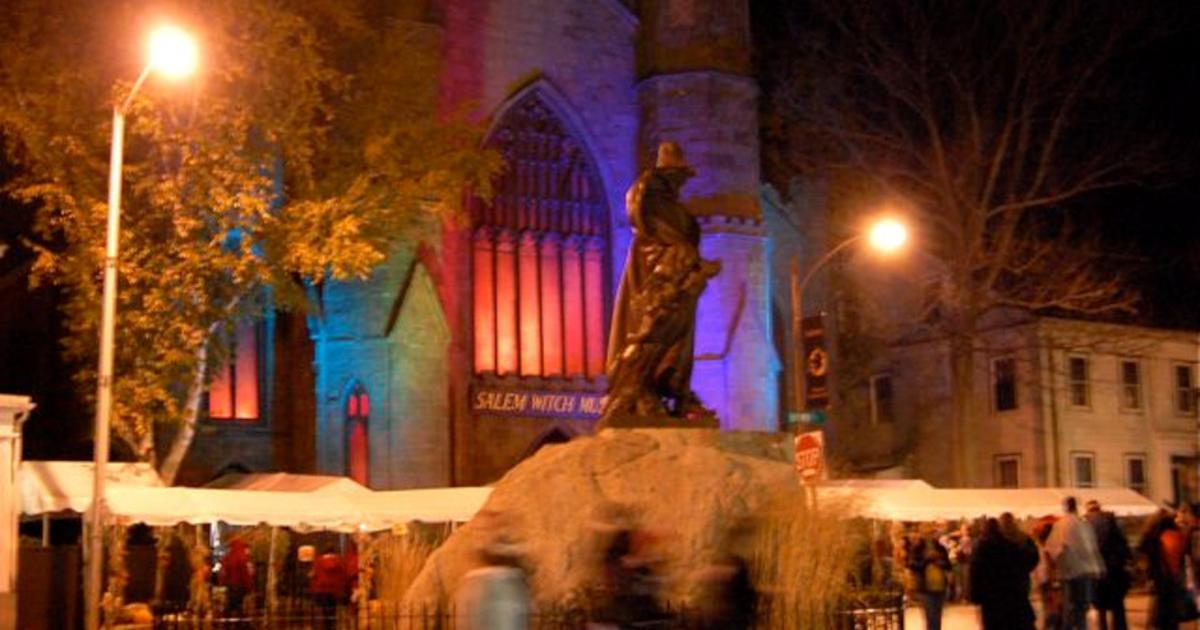
Top image: Witch Museum, Salem Commons, on Halloween. Source: Fletcher6/CC BY-SA 3.0