

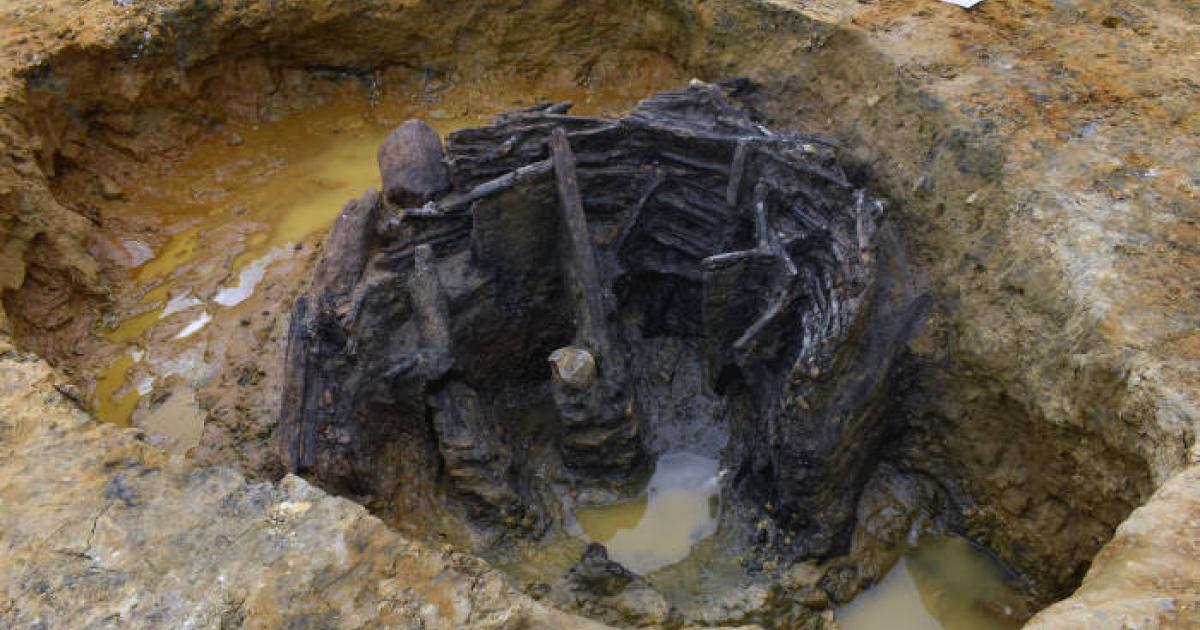

Archaeologists in England have uncovered a beautifully preserved Roman well in Norfolk, offering an exciting representation of developments during Roman occupation. Lined with intricately woven wicker and possibly featuring a wooden rung ladder, the well forms part of a broader complex linked to a Roman rural settlement. It is one of several discovered at the site, pointing to a well-developed and organized community, reports Oxford Archaeology.
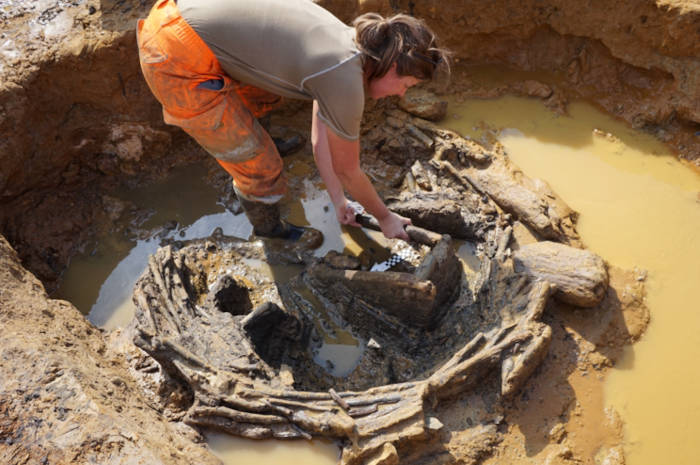
Archaeologist from Oxford Archaeology excavating the Roman wicker well. (Oxford Archaeology)
The excavation is ongoing, and archaeologists are eager to see what secrets may lie at its depths. Finds like this could yield environmental data, domestic artifacts, or personal items that deepen our understanding of life in Roman Britain.
The well is available to view in 3D model on Sketchfab.
- A Brief History of Roman Britain: A Land Transformed
- Romanitas in Early Medieval Wales: The Evidence of Latin Standing Stones
- Rome’s African Emperor: Septimius Severus and the Scottish Invasion

Rome in Britain
The Roman invasion of Britain began in AD 43 under Emperor Claudius, following earlier attempts by Julius Caesar nearly a century before. Over the next few decades, Roman legions conquered much of the island, establishing towns, roads, forts, and villas. The occupation lasted nearly 400 years, until around AD 410, when Roman control waned and the legions withdrew. During this time, Britain was transformed by Roman governance, infrastructure, and cultural exchange - leaving behind a rich archaeological legacy still being uncovered today.
Top image: Roman wicker well discovered in Norfolk, England. Source: Oxford Archaeology
By Gary Manners






















