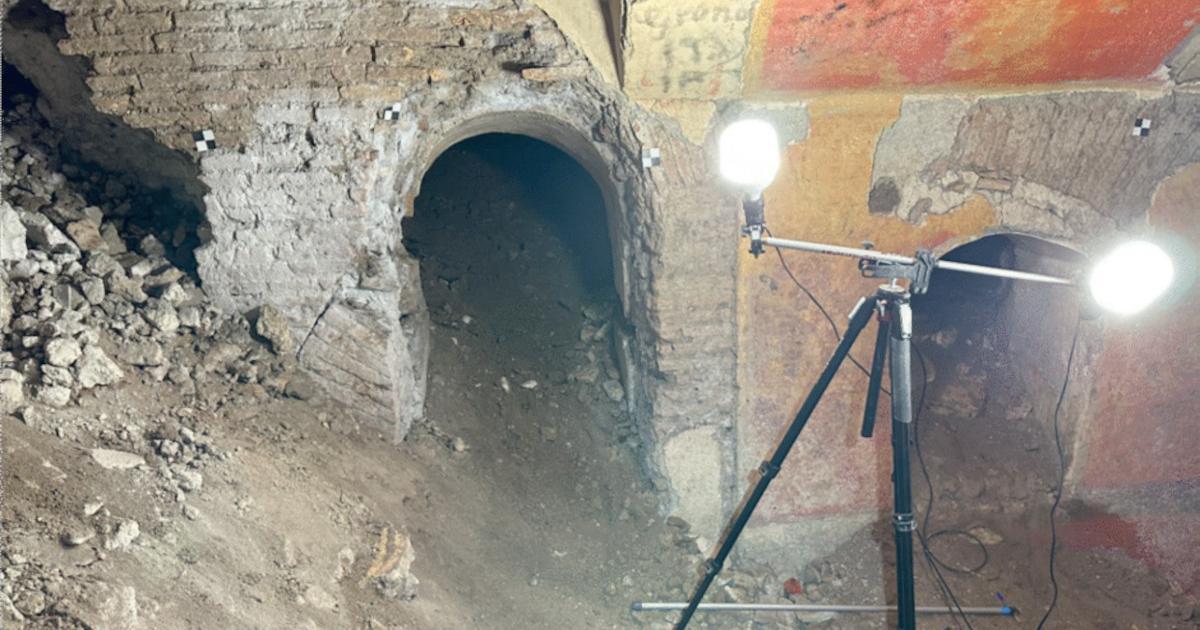

For years, students at a high school near the Colosseum in Rome whispered about secret rooms hidden beneath their gymnasium. What started as a school rumor has now been confirmed as an astonishing archaeological reality. After teenagers decided to investigate the subterranean spaces themselves, they stumbled upon an exceptionally well-preserved mid-second century AD Roman luxury home, now known as the Domus Liceo Cavour.
The discovery began in 2021 during a student protest when teenagers occupied the Liceo Scientifico Cavour building. During their unsupervised time, some students found a key to a locked iron door in the basement. Beyond a disused boiler room, they squeezed through a narrow gap and found themselves in ancient, dimly lit corridors adorned with colorful frescoes and intricate mosaics.
When the protest ended, the students informed their history and Latin teacher, Claudia Marino. Intrigued, she investigated the claims and was stunned to find genuine Roman ruins. Marino reported the find to the Special Superintendency of Rome, which eventually launched a $350,000 excavation and restoration project funded by the National Recovery and Resilience Plan (PNRR) in early 2026.
- Luxurious Roman Villa On Display Under Lavish Modern Apartment
- A Labyrinth of Ancient Tunnels Exist Under Roman Streets
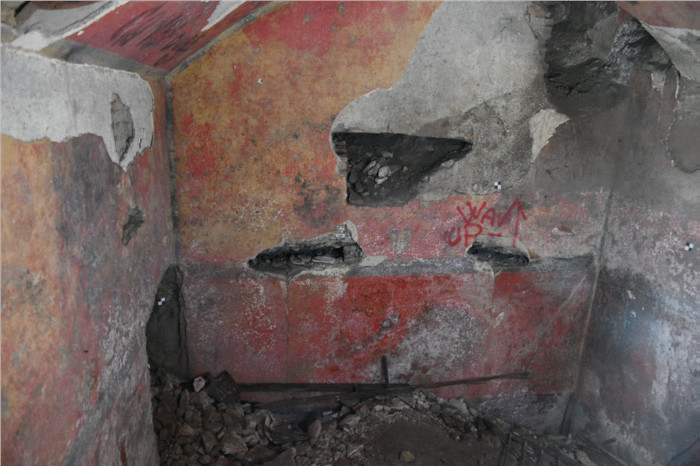
Room A at Domus Liceo Cavour. with stucco frescoes. (Cantieri Narranti/ Special Superintendency of Rome)
A Glimpse into Elite Roman Life
The archaeological excavations revealed a sprawling domus situated in one of ancient Rome's most exclusive neighborhoods, between the Carinae and the Esquiline Hill. This prestigious area was once home to legendary historical figures such as Cicero, Pompey, and Octavian.
What makes the Domus Liceo Cavour truly exceptional is its remarkable state of preservation. The underground rooms, sealed for nearly two millennia, still feature the iconic Pompeian red on their walls. Archaeologists have documented figurative and floral wall paintings, along with elaborate monochrome stucco decorations extending unbroken across the vaulted ceilings.
In one of the excavated rooms, researchers found a striking black mosaic floor made with large, irregularly shaped tiles - an aesthetic choice highly fashionable among the Roman elite during the mid-Imperial period.
- Secret Imperial Passage Opens in Rome's Colosseum After 2,000 Years
- Spectacular New Frescoes Uncovered in Pompeii
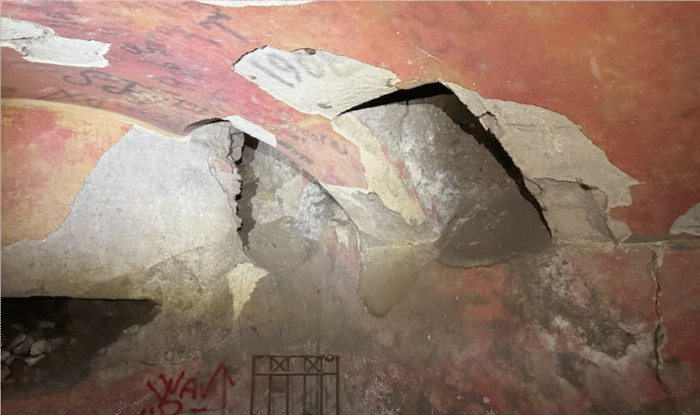
Stucco decoration on the vaulted ceilings of the ancient Roman house. (Cantieri Narranti/ Special Superintendency of Rome)
Identifying the Ancient Homeowners
Through stratigraphic analysis and historical records, experts have managed to identify the likely owners of this magnificent property. When the school building was originally constructed as a missionary headquarters in 1895, workers had actually discovered a portion of the villa.
At that time, they found a lead water pipe, or fistula, bearing inscriptions that revealed the names of two occupants: L. Fabius Gallus, a Roman senator, and later, a woman named Umbria Albina. The Umbrius family is believed to have originated from Samnium, a region in south-central Italy not far from Pompeii.
Despite the 19th-century discovery, the site was subsequently forgotten by authorities. However, the domus was never truly lost. Amidst the ancient artifacts, including amphorae and drinking cups, archaeologists found graffiti dating from the 1920s to the 1950s, proving that the subterranean chambers had been secretly explored by urban spelunkers and curious students for decades before being officially recognized.
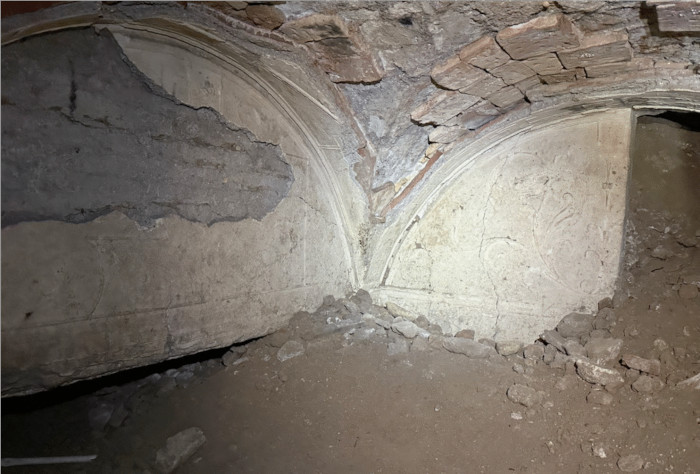
Room D of Domus Liceo Cavour. (Cantieri Narranti/Special Superintendency of Rome)
Uncovering the Past for the Future
Currently, archaeologists have removed 48 crates of artifacts and are working painstakingly to clear the rooms of debris. The excavation is challenging due to the narrow, dark, and airless conditions of the subterranean environment.
"Given the spectacular state of preservation of all the paintings within these rooms, it is essential that they be fully excavated to reveal the entire decorative scheme and allow for its detailed documentation," the Italian Ministry of Culture stated.
While only a portion of the Domus Liceo Cavour has been explored so far, it is believed to extend much further beneath the school's courtyard. The Special Superintendency of Rome and the school administration are collaborating on a plan to eventually open the archaeological site to the public, with the very students who helped rediscover the villa potentially serving as tour guides.
Top image: Arched doorways and colorful frescoes inside the Domus Liceo Cavour beneath the school gym. Source: Cantieri Narranti/Special Superintendency of Rome
By Gary Manners
References
Killgrove, K. 2026. Italian teenagers discover 1,800-year-old Roman luxury house underneath their high school gym. Live Science. Available at: https://www.livescience.com/archaeology/romans/italian-teenagers-discover-1-800-year-old-roman-luxury-house-underneath-their-high-school-gym
Newcomb, T. 2026. Students Peered Into a Locked Room—and Discovered an Ancient Roman Villa. Popular Mechanics. Available at: https://www.popularmechanics.com/science/archaeology/a71497639/roman-villa-high-school/
Osborne, M. 2026. These Italian Teenagers Stayed Overnight at Their School. They Found Ancient Roman Ruins Hidden in the Basement. Smithsonian Magazine. Available at: https://www.smithsonianmag.com/smart-news/these-italian-teenagers-stayed-overnight-at-their-school-they-found-ancient-roman-ruins-hidden-in-the-basement-180988917/
Soprintendenza Speciale di Roma. 2026. DOMUS LICEO CAVOUR. Cantieri Narranti. Available at: https://cantierinarranti.it/intervent/domus-liceo-cavour/
Wanted in Rome. 2026. Roman Domus Emerges Beneath Rome's Liceo Cavour After Students' Persistent Claims. Wanted in Rome. Available at: https://www.wantedinrome.com/news/a-second-century-roman-villa-emerges-beneath-romes-liceo-cavour.html