
Fragments Reveal a Long-Running Scheme
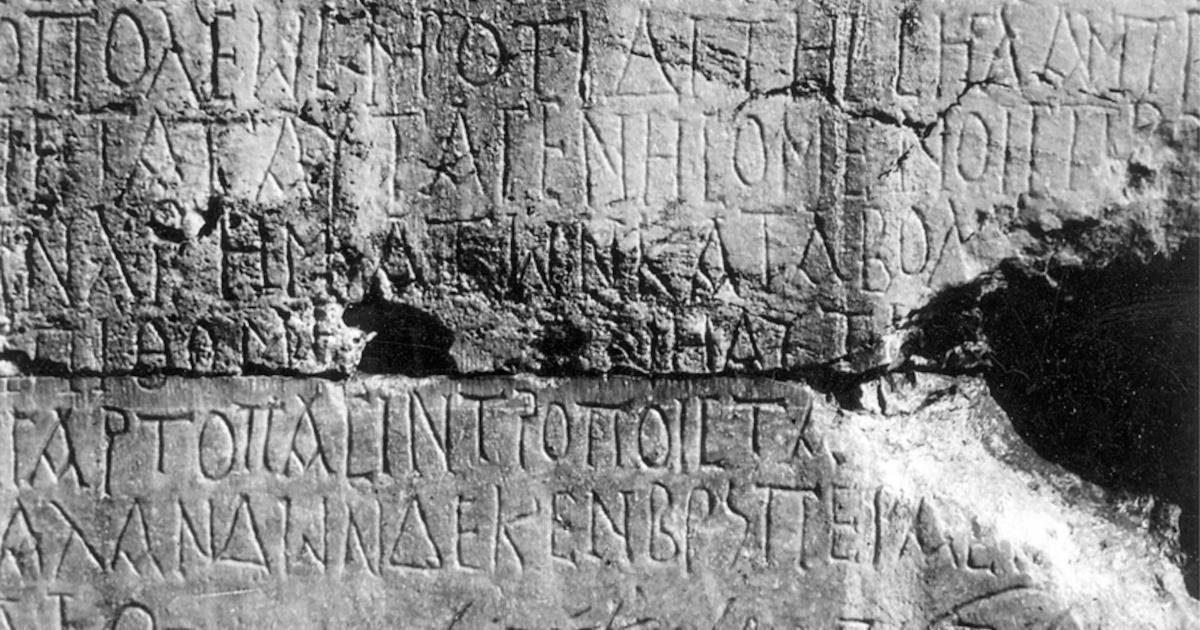
According to the Faculty of History at the University of Warsaw, Paweł Nowakowski and Mustafa Adak recognized the fragments while studying inscriptions from western Anatolia. They first looked like funerary poetry, but copies from Mylasa and Keramos showed that they filled gaps in a ruling by Flavius Illus Pusaeus Dionysius, the eastern praetorian prefect. The same order survived in several inscribed copies.
The decree concerned tax collectors working on estates belonging to Placidia, daughter of Emperor Valentinian III and mother of Anicia Juliana. Collectors reportedly issued receipts for cash or goods without stating the amount or tax type, then sent Constantinople records showing less than local taxpayers had paid. The difference became private wealth as complaints moved slowly through the imperial administration.
The case has a striking parallel in the Roman legal papyrus that exposes a tax-fraud trial from Judea. Both show that provincial financial crime became a central concern when it threatened imperial revenue or prestige. They preserve corruption’s human mechanics more clearly than a bare account of taxation.
- Can You Imagine a Taxation System Where the Wealthy Competed to Pay the Highest Taxes? It Really Happened!
- 3rd Century Roman Boundary Stone with Inscription Found in Northern Israel
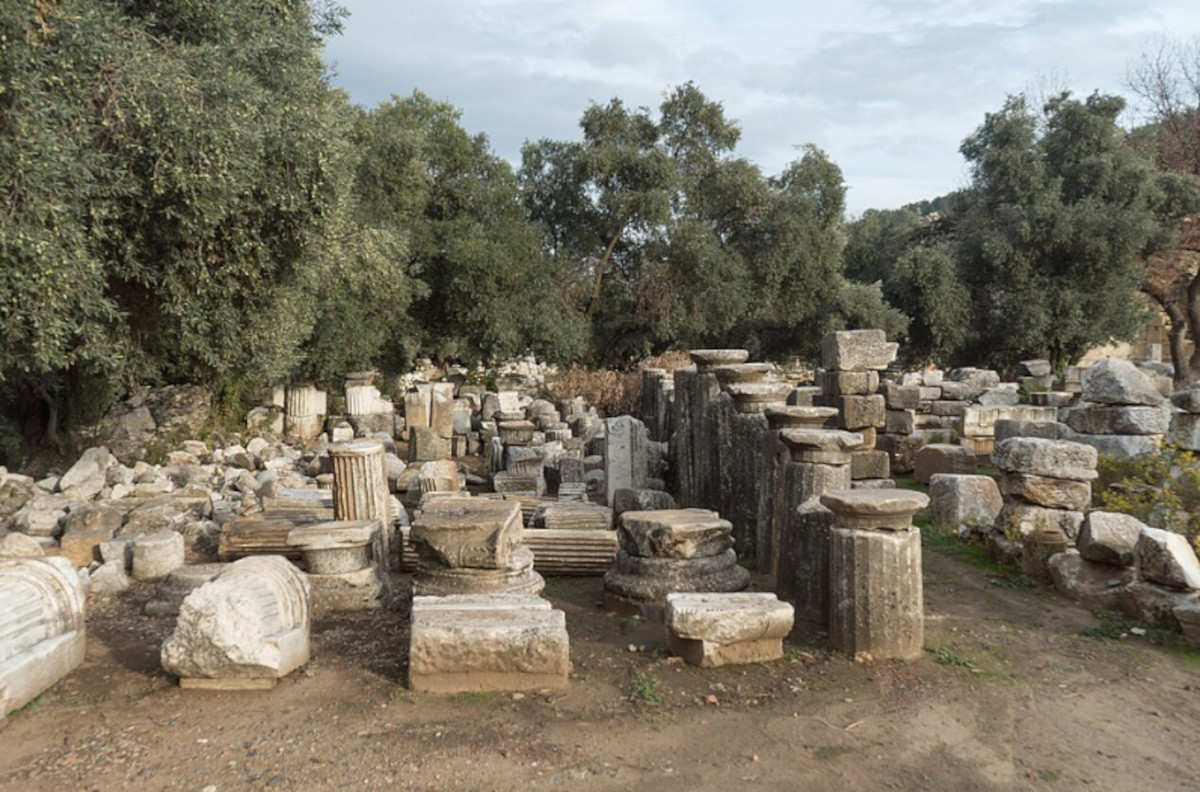
Stratonikeia ruins near the site of the inscription fragments. (Alexey Komarov / CC BY-SA 4.0)
Why the Punishment Was So Severe
Dionysius dated the order to August 1, AD 480 and gave a special commissioner three months to settle the matter. Failure could cost the commissioner his estate, while guilty officials risked execution. Provincial governors and civic “defenders” who ignored the practice could be fined three pounds of gold.
That death sentence was extraordinary. The Archaeology Magazine report notes that contemporary measures normally relied on fines, while Arkeonews quotes Nowakowski: “It’s less about the scale of the offense and more about defying imperial will: a kind of rebellion or affront to the emperor’s authority.” The wording may also have functioned as a warning rather than a literal sentence.
Roman taxation could be unusual as well as burdensome, from the urine tax to levies administered through provincial officials. The Frumentarii illustrate networks connecting distant communities with the central state. In such a system, a small alteration on a receipt could travel far.
- Explosive Legal Document Exposes Corruption and Conspiracy in Roman Era Judea
- Corpus Juris Civilis Law: Created by a Byzantine Emperor
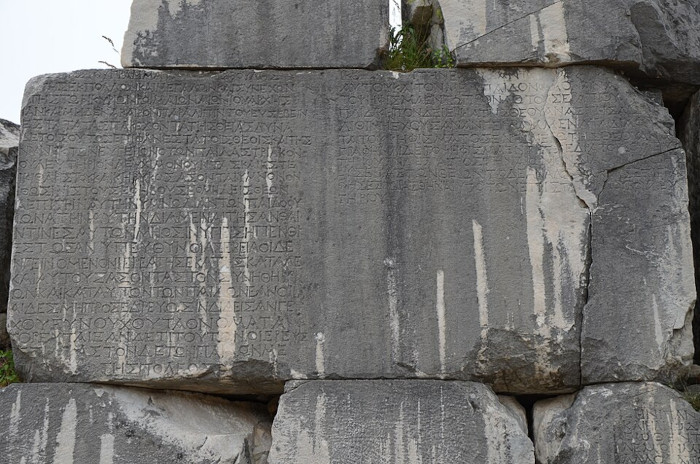
An earlier imperial economic text, Diocletian’s Prices Edict, displayed at Stratonicea’s bouleuterion (not the newly reconstructed AD 480 decree). (Carole Raddato / CC BY-SA 2.0
What the Stones Add to Roman History
The inscription is valuable not only for its account of corruption, but also for how official orders were copied. Versions from Mylasa, Stratonikeia and Keramos differ in word order and sometimes whole phrases, suggesting that local stonecutters or copyists adapted texts transferred from papyrus or parchment. A Latin date in cursive was carved so carefully that it resembles the original handwriting.
The document has been known since Richard Pococke recorded it at Mylasa in 1745, yet the new pieces complete the story. The University of Warsaw says Nowakowski and Adak are still preparing the full publication, so further readings may refine the details. For now, the Roman tax scandal shows how imperial law travelled, how provincial corruption worked and why a pressured government answered with death.
Top image: Archival photo of a copy of the inscription from Mylasa, from the archive of Louis Robert. Source: Made available by Prof. Denis Feissel/University of Warsaw
By Gary Manners
References
Archaeology Magazine. 2026. Inscription Fragments Reveal New Details of Roman Tax Scandal. Available at: https://archaeology.org/news/2026/08/10/inscription-fragments-reveal-new-details-of-roman-tax-scandal/
Büyükuygur, O. 2026. A 1,500-Year-Old Tax Scandal in Western Anatolia Reveals Corruption in the Late Roman Empire. Available at: https://arkeonews.net/a-1500-year-old-tax-scandal-in-western-anatolia-reveals-corruption-in-the-late-roman-empire/
Faculty of History, University of Warsaw. 2026. Discovery by the researchers of the STONE-MASTERS Project! Available at: https://historia.uw.edu.pl/en/discovery-by-the-researchers-of-the-stone-masters-project/
Nowakowski, P., 2026. A tax scandal from 1500 years ago. What do the new fragments of the inscription say about corruption in the Roman Empire? University of Warsaw. Available at: A tax scandal from 1500 years ago. What do the new fragments of the inscription say about corruption in the Roman Empire? - UW Scientific Service
Radley, D. 2026. 1,500-year-old Roman tax scandal exposed by ancient inscription found in Turkey. Available at: https://archaeologymag.com/2026/08/roman-tax-scandal-exposed-by-ancient-inscription/