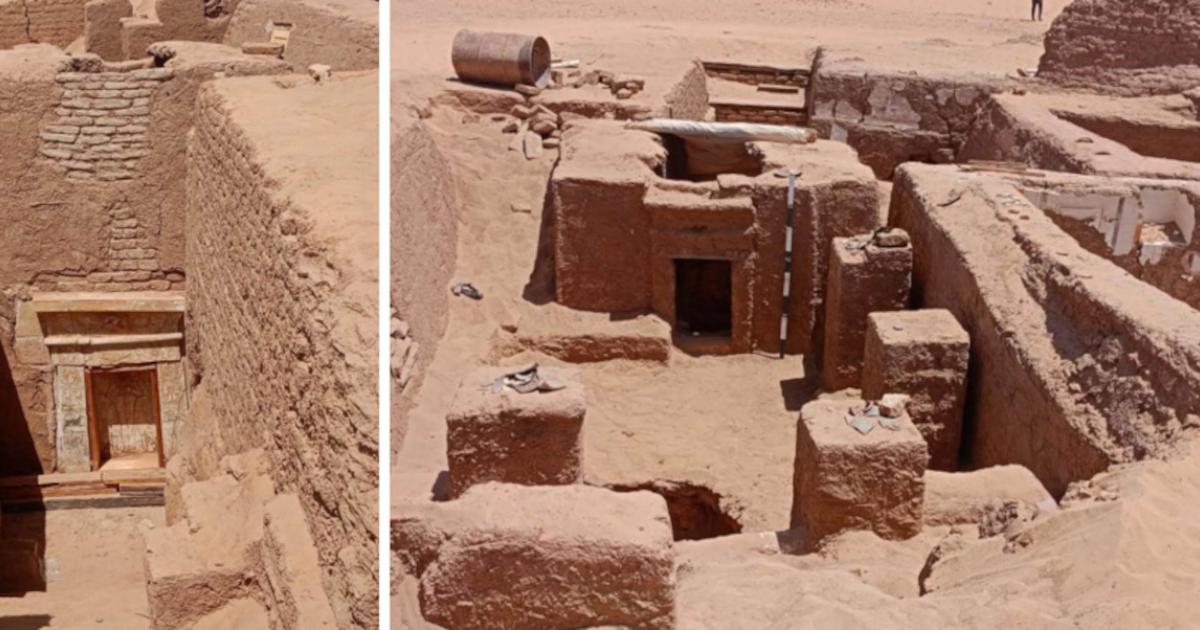

Excavations in the Dakhla Oasis in Egypt have uncovered a mudbrick pyramid tomb from Roman times, which contains a Greek epitaph and a unique Ancient Egyptian image of the underworld. This 19-line inscription most likely refers to a judge and can be seen at the entrance where protective symbols are carved. The find, reported by Egypt's State Information Service and Archaeology News, brings two funerary traditions together in one desert grave.
- Roman Era Tombs Discovered in Egypt Reveal Diverse Trends in Burial Architecture and Grave Goods
- Roman Tombs Found in Egyptian Oasis Reflect Cultural Blending Evident in Burial Practices

The Greek inscription stele. (MOTA)
A Stone Doorway to the Underworld
The tomb at Bir al-Shaghala was unearthed by a team of Egyptologists from the Egypt’s Supreme Council for Antiquities. The tomb’s entrance has a stone stairwell that descends 14 steps downwards. This leads to an entrance made of stone with a design that has frescoed inscriptions on it. The tomb has an arched chamber made of mud bricks which has two burial chambers made of plaster. The pyramid-shaped vault is constructed above the burial chambers.
The entrance lintel features images depicting the seventh hour of the Amduat, which is an Egyptian description of the journey taken by the sun god at night. However, the archaeologists note this is the first time this hour has been discovered in the Bir al-Shaghala cemetery. In addition to this, there is a stone slab covering the entrance, engravings of Osiris, as well as many texts with protective functions.
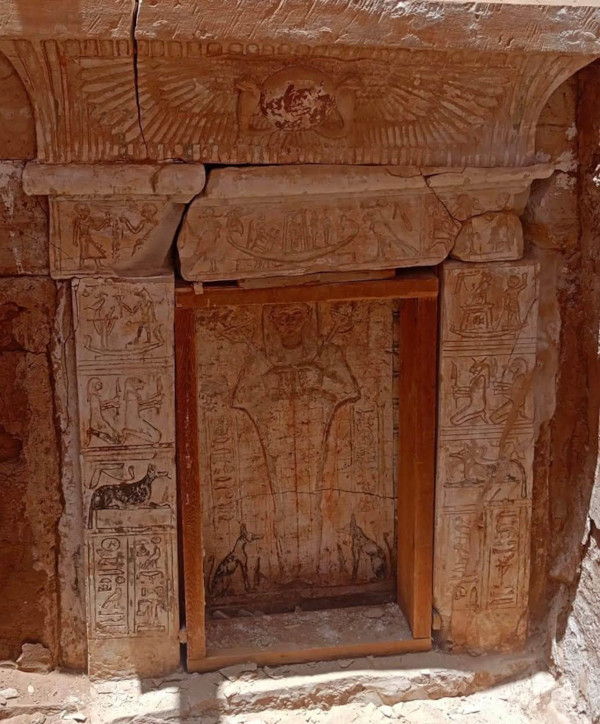
The impressive tomb entrance with images depicting the seventh hour of the Amduat. (MOTA)
The find is important not so much for the fairly modest pyramid tomb, but what is found around the entrance. In Egyptian underworld mythology deceased people had to navigate various obstacles after death, and the illustrations and texts about this mythology are shown to have still remained relevant in Roman-era Dakhla. The excavators claim that this tomb belonged to a husband and wife and not to a pharaoh.
- Inscription on Coffin Discovered to be Oldest Egyptian Soul Map
- Ancient Tombs Uncovered in Aswan Reveal Greco-Roman Secrets
A Greek Poem for a Possible Judge
A stone stele bearing 19 lines of Greek verse is set into the upper structure’s southern wall. Written in red ink, the elegy mourns a man called Psychtis in Egypt’s official report. Initial study suggests he may have been a judge. The inscription dates to the late third or early fourth century AD.
A Greek poem in an Egyptian-style tomb need not mean its owner abandoned local beliefs. Greek had a place in the oasis’s literary life: a Roman-period school at Trimithis, elsewhere in Dakhla, had Greek texts on its walls. Greek and Roman visitors also left inscriptions at older Egyptian monuments. The stele gives that broader cultural overlap a personal voice.
The finds also include an offering table above a sandstone purification basin, pottery and a bronze coin bearing Emperor Constantine’s image. The announcement does not say the coin fixes the first burial’s date. A Roman-era tomb with Greek literature found at Al-Bahnasa offers another glimpse of mixed funerary traditions.
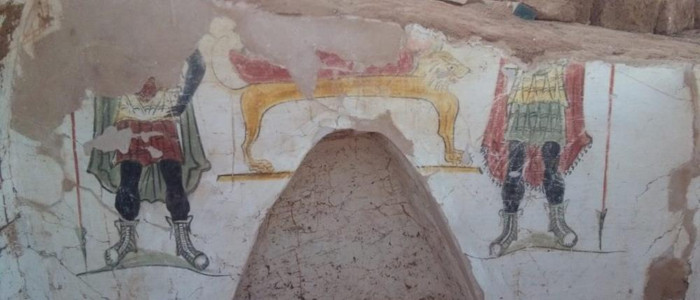
Frescoes at the site. (Egypt State Information Service)
An Oasis Cemetery with a Long Life
Archaeologists suspect later use of the tomb: a mudbrick chapel stood above the entrance, with a four-column shrine in front. That possibility makes it risky to assign every object to one burial. The pyramid-shaped superstructure belongs to a local tomb design, not the monuments built for Egypt’s ancient kings.
Bir al-Shaghala was part of ancient Mothis’s cemetery, serving the oasis capital under the Ptolemies and Romans. Excavations begun in 2002 have exposed tombs with courtyards, stairways and vaulted chambers. Their varied layouts suggest a cemetery used by prosperous residents over time, though individual building phases need further study.
A later Byzantine settlement elsewhere in Dakhla shows the oasis’s history did not stop with Roman burial. At Bir al-Shaghala, Egyptian spells guarded a grave where Greek verse recalled a life. The Roman pyramid tomb makes that overlap unusually tangible, while leaving questions about its occupants and later use unanswered.
Top image: View of the newly found tomb at Bir el-Shaghala, Dakla archaeological site, Egypt. Source: MOTA
By Gary Manners
References
El-Aref, N. 2026. Roman-Era Pyramidal Tomb Unearthed at Bir Al-Shaghala in Oasis. Available at: https://english.ahram.org.eg/NewsContent/9/41/577449/Antiquities/GrecoRoman/RomanEra-Pyramidal-Tomb-Unearthed-at-Bir-AlShaghal.aspx
MOTA. 2026. A new archaeological discovery in the area of Bir Al-Shaghala in the oases of Dakhla in the New Valley. Ministry of Tourism and Antiquities. Available at: Ministry of Tourism and Antiquities - New archaeological discovery in the area of Bir Al-Shaghala in the Dakhla Oases in the New Valley
Radley, D. 2026. Rare Roman pyramid tomb with Greek mourning poem found in Egypt’s Dakhla Oasis. Available at: https://archaeologymag.com/2026/09/rare-roman-pyramid-tomb-found-in-dakhla-oasis/
State Information Services (MENA ). 2026. Egyptian archaeological mission discovers Roman-era tomb in Dakhla Oasis. Available at: https://sis.gov.eg/en/media-center/news/egyptian-archaeological-mission-discovers-roman-era-tomb-in-dakhla-oasis/