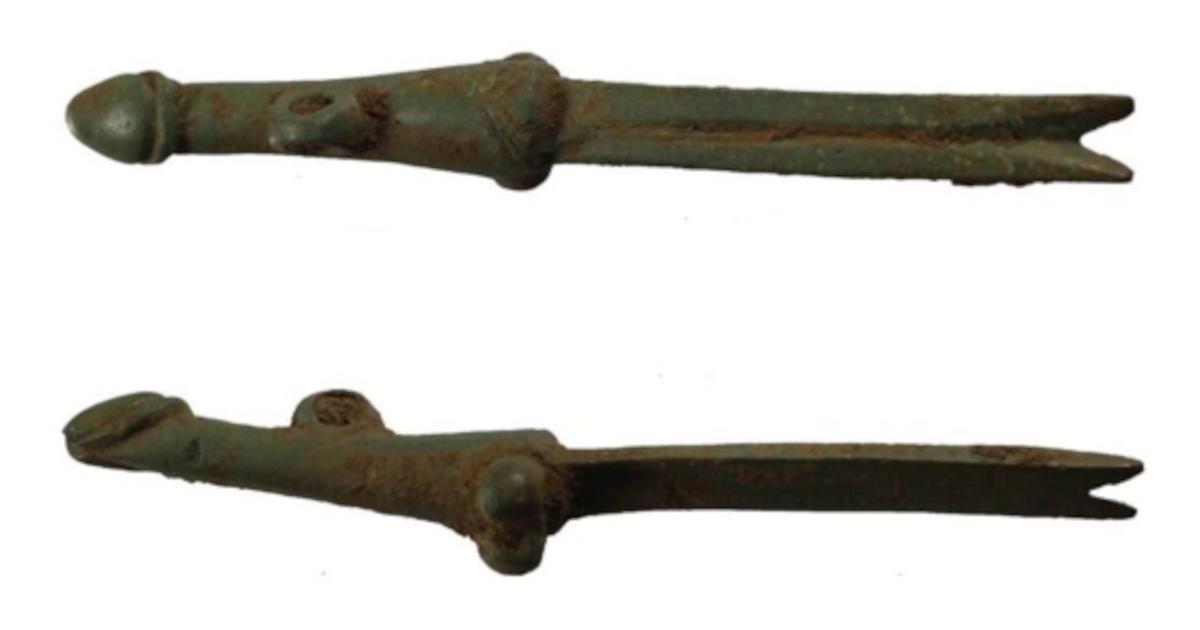

A copper nail cleaner dating back to the late Roman period, featuring a handle shaped like a phallus, has been unearthed near Cheltenham in Gloucestershire, England. The fascinating artifact was discovered during excavations for the Gloucestershire M5 Junction 10 Improvements Scheme. This find offers a unique glimpse into the everyday lives and beliefs of people living in Roman Britain between 300 and 400 AD.
The excavations, conducted by Archaeological Research Services Ltd, have revealed a wealth of history. Alongside the nail cleaner, archaeologists uncovered ditches, trackways, a well, and pits filled with domestic debris, indicating a long period of settlement.
- 1,800-Year-Old Roman Penis Pendant Discovered in England
- Phallic Symbols Found Carved Into Hadrian's Wall

One of the ancient coins found at the site. (Archaeological Research Services Ltd)
A Lucky Charm, Not an Obscenity
The small copper tool features a forked blade on one end, similar to modern nail cleaners, and a detailed phallus on the handle. It also includes a suspension loop on the side, suggesting it was meant to hang from a belt or alongside other implements.
During Roman times, the phallus was not considered an obscene symbol. Instead, it served as a powerful lucky charm and protective amulet. The symbol was ubiquitous, found on military equipment, household items, and jewelry worn by men, women, and children. Young Roman boys often wore a bulla, a type of locket containing a phallic amulet, to bring good luck and protect against evil.
Phalluses were believed to ward off the "Evil Eye," safeguard wearers from curses, and promote fertility. It wasn't until the widespread adoption of Christianity in the fourth century AD that the phallus came to be viewed as a vulgar object, as the Church denounced pagan symbols and rituals. While similar nail cleaners from Roman Britain have been found previously, Archaeological Research Services noted that this artifact "may be the finest example known."
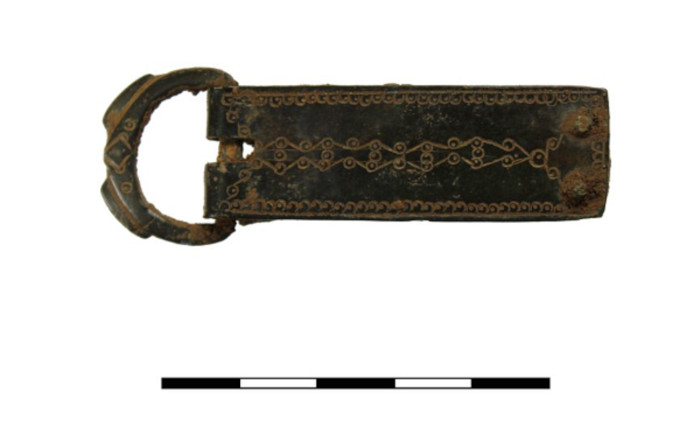
Copper alloy belt buckle found at the site. (Archaeological Research Services Ltd)
A Trove of Historical Treasures
The phallic nail cleaner was just one of many incredible relics uncovered at the site. Archaeologists also found a copper alloy belt buckle and plate from the same late Roman period.
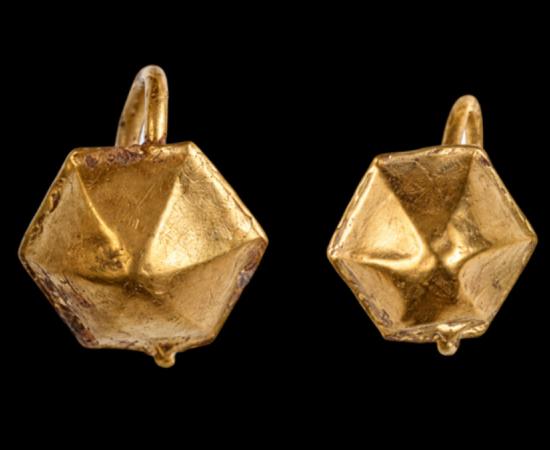
Additionally, the archaeologists found an interesting array of coins with a history of more than 2,000 years, including the silver ‘stater’ of the Iron Age known to have been used by the local Dobunni tribe, characterized by a classical horse motif. Bronze coins issued by Emperor Constantine I were also found.
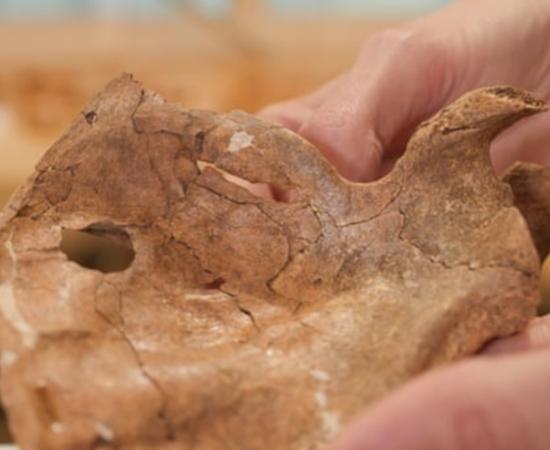
Human remains were found, including a grave from the 4th century provided with grave goods such as a copper bracelet and coins of the Roman period. In another unusual burial featured a skeleton with its skull removed from the body and placed between its legs, a practice known from the late Roman era.
Top image: Roman nail cleaner with a phallus handle discovered near Cheltenham, England. Source: Archaeological Research Services Ltd
By Gary Manners
References
All That's Interesting. 2026. Roman Nail Cleaner With Phallus Handle Unearthed In England. Available at: https://allthatsinteresting.com/england-ancient-roman-nail-cleaner-phallic-handle
Archaeological Research Services Ltd. 2026. Excavations at the Gloucestershire M5 Junction 10 Improvements Scheme – Part 4. Available at: https://archaeologicalresearchservices.com/excavations-at-the-gloucestershire-m5-junction-10-improvements-scheme-part-4/