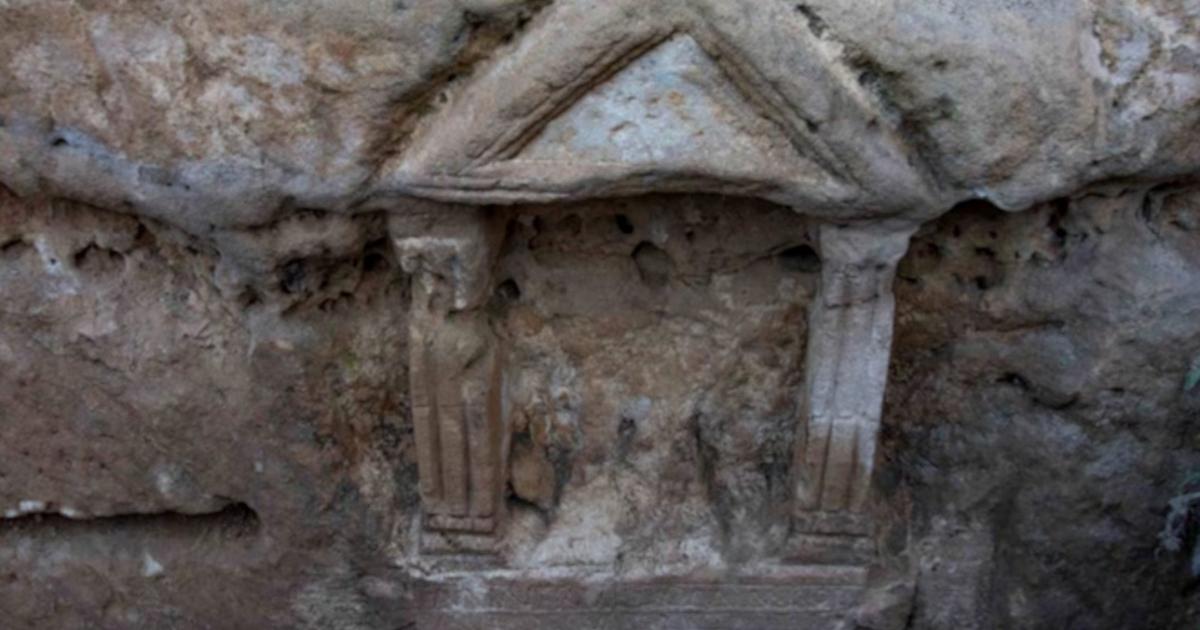

Archaeologists have made a fascinating discovery in central Spain: a rare Roman rock-cut sanctuary dedicated to the goddess Minerva. Found within an ancient quarry near Campos del Paraíso in the Cuenca province, the late second-century AD shrine offers fresh insights into the intersection of religious devotion and industrial activity in Roman Hispania. The find demonstrates that sacred spaces extended beyond major urban centers, taking root in the very landscapes where communities extracted the natural resources that fueled the Roman economy.
The sanctuary, carved directly into a sandstone quarry face, was commissioned by a man named Plotius Vigor. Researchers María José Bernárdez Gómez and Juan Carlos Guisado di Monti from the Don Felipe de Borbón y Grecia Mining History Museum detailed the discovery in the journal Mantva. The region, located just 15 kilometers from the significant ancient Roman city of Segóbriga, was famous for producing lapis specularis, a transparent gypsum used as window glass that brought immense wealth to the area.
- Remarkable Survival of Minerva's Ancient Shrine Through the Ages
- Thriving Roman Holiday Resort Emerging From Abandoned Ruins
A Miniature Classical Temple
Archaeologists found that the shrine contains a small aedicula or "mini-structure" approximately 70 cm wide and 50 cm tall. Its style resembles a classical temple, with two fluted semi-columns supporting the triangular pediment of the roof.
In the middle of the structure are a relief of the Roman goddess of Wisdom (Minerva) standing on two feet wearing a long tunic and a helmet, holding a spear in her right hand and an oval-shaped shield, which has the aegis (a protective symbol) depicted in it. The owl is also identified on the shield (Minerva's sacred bird and symbol of wisdom) and in the area around the shrine are small carved shelves likely used by people making offerings to the gods.
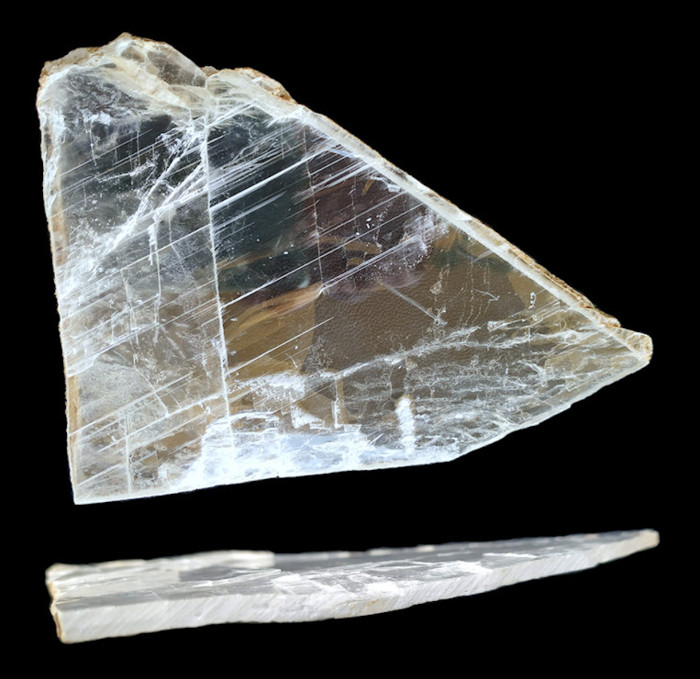
Lapis specularis, the transparent gypsum mineral extensively mined in the region during the Roman era. (Manuel Pina L / CC BY-SA 4.0)
The Plotius Family and Roman Industry
Beneath the relief of the goddess, a two-line Latin inscription reads: "To Lady Minerva, Plotius Vigor dedicates this with his entourage." This inscription is crucial, as it links a specific individual to the site. The gens Plautia or Plotius family was prominent in Roman Hispania, with members serving as senators and imperial officials in cities like Tarraco, Gades, and Carthago Nova.
- The Curious Red and Black Inscriptions Found at Spanish Roman Quarry
- Remote Sensing Technology Uncovers 66 “Hidden” Roman Bases in Spain
The discovery of the sanctuary highlights the enduring importance of Minerva in the region during the second century, a period of prosperity driven by the lapis specularis industry. "The site demonstrates how places associated with stone extraction could acquire a symbolic and religious dimension in addition to their productive function," the researchers noted.
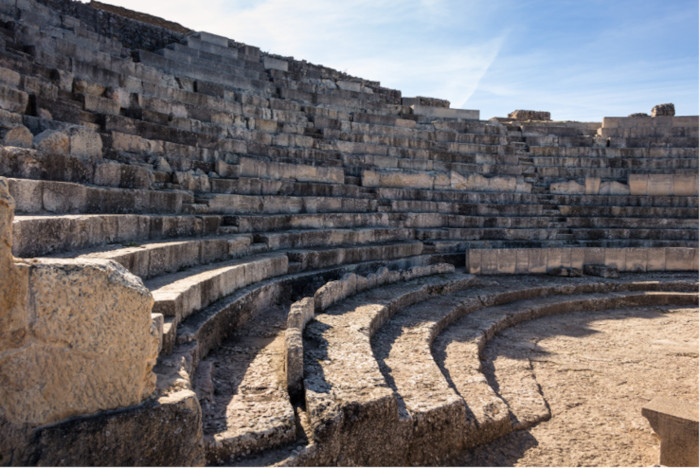
The ancient Roman amphitheater at Segóbriga, a major urban center near the newly discovered quarry shrine. (Rafa Esteve / CC BY-SA 4.0)
Sacred Spaces in Working Landscapes
This sanctuary is a compelling example of how Roman workers and quarry operators sought divine protection in their daily lives, merging economic activity with religious devotion. While grand temples like the Capitolium in major cities often dominate the archaeological record, rural and industrial sites also hosted significant religious practices.
Similar rock-cut shrines, though rare, have been found elsewhere in the empire, such as the famous Minerva's Shrine in Chester, England. The new find in Campos del Paraíso adds to the growing appreciation of sacred spaces associated with mining and quarrying in ancient Spain, offering a more complete picture of Roman religious life.
Top image: The rock-cut sanctuary dedicated to Minerva discovered in the ancient quarry near Campos del Paraíso. Source: José Martínez Hernández / El Pais
By Gary Manners
References
Bernárdez Gómez, M. J., and Guisado di Monti, J. C. 2026. El santuario rupestre de Minerva en Campos del Paraíso (Cuenca): un nuevo espacio cultual en cantera en el territorio del lapis specularis. Mantva. Available at: https://www.academia.edu/168200692/EL_SANTUARIO_RUPESTRE_DE_MINERVA_EN_CAMPOS_DEL_PARA%C3%8DSO_CUENCA_UN_NUEVO_ESPACIO_CULTUAL_EN_CANTERA_EN_EL_TERRITORIO_DEL_LAPIS_SPECULARIS_MANTVA_8_2026
El Pais. 2026. Hallado un santuario romano dedicado a la diosa Minerva en una cantera de Cuenca. Available at: https://elpais.com/cultura/2026-06-22/hallado-un-santuario-romano-dedicado-a-la-diosa-minerva-en-una-cantera-de-cuenca.html
Milligan, M. 2026. Roman shrine dedicated to Minerva discovered in ancient quarry. Heritage Daily. Available at: https://www.heritagedaily.com/2026/06/roman-shrine-dedicated-to-minerva-discovered-in-ancient-quarry/158422