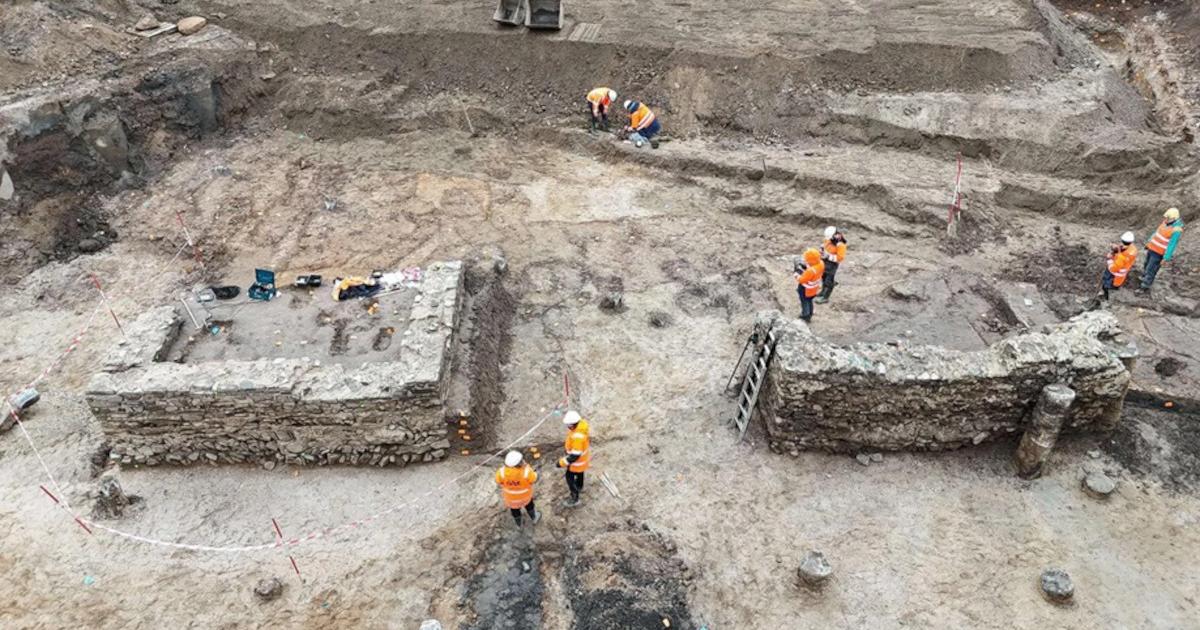

The Roman bathhouse was discovered during excavations conducted by teams from RAAP and BAAC, which began in September 2025. Their extensive work has revealed much more than just the baths. Researchers have identified a thriving urban neighborhood dating from the second and third centuries AD, complete with paved streets, residential blocks, luxurious townhouses, and a military tower.
- Roman Baths Served as Key Social Centers
- First Roman Temples from 2,000 Years Ago Found in the Netherlands
A Monumental Roman Complex
The sheer scale of the newly discovered complex is staggering when compared to other known public bathhouses in the region. For context, the bathhouse at Forum Hadriani, near modern Voorburg, covered approximately 2,200 square meters, while the one at Coriovallum in present-day Heerlen measured around 2,500 square meters. The Nijmegen bathhouse was more than twice the size of the former and nearly double the latter, making it a monumental architectural achievement.
Roman authorities granted municipal status to Ulpia Noviomagus around 100 AD during the reign of Emperor Trajan, making it the first town in what is now the Netherlands to receive Roman city rights. Following this prestigious designation, the city embarked on a major building program, erecting several large public buildings in stone, with this luxurious bathhouse being a central feature for hygiene, recreation, and social gathering.
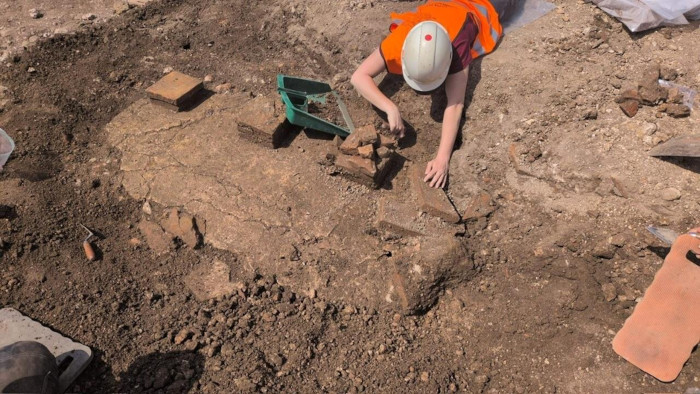
Hypocaust system in the Roman bath complex uncovered in Nijmegen. (Municipality of Nijmegen / BAAC / RAAP)
Excavations have exposed distinct rooms designated for hot, warm, and cold bathing, with some sections indicating a later expansion of the complex. The remains point to a building finished with highly expensive materials. The interior walls were clad in marble, while black and white limestone tiles paved the floors. Other rooms featured beautifully painted plaster walls, and the exterior was adorned with decorative moldings and stone columns made from limestone and sandstone.
- 2,000-Year-Old Roman Villa Found in Germany had Luxurious Underfloor Heating
- Buried Roman Canal and Road Unearthed in the Netherlands
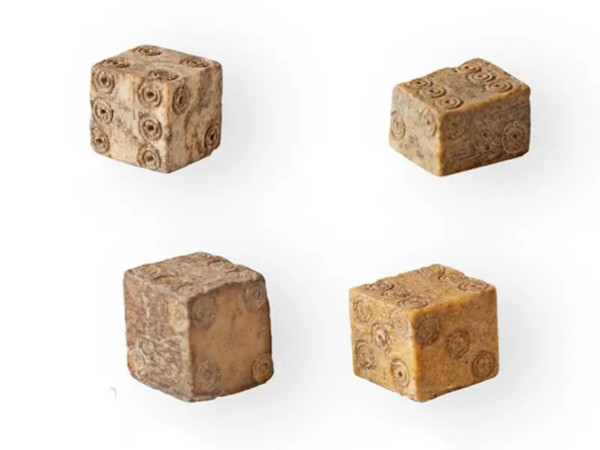
Roman gaming dice found at Nijmegen. (Municipality of Nijmegen / BAAC / RAAP)
Surviving the Centuries
Despite the fact that many Roman buildings in Nijmegen were dismantled during the Middle Ages to reuse their stone for other construction projects, large sections of the bathhouse infrastructure miraculously survived. Archaeologists uncovered intact drainage channels, floors, and sections of the hypocaust underfloor heating system. In one remarkable instance, a concrete floor still rests securely on the small brick pillars that circulated hot air nearly two thousand years ago.
Furthermore, two stone foundation walls have survived to a height of almost two meters (over six feet). According to experts, these rank among the absolute best-preserved examples of Roman masonry ever found in the city.
Stephan Mols, a researcher at Radboud University who is closely following the excavation, emphasized the significance of the find:
"The new finds show that the Romans did not regard this city as a backwater. The buildings were even larger and more imposing than we had previously thought," Mols stated. He added, "If you'd been walking around here back then, you wouldn't have gotten the impression that you were on the edge of the Roman Empire, such was the luxury and scale of the buildings."
A Wealth of Artifacts and the God of Wine
The excavation has produced tens of thousands of portable artifacts that provide a vivid glimpse into the daily lives of the city's inhabitants. Among the discoveries are intaglio gemstone signet rings, coins, fragments of bronze statues, jewelry, and a stunning necklace with a gold clasp.
Archaeologists also recovered hundreds of bone hairpins, known as bodkins, scattered across the site. Roman women used these pins to secure their elaborate hairstyles. Interestingly, several of these hairpins feature beautifully carved cats—some standing with their tails raised in anger, and others seated calmly. The presence of these pins suggests the existence of highly skilled local artisans and a wealthy female population.
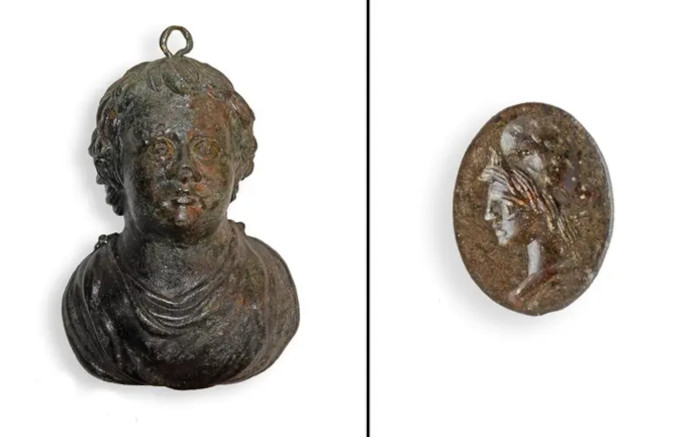
Left: Bronze bust of Bacchus from Nijmegen. Right: gemstone from a Roman signet ring found in Nijmegen (Municipality of Nijmegen / BAAC / RAAP)
One of the most notable and exquisite finds is a small bronze bust of Bacchus, the Roman god of wine and ecstasy. Experts believe the piece originally decorated a pouring vessel or an item of furniture. Later in its history, owners modified the object by adding a hanging loop, repurposing the divine bust as a practical weighing scale.
The recovery of numerous coins issued during the reign of Emperor Postumus (260 to 269 AD) provides solid evidence that this wealthy district remained occupied well into the third century, longer than previously assumed. Such coins appear far less often in other parts of the Roman city, suggesting this particular neighborhood held a special significance.
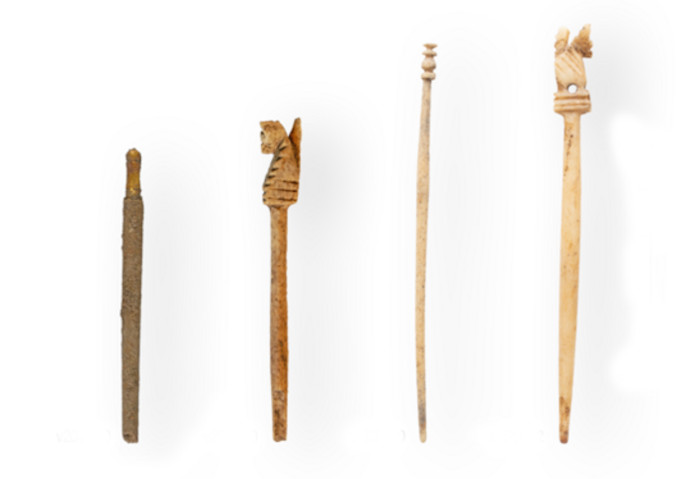
Roman bone hairpins found in Nijmegen, some decorated with carved cats. (Municipality of Nijmegen / BAAC / RAAP)
Fortunately, developers plan to integrate several of the best-preserved remains into the new residential design, ensuring that the legacy of this magnificent Roman city remains visible for future generations. A selection of the recovered artifacts is set to go on display at Nijmegen City Hall on June 29, 2026, giving the public a first glimpse of the extraordinary finds from this remarkable excavation.
Top image: Excavation of the Roman bathhouse in Nijmegen. Source: Municipality of Nijmegen / BAAC / RAAP
By Gary Manners
References
Archaeology Magazine. 2026. Large Roman Bathhouse Discovered in The Netherlands. Archaeology Magazine. Available at: https://archaeology.org/news/2026/06/18/large-roman-bathhouse-discovered-in-the-netherlands/
Nijmegen Municipality. 2026. Largest Roman bathhouse in the Netherlands excavated. Available at: https://www.nijmegen.nl/nieuws/grootste-romeinse-badhuis-in-nederland-opgegraven/
Phys.org. 2026. Unearthed bathhouse reveals a thriving Roman Nijmegen. Phys.org. Available at: https://phys.org/news/2026-06-unearthed-bathhouse-reveals-roman-nijmegen.html
The History Blog. 2026. Largest Roman bathhouse in the Netherlands found in Nijmegen. The History Blog. Available at: http://www.thehistoryblog.com/archives/76341