
A routine salvage excavation ahead of construction of a new bus terminal in Ramat Gan, Israel, revealed a surprising discovery: an industrial and commercial complex dating back 1,300 years to the early Islamic period. Digging for several months in the parking lot of the city’s Winter Stadium, archaeologists from the Israel Antiquities Authority (IAA) uncovered evidence of workshops, trade, and economic activity. According to Yoav Arbel, one of the excavation directors, this find offers insight into the economic activities of the Umayyad and later Abbasid Caliphates. So far, archaeologists have exposed only part of the complex, leaving its true size and purpose unclear.
Unexpected Discovery Reveals a Vast Early Islamic Commercial Complex
Arbel, who led the excavation along with Lior Rauchberger, noted that the find was unexpected: “We expect to find archaeology here, but we did not expect to find an entire commercial and industrial complex from the seventh and eighth centuries AD. The whole thing is so well organized, it is clear that engineers planned it, and that the government probably was involved as well.”
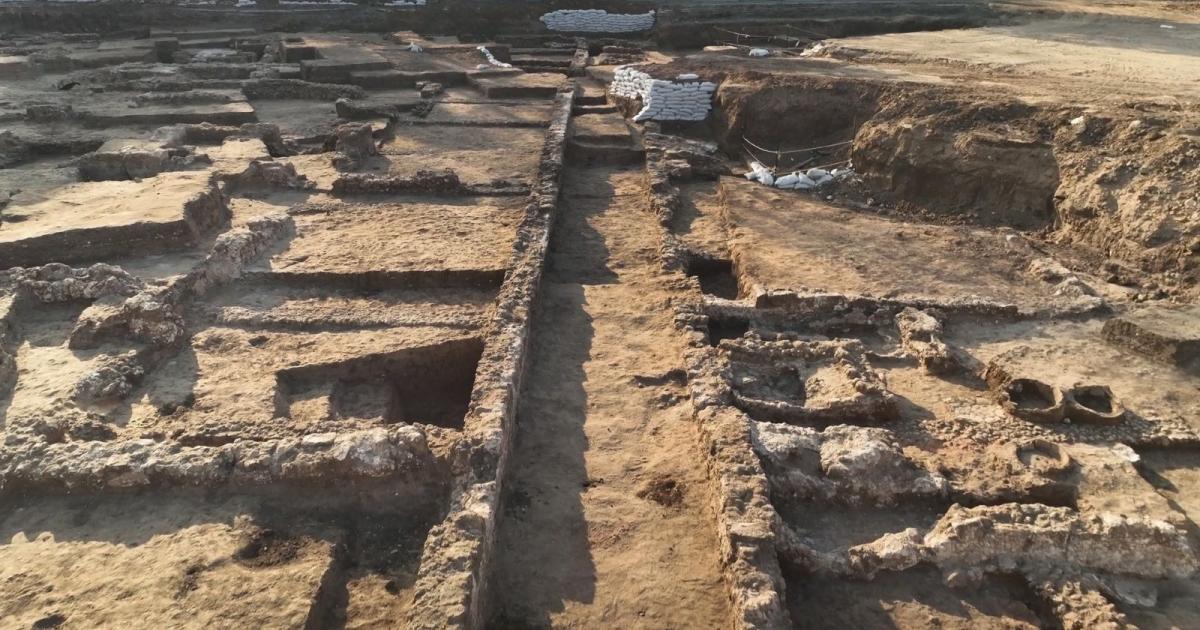
He pointed out that the complex features a network of straight streets that intersect at 90-degree angles and are lined with rooms that once served as shops or warehouses. The complex also contained plastered industrial facilities, large pottery kilns, and installations apparently used to produce or process liquids, although researchers have not yet determined what substances were involved.
- Lavish Early Islamic Mansion Found in Israel’s Negev Desert Astounds!
- 1,600-Year-Old Pottery Workshop Has First Known Rock-Hewn Kiln in Israel
A Thriving Commercial Quarter Vanished in the Ninth Century
Scientific dating results using radiocarbon dating aren’t yet available. Still, archaeologists think this particular quarter flourished for almost 150 years during the Umayyad and later Abbasid Empires before being abandoned in the second half of the 9th century AD, for reasons which aren’t yet understood. Citing their current research, Arbel noted that the complex was eventually resettled, and during the Fatimid period the site took on a more domestic character, with residential buildings and tabun ovens constructed over the ruins of the earlier industrial complex. This later settlement survived until the late 11th century AD, around the time of the First Crusade and the Crusader conquest of the region.
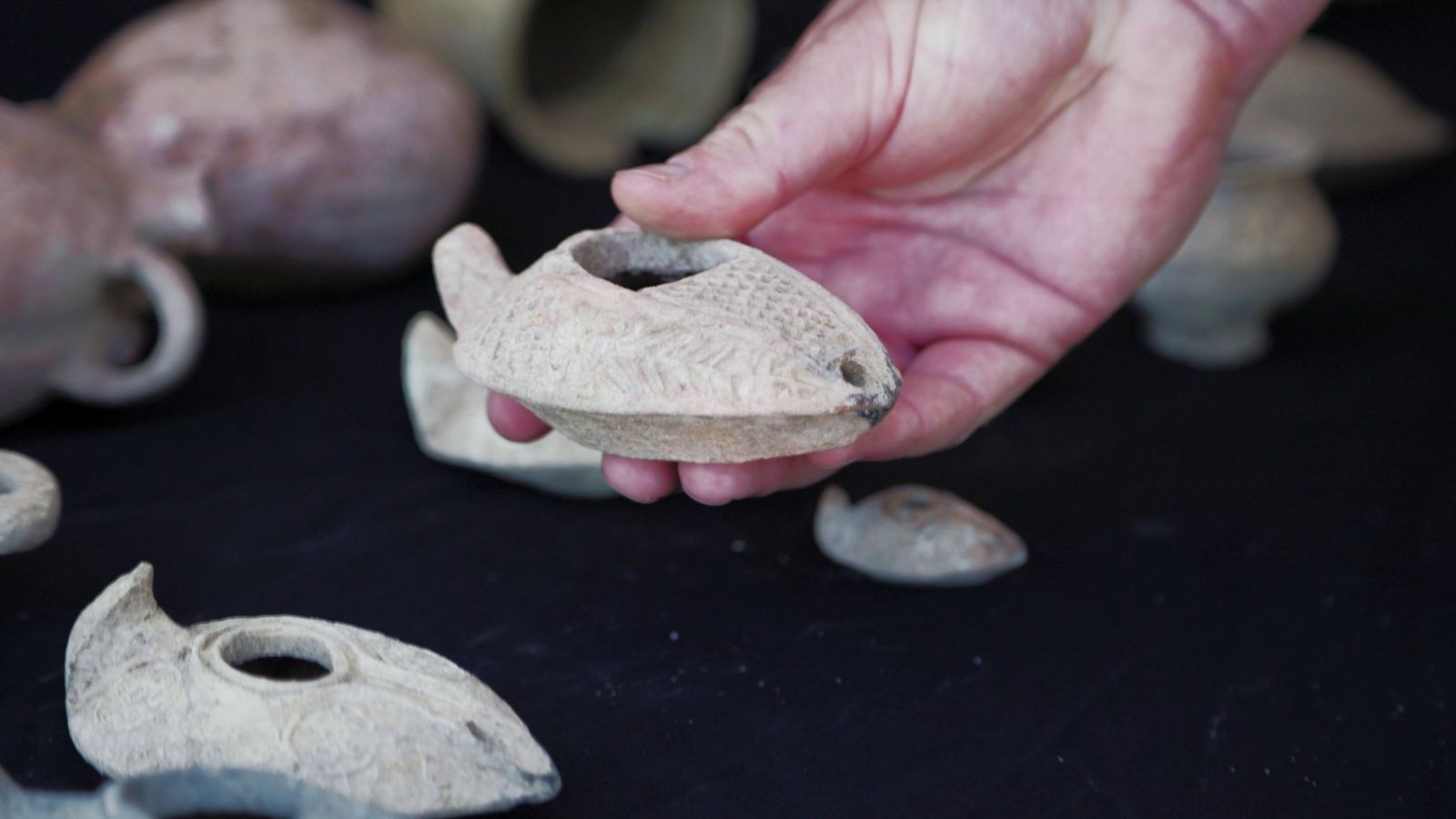
Decorated ceramic oil lamps associated with the archaeological discoveries at Ramat Gan. Finds such as these provide a glimpse into everyday life within the approximately 1,300-year-old complex uncovered by archaeologists. (Israel Antiquities Authority)
Ancient Trade Hub Stood Along a Major Islamic-Era Highway
Similar industrial facilities have been discovered elsewhere in Israel, Syria, and Lebanon, but complexes of this scale are more commonly associated with large urban centers. This complex was unique in its location along a principal road that once connected Jaffa, Ramla (once the district's capital), and Jerusalem. That highway, a major artery of the Islamic period, may have served travelers and merchants moving along this important route. IAA researchers continue to investigate whether the complex shipped products to other regional locations and to identify the owners and operators of the facilities.
- The First Crusade: Christian and Muslim Bloodshed as Peasants, Princes, and Turks Clash in the Holy Land
- Ancient Oil Lamp Find Sheds Light on Middle Eastern History
Dozens of Artifacts Reveal Everyday Life at the Ancient Complex
In addition to the building remnants, researchers found dozens of pottery vessels and intact oil lamps, along with coins, fragments of glass vessels, pieces of bronze tableware, and cosmetic implements. Iron pickaxe heads, a sickle, and numerous nails found at the site provided insight into the period’s culture, trade, and economy. These artifacts helped researchers date the archaeological remains with considerable confidence.
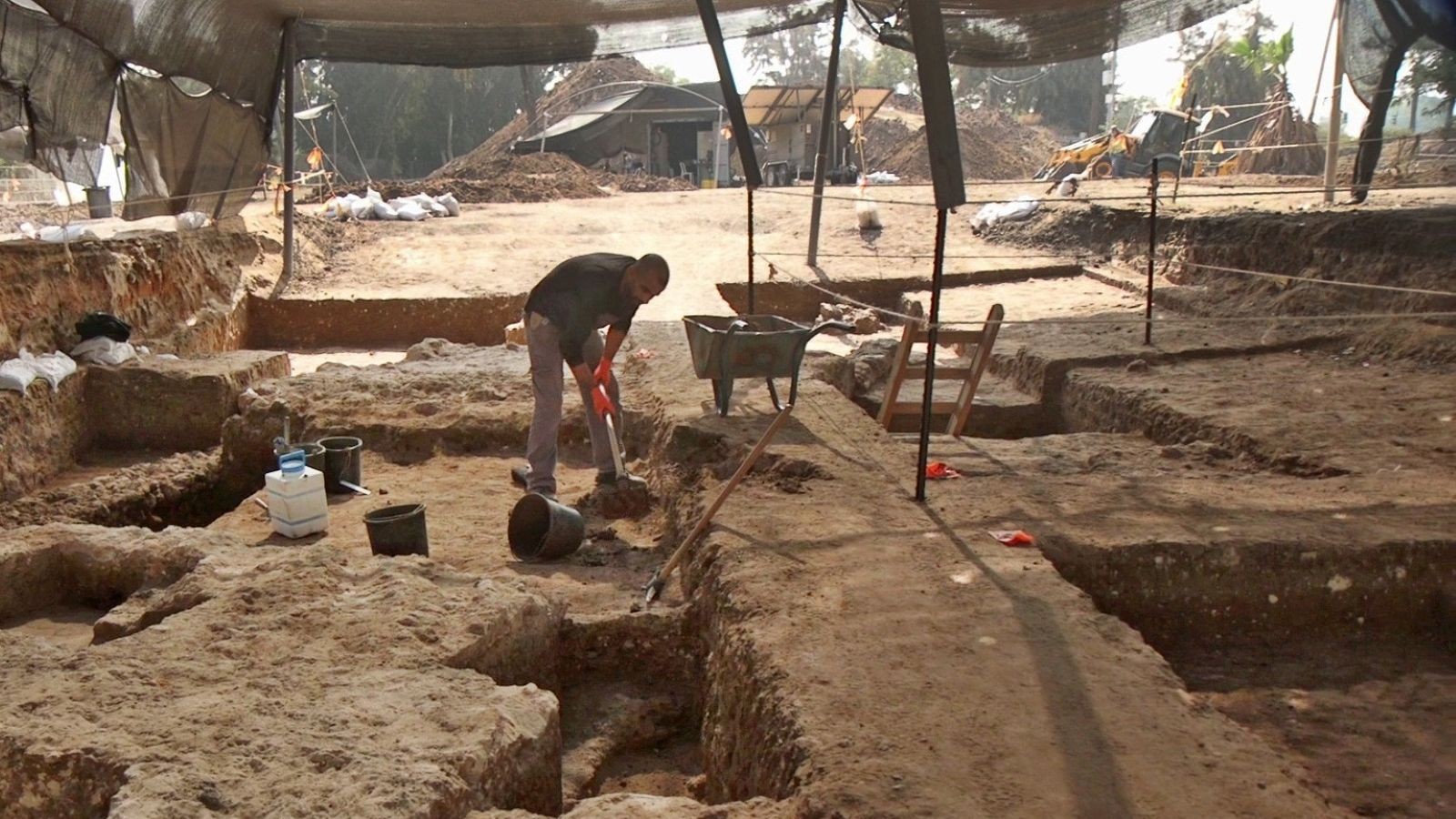
Archaeological excavation underway at the 1300-year-old complex discovered in Ramat Gan. Archaeologists are exposing architectural remains associated with a substantial Early Islamic-period settlement. (Israel Antiquities Authority)
Who Lived and Worked at the Mysterious Trade Complex
The religious and ethnic identity of the people who lived or worked at the complex remains unknown. The wider region during the Early Islamic period included Muslim, Christian, Samaritan, and Jewish communities. Arbel believes that the people who lived and worked at the complex were a diverse group. Still, IAA has not recovered sufficient evidence to be exact: “There were Muslims, but also a lot of Christians, Samaritans, and Jewish communities. We don’t know who was there at the time, and we have not found any houses of prayer or other indications to identify them.”
According to the IAA, Ramla, the district capital, had a majority Muslim population. The Yarkon region is believed to have retained a substantial Samaritan population descended from communities that had flourished there during the Byzantine period.
- The Golden Age Of Islamic Astronomers
- The Radhanites: A Glimpse into the Trade Networks of the Middle Ages
Archaeologists Believe Much More Remains Beneath Ramat Gan
Excavations at this particular site recently concluded, but Arbel believes substantial archaeological remains extend beyond the excavated area:
“The site extends west, north, and south and possibly to the east as well. So, we only have a part of it.”
Digging at the site began in November 2025, as part of the construction process for the planned bus terminal. A break of several months during the winter season limited the scope of the dig, and much more remains buried beyond the protective fences. Following comprehensive scientific documentation, measures will be taken to preserve the archaeological remains as construction of the bus terminal proceeds.
Other IAA excavations in the vicinity have already turned up additional remains. Considering the context of the site, Arbel suggests the newly discovered complex may be just one node in a much larger economic landscape that linked fields, workshops, and road networks during the early Islamic eras: “It is a possibility that it does belong to a much larger story that we don’t have,” Arbel said. “We only have pieces of it so far.”
Top Image: Extensive architectural remains of the approximately 1,300-year-old complex uncovered near Winter Stadium in Ramat Gan, Israel. The dense arrangement of walls and rooms points to a substantial Early Islamic-period settlement with commercial and other activities. Source: (Israel Antiquities Authority)
By Ramsey Hardin
References
All Israel News Staff. 2026. IAA uncovers sophisticated industrial site from the Middle Ages in central Israel. Available at:
Ben-Ari, C. 2023. Ramat Gan. Hadashot Arkheologiyot—Excavations and Surveys in Israel 135. Israel Antiquities Authority. Available at:
https://hadashot.iaa.org.il/report_detail_eng.aspx?id=26430&mag_id=135
Glick, A. 2016. Ramat Gan. Hadashot Arkheologiyot—Excavations and Surveys in Israel 128. Israel Antiquities Authority. Available at:
https://hadashot.iaa.org.il/Report_Detail_Eng.aspx?id=25033
Israel National News. 2026. Have the oldest streets in Ramat Gan been uncovered? A 1,300-year-old complex was discovered near Winter Stadium. Available at:
https://www.israelnationalnews.com/news/431757
Radashkovsky, I. 2024. Ramat Gan, Derekh Ha-Tayyasim. Hadashot Arkheologiyot—Excavations and Surveys in Israel 136. Israel Antiquities Authority. Available at:
https://hadashot.iaa.org.il/report_detail_eng.aspx?id=26491&mag_id=137
Sela-Eitam, M. 2026. WATCH: Archaeologists unearth 1,300-year-old ‘shopping hub’ beneath stadium in central Israel. Available at:
https://www.jpost.com/archaeology/article-905656
Stub, Z. 2026. 1,300-year-old industrial hub uncovered during bus terminal construction in Ramat Gan. Available at: