
The collapse of the Western Roman Empire ushered in an era of profound transformation across Europe, a time traditionally characterized by the chaotic migrations of "barbarian" tribes. A groundbreaking new study utilizing ancient DNA analysis has pierced the veil of this poorly documented period, revealing that the emergence of post-Roman societies was far more complex than previously imagined. By sequencing 314 genomes from late Roman and early medieval cemeteries in Pannonia, an international team of researchers has discovered that migrating northern European populations did not simply conquer and replace local inhabitants, but instead integrated to form a sophisticated, hierarchical new society.
This pivotal research, published in the journal Science, challenges the long-held myth of simple barbarian domination. The study focused on the Little Hungarian Plain in northwestern Hungary, an area that once formed part of the Roman province of Pannonia. This region served as a crucial frontier zone where the classical world met the encroaching northern tribes.
- The Lombards: The “Barbaric” Germanic Warriors Who Changed Italy
- Aquincum: Exploring the Ancient Roman City Under Modern-day Budapest
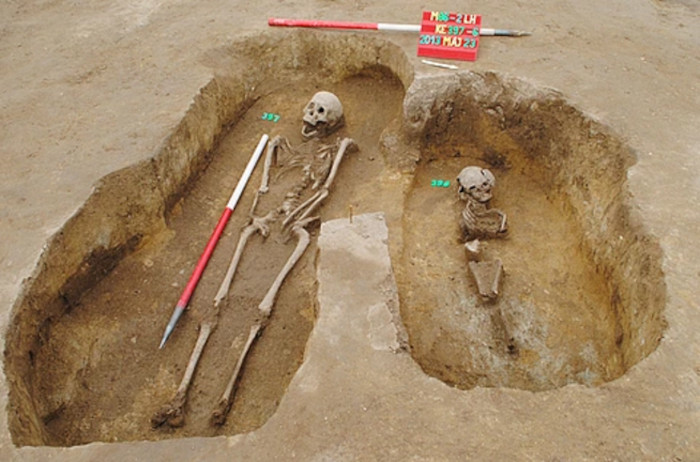
Burials of an adult and a child from the sixth-century cemetery at Szeleste, Hungary. (Savaria Museum/IAS)
Tracing the Genetic Shift in Post-Roman Pannonia
The multidisciplinary team, led by researchers from Stony Brook University and Eötvös Loránd University, analyzed skeletal remains from seven cemeteries - two dating to the late Roman era and five from the post-Roman period. Their genetic analysis revealed a stark contrast between the two epochs. During the Roman period, the local communities were part of a dense, collaborative network characterized by predominantly southern European genetic ancestry, alongside notable diversity from Asia and Africa, reflecting the cosmopolitan nature of the Roman Empire.
However, the post-Roman sites exhibited a dramatic rise in northern European genetic ancestry. This shift corresponds with the historically documented expansion of the Lombard Kingdom from north of the Danube River into former Roman territories during the early 6th century. Yet, the researchers discovered that this movement was not a single, massive wave of barbarian migration. Instead, it involved complex and sustained patterns of mobility, with genetic connections linking individuals in the Little Hungarian Plain to populations much farther north.
- DNA Revels How the Slavic Migration Reshaped Central and Eastern Europe
- DNA Study Reveals Diversity Among Post-Roman Elites
The Forging of a Complex, Hierarchical Society
Perhaps the most surprising revelation from the ancient DNA analysis is the intricate social structure of these newly formed communities. The migrating groups did not merely establish loose, egalitarian rural settlements. By integrating genomic data with archaeological findings, such as grave goods and isotopic evidence of diet, the team identified distinct social hierarchies.
"Prior to our ability to analyze the DNA of these peoples who moved into what is now Hungary, and similar regions in Europe, archeologists assumed these communities were of the same rural type, but what we see is a larger post-Roman society," explained Krishna R. Veeramah, Associate Professor at Stony Brook University and co-corresponding author of the study, in a university press release. "While we found the same overall genetic diversity in multiple cemeteries in the region, the groups appear to have very different social structures based on ancestry and grave goods."
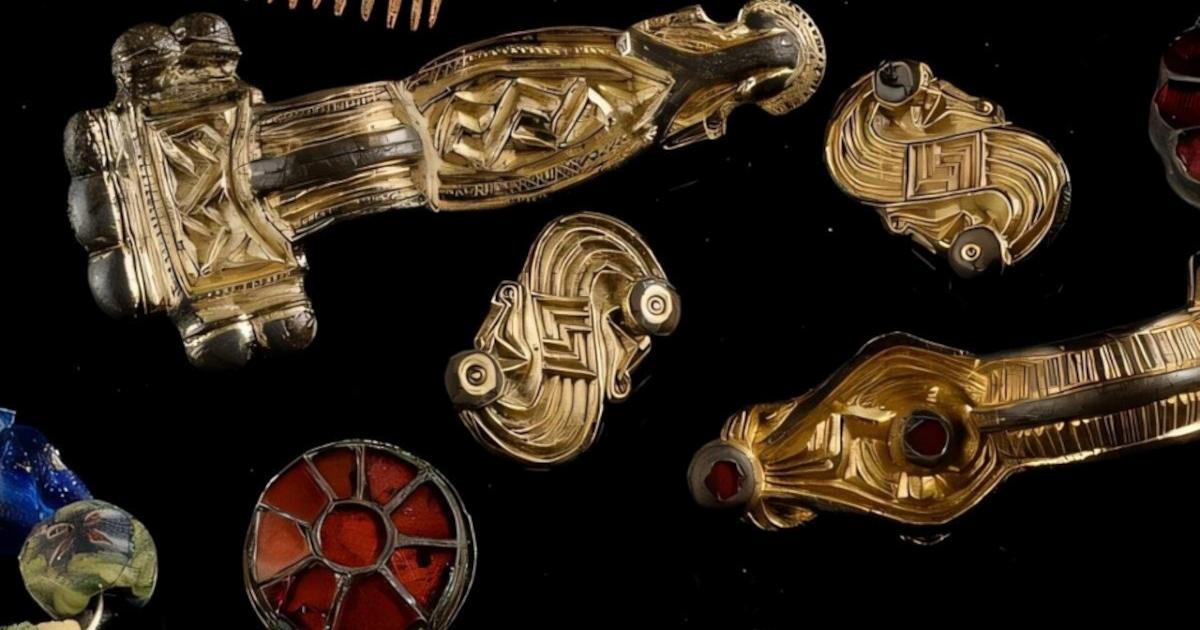
For instance, at the Hegykő cemetery, the arriving population from northern Europe formed large, interconnected kinship groups. These individuals enjoyed an elevated status, evidenced by their superior diets and richer grave goods, including weapons and brooches, suggesting they functioned as a ruling elite exerting political control. Conversely, at the nearby Szeleste site, the community lacked tight kinship ties and consisted of families with mixed northern and southern ancestry, indicating a more integrated and less stratified social organization.
Rethinking the "Barbarian" Legacy
These findings fundamentally reshape our understanding of the so-called barbarian kingdoms. The research demonstrates that the migrating Lombards and other northern groups did not simply eradicate the existing Romanized populations. Instead, multiple modes of community formation were shaped by dynamic interactions between the incoming northern Europeans and the local southern Europeans.
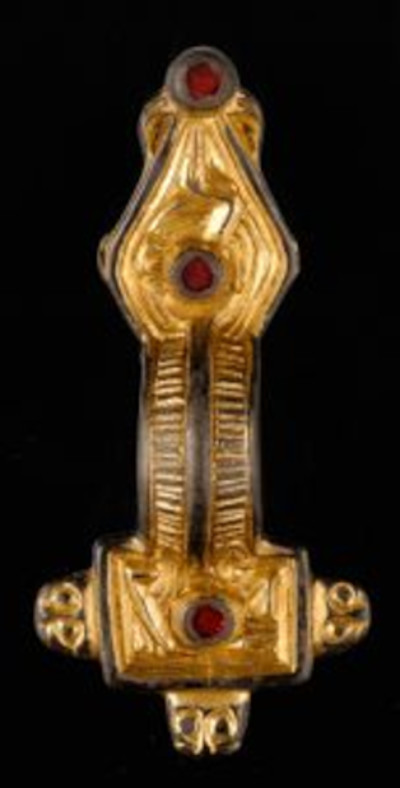
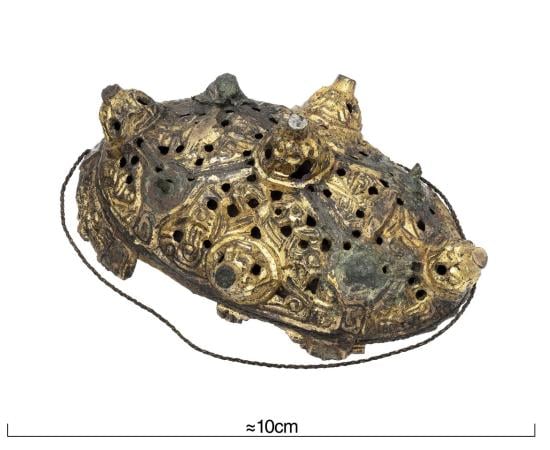
This close-up shows a bow brooch, which was used to fasten cloaks, tunics, or other fine clothing. (Savaria Museum)
Professor Emeritus Patrick Geary of the Institute for Advanced Study, co-PI of the HistoGenes project, which is funded by the European Research Council (ERC), summarized the significance of the findings in a statement to EurekAlert!: "The project has revealed both gradual and localized forms of movement across short and long distances, as well as rapid, large-scale population shifts from Eastern Asia into the Carpathian Basin. It has also demonstrated that material culture and genetic ancestry do not necessarily coincide and has illuminated the diverse ways newcomers integrated into existing populations."
This monumental study not only fills a crucial gap in the historical record but also highlights the enduring power of ancient DNA to rewrite the narratives of our past, proving that the ashes of the Roman Empire gave rise to vibrant, complex societies that laid the foundations for modern Europe.
Top image: Pictured in this collection of grave items from Szeleste are the center of a shield, or umbo (upper right), various brooches (center), mosaic beads, and an antler comb (top left). Source: Savaria Museum
By Gary Manners
References
Institute for Advanced Study. 2026. Ancient DNA study of post-Roman Europeans reveals the emergence of a complex new society. EurekAlert!. Available at: https://www.eurekalert.org/news-releases/1131905
Stony Brook University. 2026. Ancient DNA Study of Post-Roman Europeans Reveals the Emergence of a Complex New Society. SBU News. Available at: https://news.stonybrook.edu/newsroom/press-release/general/ancient-dna-study-of-post-roman-europeans-reveals-the-emergence-of-a-complex-new-society/
Tian, Y. et al. 2026. Unveiling the complexity of post-Roman polity formation in Pannonia using ancient DNA. Science. Available at: https://www.science.org/doi/10.1126/science.aec2634