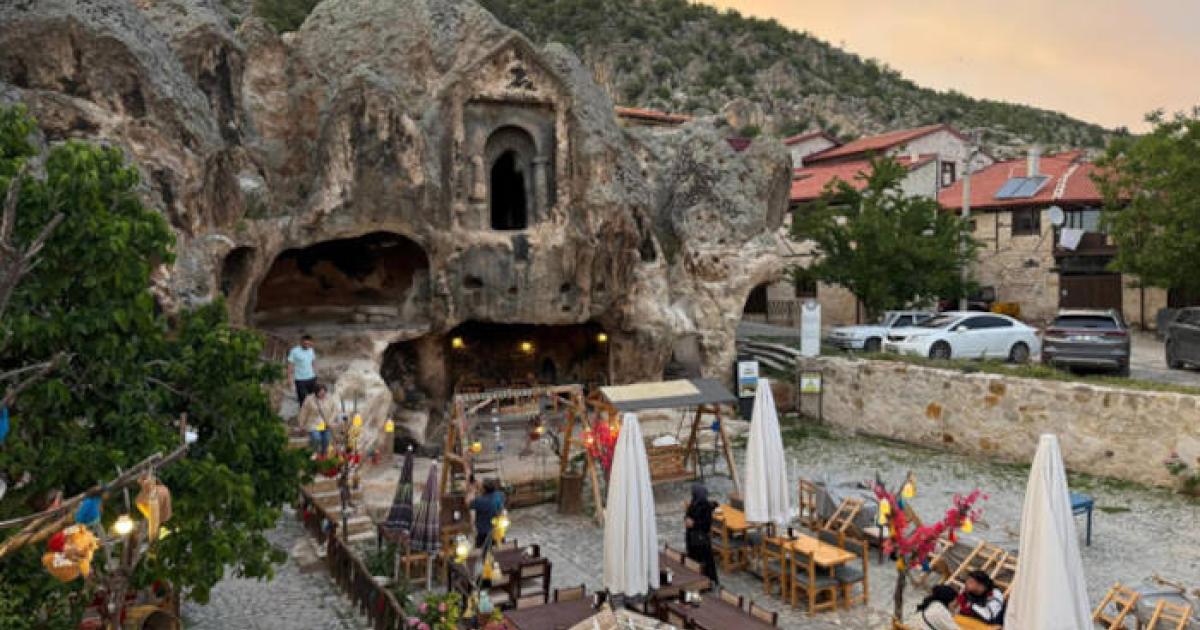

In an astonishing case of cultural heritage misuse, a 3,000-year-old Phrygian rock-cut tomb in the village of Ayazini, Türkiye, has been illegally transformed into a café-restaurant. The sacred burial site, which lies within the Phrygian Valley of Afyonkarahisar and is listed on the UNESCO World Heritage Tentative List, was repurposed without permission into a business space outfitted with seating, carpets, lighting, and even a chimney heating system.
First reported by Hürriyet, the establishment operated under the name "Taş Bahçe" ("Stone Garden") and promoted itself on social media using captions like "The glory of the stone rooms." Photos and videos show the tomb’s ancient chambers retrofitted with modern comforts and decorative items affixed directly into the stone.
- Phrygian Temple Found Beneath the Famous Maltas Monument in Turkey
- Sacred Structures Built by Phrygians in 800 BC Unearthed in Turkey
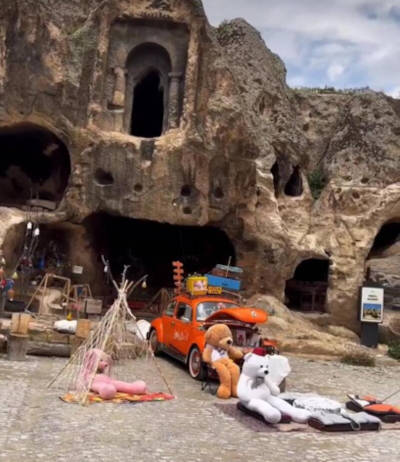
The tomb has been adorned both inside and out. (Salim Uzun /Hürriyet)
A Sacred Site Turned into a Social Hub
The violation has shocked experts, given the tomb’s status as a registered archaeological site. Wooden furnishings, transparent winter doors, and even a swing installed outside the monument were all part of a broader attempt to draw tourism and business to the area — all without approval from Türkiye’s Regional Conservation Council, the agency responsible for protecting cultural sites.
Electrical wiring was drilled into the ancient rock, and heating systems installed inside chambers once reserved for the dead. The transformation, visible to the public via the café's social media channels, triggered an immediate backlash from archaeologists and heritage professionals.
“Not even a chair should be placed next to a registered monument without permission, let alone converting it into a café,”
— Prof. Nevzat Çevik, Akdeniz University, Department of Archaeology.
Prof. Çevik expressed outrage at the commercialization of such a significant site, accusing the owners of deliberately exploiting the tomb’s historic value.
- Hierapolis, Phrygian City Of Cybele And Home Of Hades
- Anatolian History: Emerging Empires and Lands Changing Hands
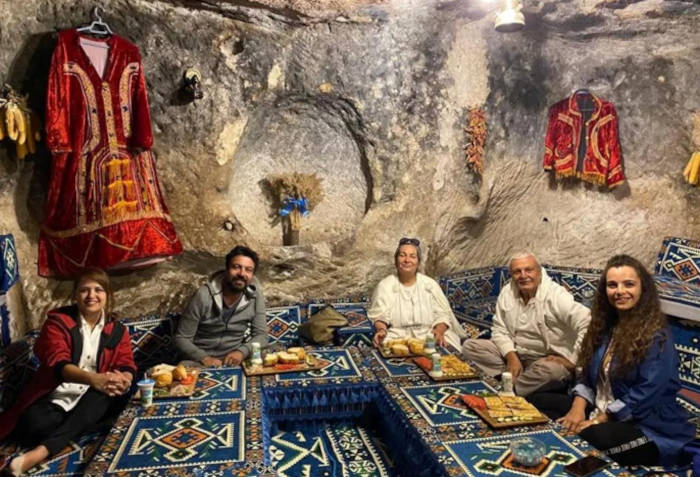
The inside of the tomb, beautifully decorated, but still illicit. (Salim Uzun/Hürriyet)
Scholars Decry Desecration of the Past
Fellow archaeologist Prof. Havva İşkan echoed the condemnation, warning of the implications of such transformations on sacred and cultural memory.
“These are burial chambers with spiritual meaning for the people who lived at that time. We’ve unfortunately turned them into amusement parks,”
— Prof. Havva İşkan, archaeologist.
She added, “They even drilled into the rock to install electricity. Who knows, maybe they’re making tea and coffee right inside the tomb.”

Ancient Origins Indian Traditional Jewelry Collection! Every piece is a vibrant celebration of India’s ancient artistry, where masterful craftsmanship meets timeless elegance. From beautifully designed necklaces and earrings to mesmerizing crystal malas that dance with radiant beads and bold colors, this collection is a treasure trove of cultural splendor.
Swift Action by Authorities
In response to the public outcry and visual evidence shared online, Türkiye’s Ministry of Culture and Tourism launched a formal investigation. Birol İnceciköz, Director General of Cultural Assets and Museums, confirmed that all renovations were unauthorized and constitute a violation of cultural heritage law.
“All infrastructure work carried out without permission in a registered structure is a violation. We’ve initiated legal proceedings and are closely monitoring the matter,”
— Birol İnceciköz, Ministry of Culture and Tourism.
While the tomb lies on a parcel of private land, its designation as a protected archaeological site makes any alteration subject to official oversight. Museum authorities from Afyonkarahisar acted swiftly, removing all modifications — including carpets, furniture, and wiring — and restoring the tomb to its original condition as of June 30, 2025.
Business Owner Defends Actions
Halil Çakmak, the owner of the business, denied malicious intent and claimed they had applied for permission and were still awaiting a decision.
“We weren’t acting in bad faith. We just wanted to contribute to the region’s development,”
— Halil Çakmak, café operator.
He also acknowledged paying an “ecrimisil” compensation fee, although this fee did not apply to the tomb area specifically. Çakmak stated that the business would now continue outside the heritage zone, respecting the legal boundaries established.
Top image: UNESCO listed tomb in the Phrygian Valley of Afyonkarahisar, Türkiye, illegally converted into a restaurant. Source: Salim Uzun/Hürriyet
By Gary Manners