A naturally mummified dog found at Castillo de Huarmey has provided the earliest radiocarbon date yet recovered from the Peruvian site - and fresh evidence that Peruvian hairless dogs were already part of Wari life more than a millennium ago. The discovery includes dog mummies, skulls and puppies found near human burials. Together, the remains suggest that ancient people did not have one simple relationship with dogs: some were cared for, some may have scavenged, and others were placed beside the dead.
The findings come from a study in the Journal of Anthropological Archaeology, which combines zooarchaeology with chemical analysis of teeth and bones. Researchers identified at least three probable Peruvian hairless dogs among 341 dog-bone specimens representing a minimum of 19 animals, alongside a complete mummified male. The dog’s radiocarbon date falls between 688 and 870 AD, placing it firmly within the Wari period and making it roughly 1,200 years old.
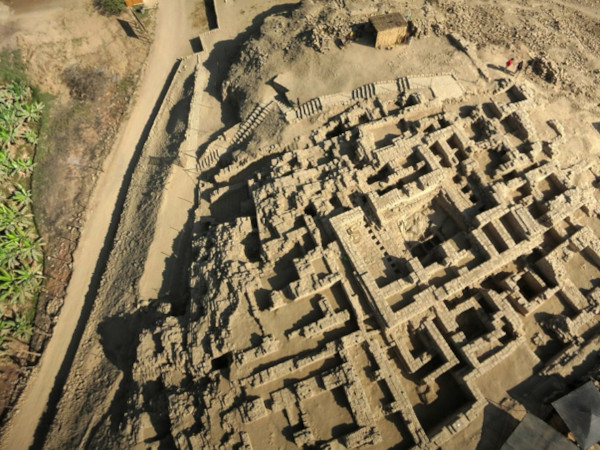
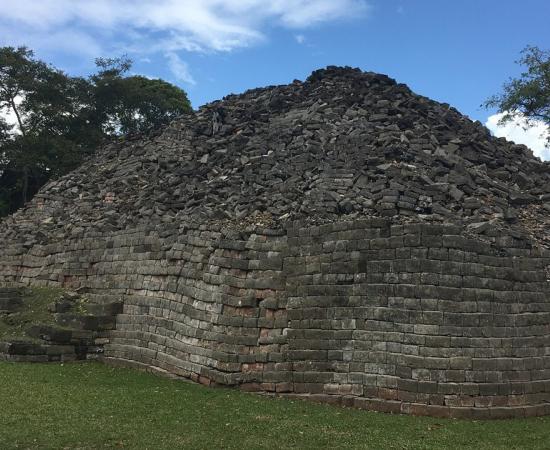
Castillo de Huarmey, Peru. (Miłosz Giersz/University of Warsaw)
A Wari center on Peru’s desert coast
Castillo de Huarmey lies near the modern city of Huarmey, around 190 miles north of Lima. According to the University of Warsaw, the 45-hectare complex served as a Wari settlement, palace, temple and cemetery between about 600 and 1050 AD, centuries before the Inca Empire. Its hyper-arid coastal setting preserved hair, skin, bone, textiles and pigments, even though an earthquake and later looting disturbed much of the upper site.
- Hairless Dogs Hang Out at Peru’s Ancient Pyramids
- Tiwanaku Dog Mummies Reveal Early Human-Animal Bonds
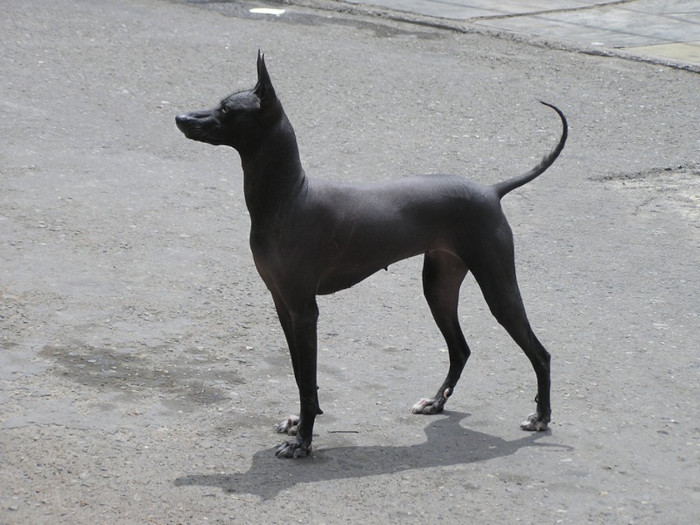
Modern Peruvian hairless dog in Trujillo, Peru. (Yuri Hooker/CC BY-SA 3.0)
Teeth, mummies and buried puppies
The identification depended on more than the dogs’ preserved skin. The three unusual individuals had never developed some first premolars, a dental trait associated with the same genetic change that produces hairlessness. One skull retained skin and attached ears and had been colored with cinnabar, while the mummified male was found in a shallow pit.
Other dogs appeared in striking funerary contexts. A puppy only six to eight weeks old was buried with an elite craftsperson known as the “Master Basketmaker,” while puppy remains accompanied a man identified as “XY,” probably sacrificed as a tomb guardian. An adult dog was also found in a palace context. These discoveries echo other ancient dog burials in Peru, but the Wari evidence is more complicated because not every dog received the same treatment.
- Slain Humans Buried with Strangled Dogs Found at Prehistoric Site in Peru
- Most Unusual Dog Burial Ever Unearthed in Egypt
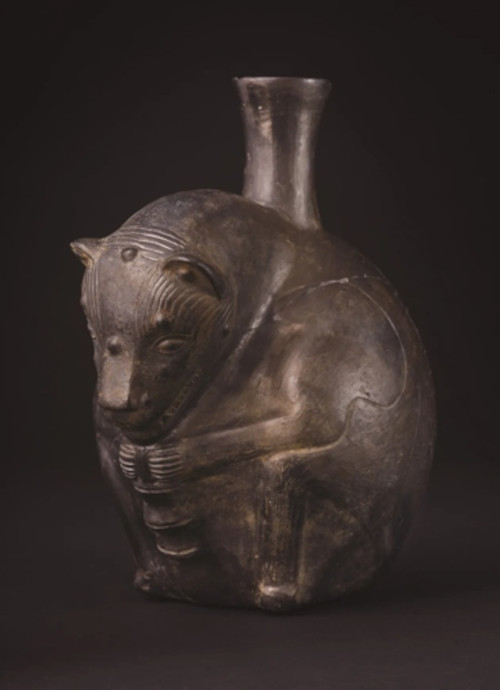
An anthropomorphic vessel of a Peruvian hairless dog from the Castillo de Huarmey mausoleum in Peru. (Miłosz Giersz/Dartmouth College)
The researchers found very few butchery marks, suggesting dogs were not commonly eaten. Some animals seem to have been deliberately buried, while others were mixed with refuse. That contrast is why the team uses the broader idea of “companion species,” rather than assuming every dog was a treasured pet.
The role of animals in Wari society also appears in discoveries such as a 1,200-year-old Wari temple and the Wari settlement at Pachacamac. Those finds help place Castillo de Huarmey’s dog burials in a broader regional context. Dogs were part of an Andean tradition that assigned animals both practical and symbolic roles.
What the dogs ate—and what that means
Carbon, nitrogen, oxygen and strontium isotopes gave the researchers a glimpse of the animals’ movements and diets. Most had consumed maize, a major food in the pre-Hispanic Andes, and their chemical signatures generally pointed to local lives around Huarmey. The probable hairless dogs were especially revealing: as puppies, their diets resembled those of human children, but their food became more varied as they matured.
That pattern could indicate special early care or organized breeding, although the researchers stress that the evidence cannot show whether the puppies were intentionally fed maize or simply ate scraps. The authors present organized breeding as a possibility, not direct proof. “Our findings indicate that humans and dogs coexisted at this Wari site,” first author Weronika Tomczyk told Dartmouth College, “but reconstructing their bond is challenging, as past emotions are difficult to capture through archaeological methods.”
The study therefore offers something more nuanced than a story about ancient pet keeping. Peruvian hairless dogs could have been companions, working animals, scavengers or ritual participants, depending on the animal and the people around it. Their remains show that intimate human-animal relationships existed within the Wari world, but they also show that care was uneven—much as it can be today.
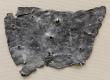
Top image: A naturally mummified dog skull painted with cinnabar from Castillo de Huarmey in Peru. Source: Weronika Tomczyk/Dartmouth College
By Gary Manners
References
Chyla, J. M. 2026. The oldest date from Castillo de Huarmey came from a hairless dog. Archeowiesci. Available at: https://archeowiesci.pl/en/the-oldest-date-from-castillo-de-huarmey-came-from-a-hairless-dog/
Dartmouth College. 2026. Peruvian Hairless Dogs Discovered at Ancient Site. Available at: https://home.dartmouth.edu/news/2026/05/peruvian-hairless-dogs-discovered-ancient-site
ScienceDaily. 2026. Archaeologists discover 1,200-year-old mummified hairless dog in Peru. Available at: https://www.sciencedaily.com/releases/2026/10/261016070644.htm
Tomczyk, W., Giersz, M., Więckowski, W., Pimentel Nita, R. and Ebert, C. E. 2026. The many lives of companion species: a zooarchaeological and isotopic research on Wari dog remains from Castillo de Huarmey, Peru. Journal of Anthropological Archaeology, 82, 101767. Available at: https://doi.org/10.1016/j.jaa.2026.101767
University of Warsaw. 2019. Castillo de Huarmey. The Wari Empire Centre on the North Coast of Peru. Available at: https://www.archeologia.uw.edu.pl/en/castillo-de-huarmey-the-wari-empire-centre-on-the-northern-coast-of-peru/