
Paracas weapons tell a story that ought to have an arrow in it—but does not. A new study of 200 obsidian projectile points from southern Peru identifies them all as spearthrower darts, while bows remain absent from Paracas burials and imagery. The result stands out in a period marked by population growth and violence. Why did these communities hold fast to darts and slings?
Two Hundred Points, Not One Arrowhead
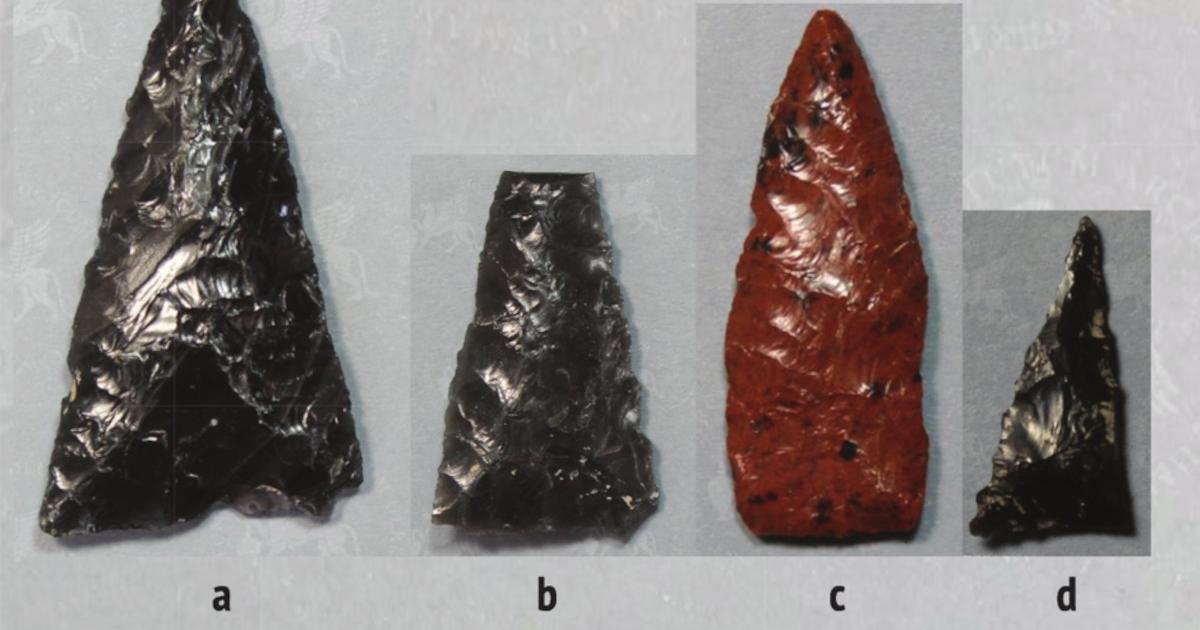
From 406 candidate artifacts, researchers excluded non-projectiles and heavily altered pieces, leaving 200 obsidian points from five Palpa valley sites reports Arkeonews. They compared the surviving points’ widths and thicknesses with archaeological darts and arrows still attached to their shafts. The surviving points’ widths and thicknesses were measured against those of archaeological darts and arrows remaining on their shafts. Out of the 122 intact points, all were categorized as darts in all five statistical tests with the median probabilities of 95 percent to 99 percent.
The stonework examined corresponds to that of surviving examples from elsewhere. Paracas male burials yielded slings, spears, maces, knives and shields; in textiles, figures are depicted with the same accoutrements. Not even the wealth of burial goods or illustrations show any bows, although the Paracas textile tradition left an unusually rich record. Absence cannot mean that there was no one practicing archery but various independent types of evidence tell the same story.
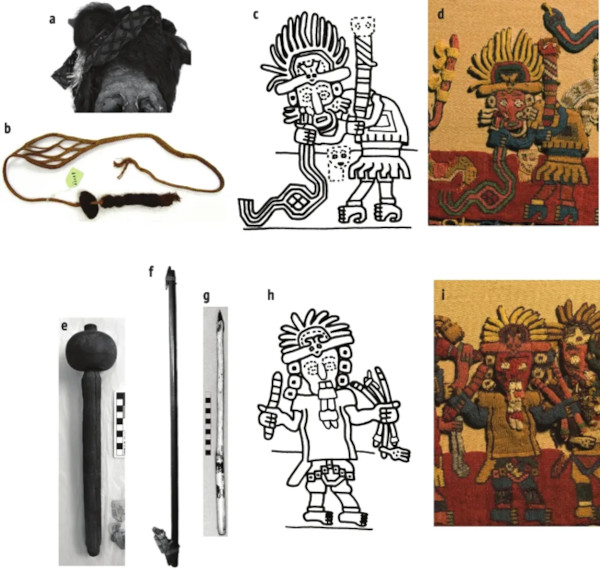
Paracas weapons from Wari Kayan burials and the Paracas Textile, including slings, a stone club, an animal-shaped spearthrower, and a composite dart. Textile scenes also depict men using slings and spearthrowers. (Marsh et al./CC BY 4.0)
A Weapon System Built for the Valleys
This sequence covers several centuries: projectile points at the site of Jauranga are approximately dated to 460–250 BC while the majority of finds are from the site of Cutamalla dated to 240–40 BC. Evidence of the actual method for shooting such darts is provided by means of the surviving spearthrower hook from the site of Collanco. A hook on a lever called atlatl lengthens the throwing arm and makes it possible to throw a heavier projectile than usual arrows. These were practical weapons, not an incomplete version of a bow.
- 20,000-year-old Rings Cleverly Deduced to be Prehistoric Spear-thrower Grips
- New Evidence Shows Humans Were Using Bows and Arrows in 52,000 BC
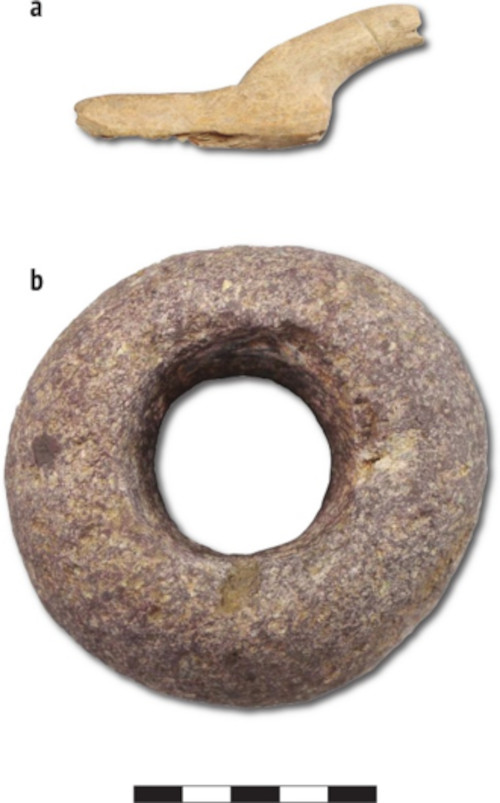
Bone spearthrower hook from Collanco (top) and stone mace head from Cutamalla (bottom); scale bar 5 cm. (Marsh et al./CC BY 4.0)
Situated in proximity to the Quispisisa obsidian source, Cutamalla boasts a large variety of projectile points and remains of camelids. The research indicates that darts were likely used to hunt wild camelids and deer as well as possibly for combat. It appears that the sling could serve as another alternative weapon but that the available woods may not have been suitable to make an effective bow. None of those explanations alone establishes why the bow is missing; together they make persistence of the existing toolkit easier to understand.
Violence Did Not Dictate the Technology
The area was far from a serene environment that had no use for weapons. In the broader coastal region, signs of warfare such as head injuries, fortifications, and sling stones are all present. In Palpa, the study authors were able to pinpoint 53 sites with some kind of fortification or weaponry. However, the evidence collected indicates that the warfare in Palpa took place on a local rather than a territorial scale. What is more, the dart found in association with the bones of the camelid could possibly belong to a hunter and not a warrior.
Nor should the finding be projected indiscriminately onto every society in Peru. The authors suggest that bows may also be hard to find in later coastal cultures, including Nasca, Moche and Chimú, but say that possibility needs more research. Nasca trophy-head traditions are another reminder that ritual and violence can leave records open to competing interpretations. Here, the firmest conclusion concerns the measured Paracas points and the Palpa weapon assemblages.
The use of bows and arrows in prehistoric North America serves as a useful example of how different weapon technologies can emerge at different times throughout history. Obsidian stones were traded, animals were hunted, and slings and spear throwers were still used long after their initial introduction during any changes. The lack of evidence regarding bows and arrows does not indicate a lack of skill on the part of the Paracas artisans, but raises important questions regarding the abilities of weapons that were already available back then.
Top image: Four obsidian projectile points from Jauranga, Cutamalla and Collanco, showing different degrees of reshaping; scale bar 5 cm. Source: Marsh et al., Fig. 6 / CC BY 4.0.
By Gary Manners
References
Altuntaş, L. 19 September 2026. Paracas Warriors in Ancient Peru Had Sophisticated Projectile Weapons, Yet the Bow Was Missing. Available at: https://arkeonews.net/paracas-warriors-in-ancient-peru-had-sophisticated-projectile-weapons-yet-the-bow-was-missing/.
Marsh, E. J., Yebra, L., Castro, S., et al. 18 September 2026. Unbowed: Raiding and Hunting with Paracas Spearthrowers and Slings and the Conspicuous Absence of the Bow in Western South America. Journal of Archaeological Method and Theory. Available at: https://doi.org/10.1007/s10816-026-09826-9.