
A previously overlooked fragment of a lost papal letter is adding an unexpected Roman dimension to the Norman Conquest. Historian Tom Licence argues that Pope Alexander II’s support for William of Normandy may have rested not only on Harold Godwinson’s disputed right to the English throne, but also on England’s possible place in a fierce conflict between rival papal claimants. The interpretation does not move the Battle of Hastings away from Sussex, but it does suggest that the political road to 1066 ran through Rome as well.
A Survival in Fragments
The evidence is not a newly found, complete papal letter. As the University of East Anglia explains, two passages from Alexander II’s lost register survived as copies in medieval collections of papal rescripts now held in the Vatican archives. Licence, whose interpretation appears in his new book Harold: Warrior King, says the letter was written after William had taken the English crown.
In the surviving language, Alexander recalled England’s former protection by St Peter before condemning people “fired with the pride of their father Satan” for leading the English from “the path of truth.” Licence told UEA that the papal register itself is lost, while “two excerpts from this particular letter survive in collections of papal rescripts.” That survival matters because it shifts attention from familiar later narratives, including portrayals of Harold Godwinson’s death, to evidence preserved beyond England.
- A Red Dawn Rises - The Battle of Hastings, 1066
- Did Harold Godwinson Really Die on the Battlefield at Hastings as the Records Suggest?
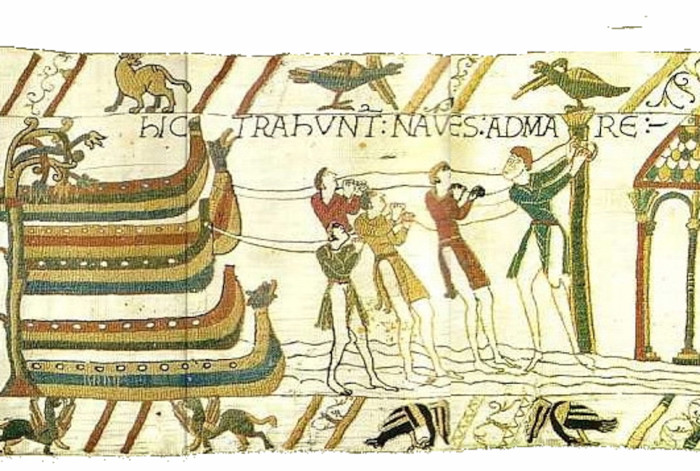
Norman vessels are prepared in Bayeux Tapestry Scene 36. (Public Domain)
Rome’s Divided Church
Licence’s reading places those fierce words against the papal schism that began in 1061, when opposing factions chose Alexander II and Bishop Cadalus of Parma, who took the name Honorius II. Honorius retained powerful support in the Holy Roman Empire and among allies in northern Europe, while both camps struggled for authority in Rome. The resulting conflict offers a wider setting for the Norman political world explored in The Dramatic History of the Normans.
The crucial point is one of interpretation, rather than certainty about a single decision by Harold. Licence argues that Alexander’s unusual rhetoric may identify England with the pope’s enemies, not merely condemn an alleged broken oath to William. “1066 was not simply decided on the battlefield at Hastings,” he said in the UEA announcement; “the outcome may also have been shaped by decisions taken almost a thousand miles away in Rome.”
- The Bayeux Tapestry Tells the Norman Victors' Story
- Nearly 1,000 Years Old, the Bayeux Tapestry is an Epic Tale and Medieval Masterpiece
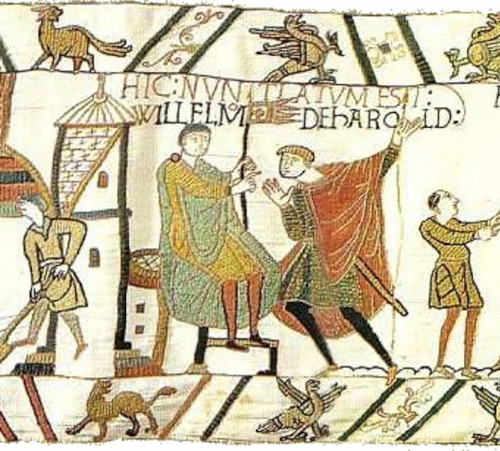
William receives news concerning Harold in Bayeux Tapestry Scene 46. (Public Domain)
A Broader Lens on Conquest
Papal approval could give William’s expedition a powerful language of legitimacy, but it did not supply ships, soldiers or battlefield success. The new argument therefore complements, rather than replaces, the succession crisis, Harold’s defense of England and the military realities of the campaign. It also makes the Norman story more European in scale, a useful corrective to versions of the Bayeux narrative that center only the victors; the tapestry itself is the subject of a recent Ancient Origins examination of the Norman perspective.
The timing gives the finding extra resonance. The British Museum is exhibiting the 70-meter embroidery that depicts the events leading to Hastings and the conquest, a work the museum says was likely commissioned by a Norman patron and made by English embroiderers. Meanwhile, the Norman takeover’s longer effects, from everyday foodways to contested memories of the battlefield and its possible warrior remains, continue to invite scrutiny.
Licence’s case is deliberately more measured than the dramatic wording of the letter. It proposes that papal politics may help answer why Alexander was prepared to support the removal of an anointed king, not that a Roman quarrel predetermined the fighting of 14 October 1066. For researchers of the Norman Conquest, the fragments are a reminder that even an event so strongly associated with a battlefield was shaped by alliances, rival authorities and messages moving across medieval Europe.
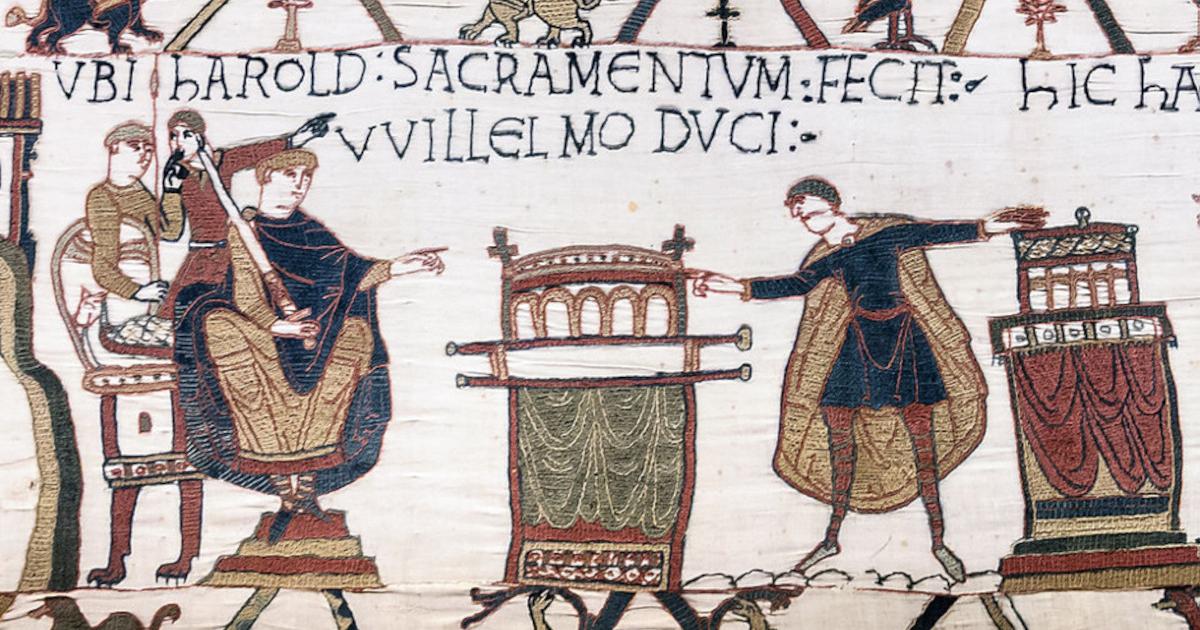
Top image: Bayeux Tapestry - Scene 23: Harold swearing oath on holy relics to William, Duke of Normandy. Source: Public Domain
By Gary Manners
References
British Museum. 2026. The Bayeux Tapestry. Available at: https://www.britishmuseum.org/exhibitions/bayeux-tapestry
Licence, T. 2026. Harold: Warrior King. Yale University Press. Available at: https://yalebooks.co.uk/book/9780300252958/harold/
University of East Anglia Communications. 2026. Lost letter from the Pope casts 1066 as a holy war against ‘followers of Satan’. Available at: https://www.uea.ac.uk/about/news/article/lost-letter-from-the-pope-casts-1066-as-a-holy-war-against-followers-of-satan