
Onkalo is set to become one of the most remarkable graves ever dug, a tomb that will hold no kings and no gold. On October 22, 2026, the Finnish Government granted Posiva, the company that built it, an operating license for the repository at Olkiluoto in the municipality of Eurajoki.
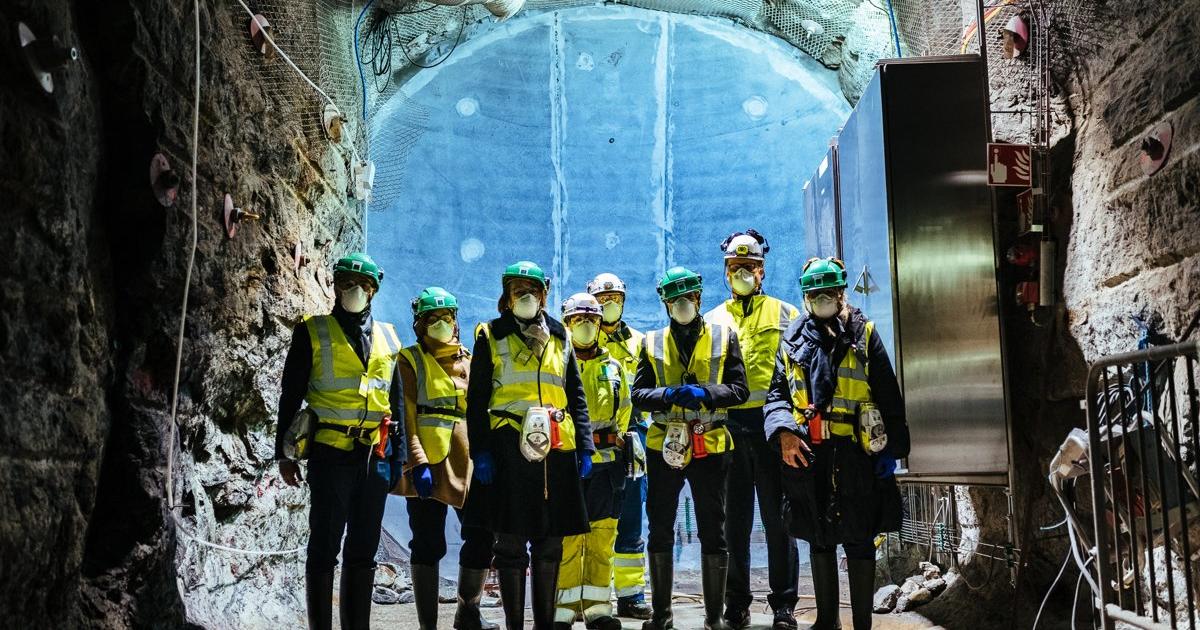
According to Posiva's announcement, "This is the first operating licence anywhere in the world granted for the final disposal of spent nuclear fuel." Daily Finland reported that the repository lies more than 400 meters (1,300 ft) down and will take about 3,300 canisters until the 2120s, when it will be backfilled and closed.
In August 2026 the American Nuclear Society's Nuclear Newswire reported that the regulator STUK had assessed long-term safety over "at least 100,000 years and as long as 1 million years." That is at least ten times the 10,000 years that US planners once struggled to send a warning across, and ancient tomb builders who wanted strangers kept out forever relied on curses. But did their warnings ever work?
Curses on the Coffins of Sidon
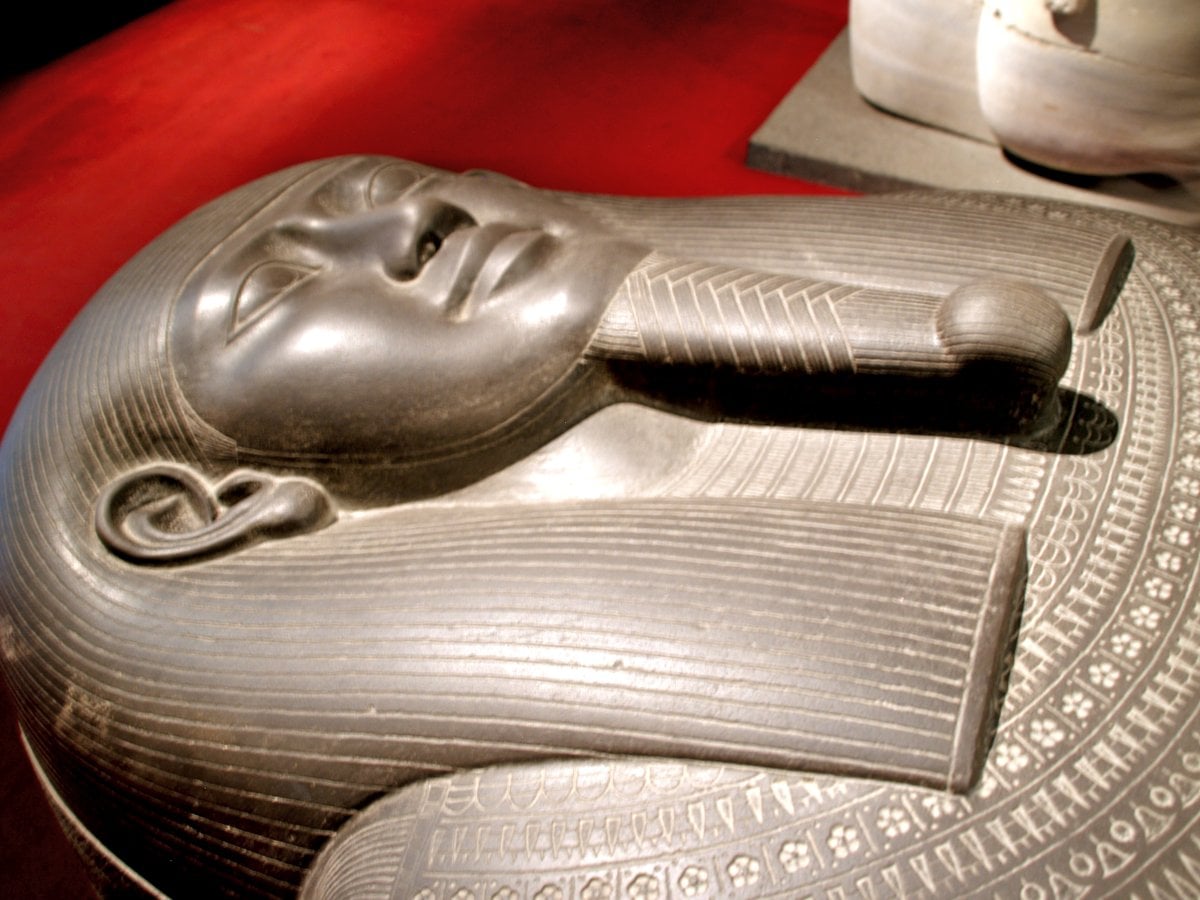
The lid of the sarcophagus of King Tabnit of Sidon, now in the Istanbul Archaeology Museums. Photo: Dave Proffer, via Wikimedia Commons, CC BY 2.0
The kings of Sidon, in what is now Lebanon, took a blunt approach about 2,500 years ago. They were laid in stone sarcophagi carved with inscriptions aimed squarely at grave robbers.
King Tabnit made a peculiar sales pitch to anyone who found him, according to the translation published by Jona Lendering on the Livius website:
"Whoever you are, any man who comes upon this coffin, do not, do not open my cover and disturb me, for no silver is gathered with me and no gold is gathered with me or any kind of riches."
The threat arrives only after that plea of poverty. Tabnit warned that opening the coffin "would be an abomination to Astarte," and he wished on the intruder no "offspring among the living under the sun."
His son Eshmunazar II repeated the method. His Egyptian sarcophagus, now in the Louvre, carries an inscription in which the king, who says he was "snatched away not at my time," calls himself "the son of a few days, a smitten one, an orphan, the son of a widow."
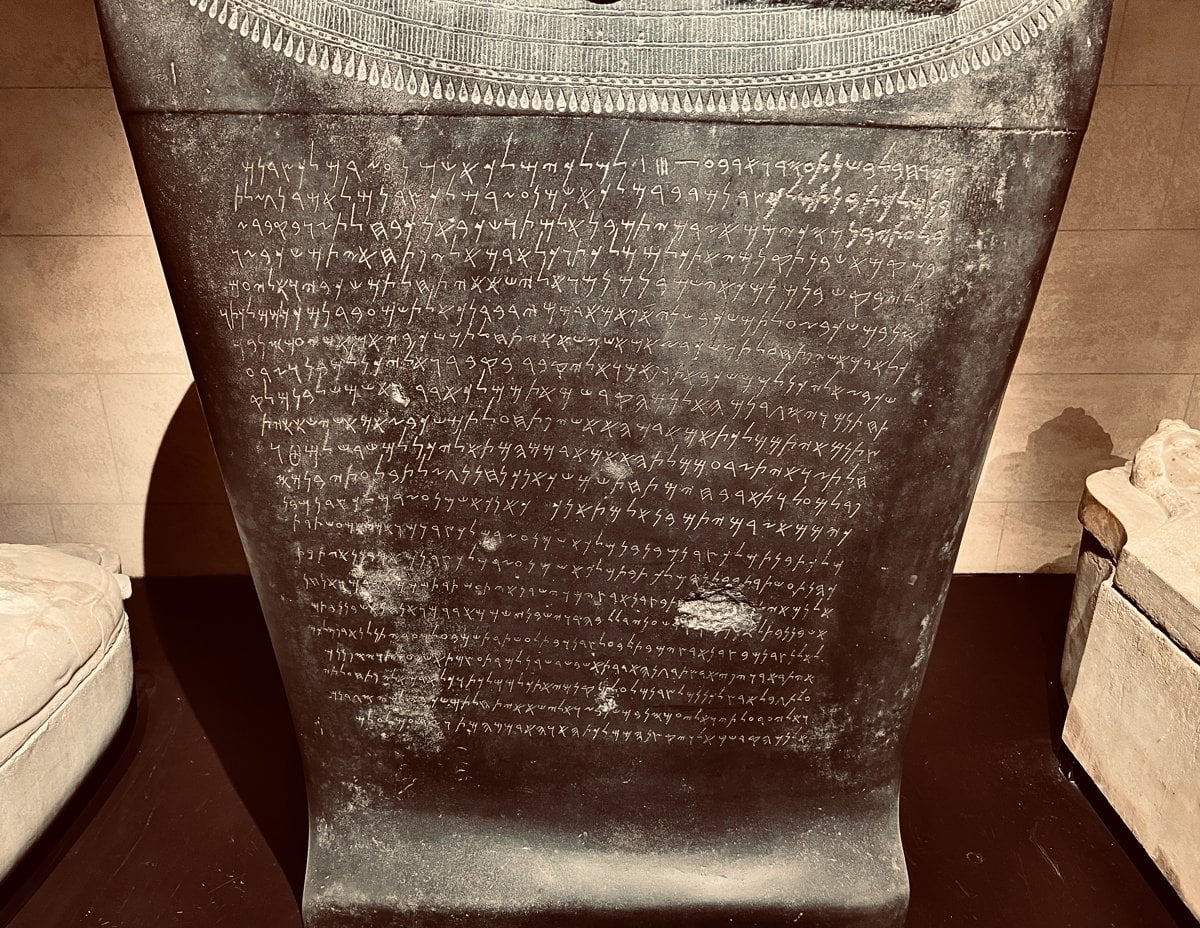
The Phoenician inscription on the sarcophagus of Eshmunazar II, King of Sidon, in the Louvre. Photo: Matthew Suriano, via Wikimedia Commons, CC0
The DEAPS project at Ohio State University translates his order that a robber should "let him not seek anything within it, for he did not place anything within it." Anyone who disobeyed would have no grave and no heir, and the king even warned against bad advice: "Even if people tell you, do not listen to them."
Gods, Fines and Hungry Crocodiles
Across the sea in Lycia, in what is now southern Turkey, tomb owners called on gods and the law at once. A sarcophagus at Kyaneai, known as the Xudalije Tomb, warns in Lycian that whoever harms it, "the gods of the Agora will destroy him."
Other epitaphs invoked Eni, the so-called mother of the gods. According to the Trmmili Texts project, one says a violator "will pay nine cows as penalty to the mother of this sanctuary without delay," a bizarre blend of curse and legal fine.
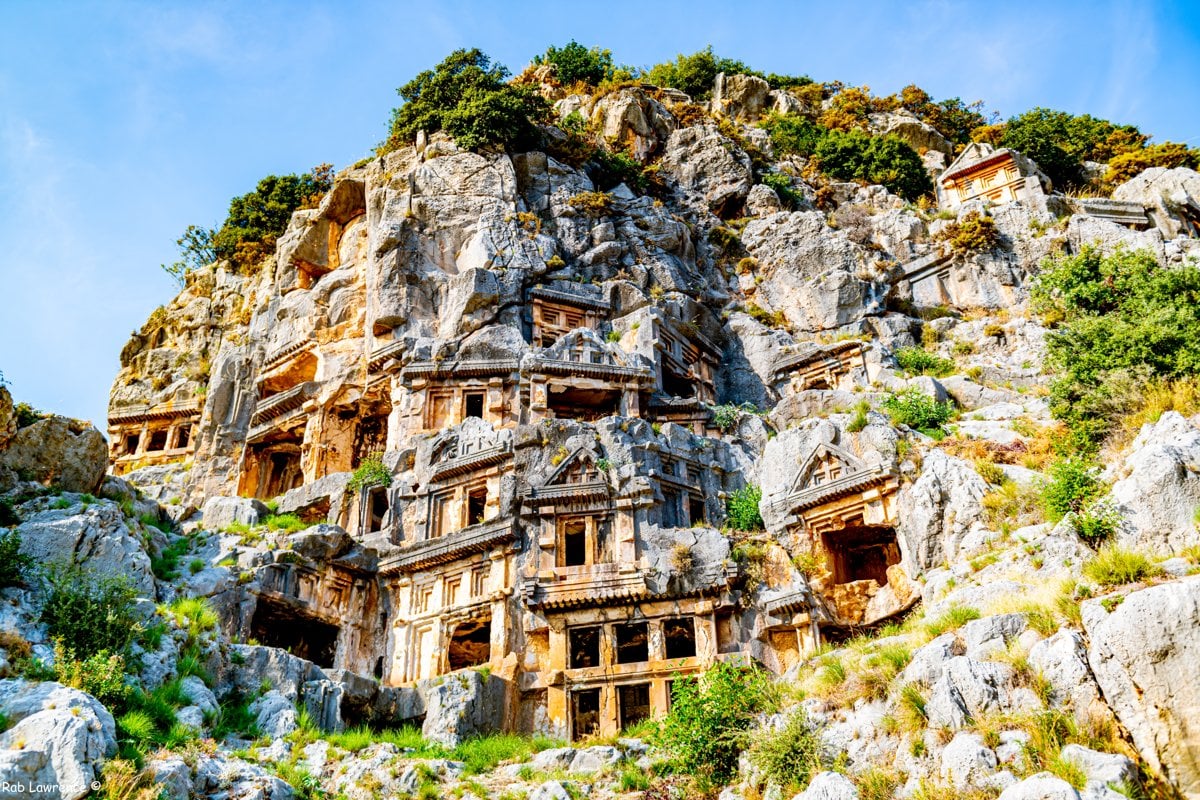
Rock-cut tombs of the 4th century BC at Myra in Lycia, southern Turkey. They are not the Kyaneai tomb discussed here. Photo: Rab Lawrence, via Wikimedia Commons, CC BY 2.0
In 1993 the Associated Press reported that excavators in a Giza graveyard of overseers, artisans and workers had found curses in the tomb of an official named Pet-et-ty and his wife, Nesey-seker. His curse summons crocodiles, lions and hippopotamuses against intruders, and hers adds scorpions and snakes to the list.
The AP went on to list a run of bad luck at the dig. An earthquake struck south of the pyramids, a photographer's ladder collapsed and a small debris train derailed. Most serious of all, Zahi Hawass, the official in charge, suffered a near fatal heart attack, and colleagues blamed the newly found curses. That idea is Fringe, and Hawass himself was skeptical. "I think it was overwork," he said.
The Atomic Priesthood and a Message of Danger
Rather strangely, modern planners ended up weighing the same ancient tactics. For the Human Interference Task Force created by the US Department of Energy, the semiotician Thomas Sebeok of Indiana University wrote in 1984 that "no fail-safe method of communication can be envisaged 10,000 years ahead."
His answer was a so-called "atomic priesthood," a commission of experts who would keep the truth while legends and rituals built up "accumulated superstition to shun a certain area permanently" over many generations. However, Sebeok admitted that the folklore specialists he consulted knew of no precedent except the "well-known, but ineffectual, curses" linked to the pyramids of some Egyptian pharaohs.
In 1991 Sandia National Laboratories gathered two expert teams to design markers for the Waste Isolation Pilot Plant in southeastern New Mexico. Team A, which met in Buffalo, New York, and included the anthropologist Ward Goodenough of the University of Pennsylvania, drafted a message for readers thousands of years away:
"This place is a message...and part of a system of messages...pay attention to it!"
The message goes on to say "This place is not a place of honor" and "nothing valued is here," the same move Tabnit made with his empty coffin. It also warns that "The danger is still present, in your time, as it was in ours."
Mark the Grave or Forget It?
Finland appears to lean the other way. In a 2022 presentation, Petri Paju reported that Finnish experts he interviewed saw Olkiluoto as "a passive system, designed safe to leave and forget even," and feared that distorted memories could one day turn markers into a danger.
Paju called this the traditional "Finnish approach," which is "to forget or leave it," and noted that Finnish work on long-term memory had mostly been postponed. However, Daily Finland reported that Posiva must make sure the essential data sets for the disposal work are stored so that they are available to the state after closure.
Francesco Mazzucchelli of the University of Bologna and Nanta Novello Paglianti of the Université de Bourgogne noted in 2022 that the director of the company that owns the site, interviewed in the 2010 documentary Into Eternity, offered a solution: to think of Onkalo as "the place we should always remember to forget."
Sandia's Team A had rejected that kind of silence for its own site. Its members weighed the argument that marking would only attract "curiosity seekers," yet wrote that "not warning future generations of a potential peril under their feet represents an abdication of moral responsibility."
Did the Ancient Curses Ever Work?
The ancient record offers mixed comfort for both camps. The coffins of Tabnit and Eshmunazar now sit in museums, opened and studied despite every curse, while the AP reported that nobody entered the tomb of Pet-et-ty for 4,600 years. Whether the curses themselves kept anyone out is Unverified.
The license and the ancient inscriptions are Established. Whether Finland will leave Onkalo unmarked is Unverified, and the choice between marking and forgetting is Disputed among specialists. Whether silence will protect Onkalo better than curses protected the kings of Sidon is a question that nobody alive today will see answered.
IAEA Director General Rafael Mariano Grossi and his party inside the Onkalo tunnels at Olkiluoto, Finland, on November 26, 2020. Photo: TVO/Tapani Karjanlahti, IAEA Imagebank, via Wikimedia Commons, CC BY 2.0
By Aris Manus
Related on Ancient Origins
- Rest Like an Egyptian: Lifting the Lid on the Elaborate Phoenician Tabnit Sarcophagus
- The Ancient Lycians and Their Spectacular Rock-Cut Tombs
- There WAS a Curse! Was Deadly Radiation Behind the Curse of the Pharaohs?
- The Curse of Tutankhamen's Tomb, Part 1
Sources
- Posiva, "Historic decision: Finnish Government grants operating licence to Posiva," October 22, 2026
- Daily Finland, "Posiva granted licence to operate world's 1st spent nuke fuel repository," October 22, 2026
- ANS Nuclear Newswire, "Onkalo SNF repository passes safety assessment," August 10, 2026
- Jona Lendering, "Sidon, Royal Tombs, Chamber 2, Sarcophagus of Tabnit," Livius
- James D. Moore and Armand Rogers, "KAI 014," DEAPS, Ohio State University
- Lycian Monuments, "Lycian Inscriptions of Kyaneai"
- Trmmili Texts, "Eni"
- Associated Press, "Tomb yields oldest curses," The Cayman Compass, December 10, 1993
- Thomas A. Sebeok, "Communication Measures to Bridge Ten Millennia," BMI/ONWI-532, Office of Nuclear Waste Isolation, 1984
- Kathleen M. Trauth, Stephen C. Hora and Robert V. Guzowski, "Expert Judgment on Markers to Deter Inadvertent Human Intrusion into the Waste Isolation Pilot Plant," SAND92-1382, Sandia National Laboratories, 1993
- Petri Paju, "Forgetting the nuclear waste repository for good as the Finnish approach?", SYP 2022 presentation, Finnish Nuclear Society
- Francesco Mazzucchelli and Nanta Novello Paglianti, "How to remember a place to forget?", Linguistic Frontiers 5(3), 2022