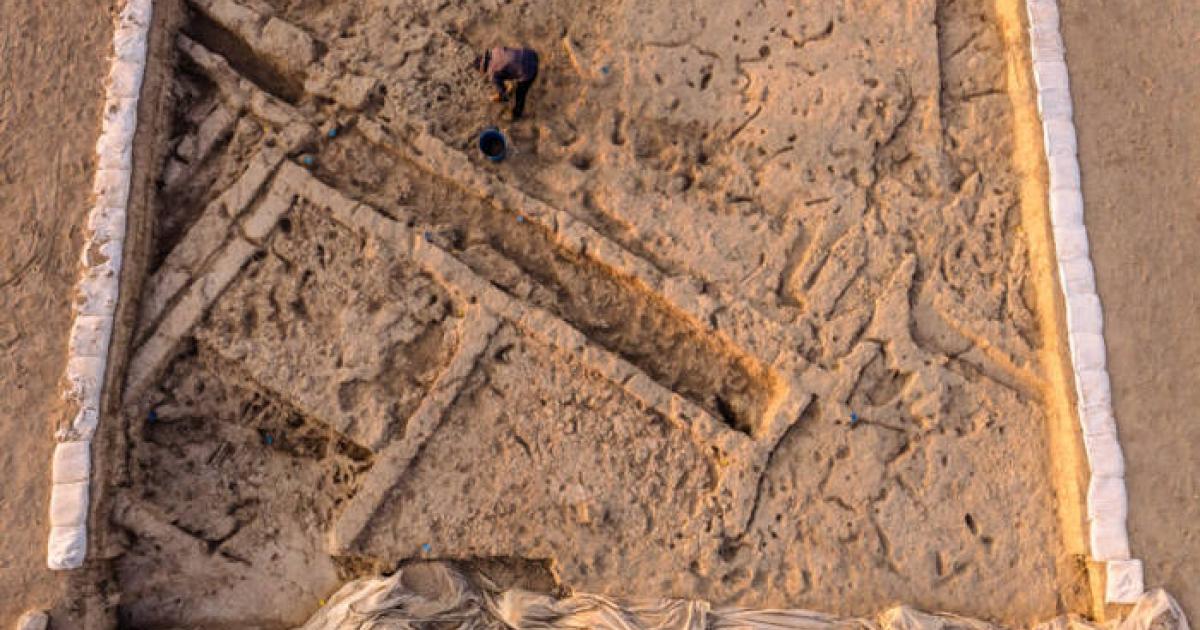

Archaeologists working at Canhasan 3 Höyük in Turkey's Karaman province have unearthed what appears to be one of the world's oldest known streets, dating back approximately 9,750 years. This remarkable discovery predates the famous Çatalhöyük settlement by 750 years, challenging long-held assumptions about early Neolithic settlements and urban planning. Led by Associate Professor Adnan Baysal of Ankara University under Turkey's "Heritage for the Future Project," the excavation has revealed a carefully planned passageway between houses that suggests sophisticated early urban planning concepts were already emerging in Central Anatolia nearly 10,000 years ago.
The discovery fundamentally challenges the traditional view of Neolithic urban life in the region as consisting of tightly clustered, roof-accessed homes with minimal external organization. Instead, Canhasan 3 reveals a community that deliberately created space between structures, indicating early experiments in social organization and architectural planning. This finding has profound implications for our understanding of how human settlements evolved from simple agricultural villages to complex urban centers.
- The Unmatched 9500-Year-Old Honeycomb City of Çatalhöyük
- Two Major Discoveries at One of the First Urban Centers, Çatalhöyük
Revolutionary Evidence of Early Social Organization
The excavation team uncovered a passageway separating two houses at the site, representing a deliberate attempt at creating communal or functional space rarely seen in Neolithic Anatolia. Professor Baysal emphasized the significance of this discovery, noting that while Çatalhöyük featured tightly clustered houses with roof access, Canhasan 3 demonstrates a completely different architectural vision. These gaps between homes may have functioned as passageways, protective corridors for livestock, or even as primitive streets representing humanity's earliest experiments with urban design.
The team also discovered hearths placed differently than those found at Çatalhöyük, suggesting diverse cultural practices within Central Anatolia's Neolithic communities. This variation indicates that early settlements were not uniform but represented different approaches to solving everyday challenges of movement, protection, and social interaction. The architectural differences between Canhasan 3 and other contemporary settlements demonstrate the experimental nature of early urban development.
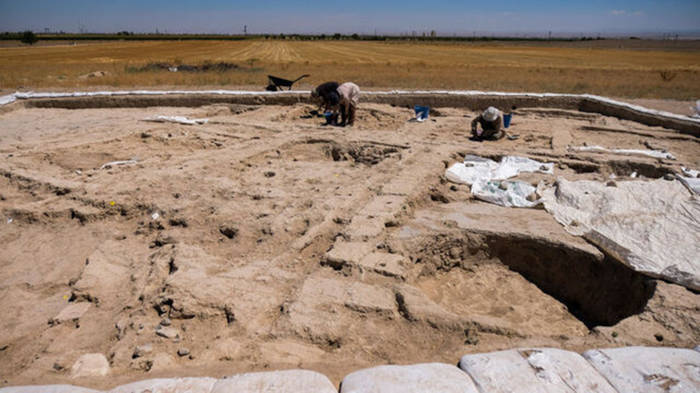
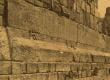
Excavations at Canhasan 3 reveal unique architectural features (DHA)
A Settlement Complex Spanning Millennia
Canhasan represents not a single mound but a complex of three interconnected sites (Canhasan 1, 2, and 3) that witnessed continuous human occupation from the Pre-Pottery Neolithic through the Bronze and Iron Ages ArkeoNews. This remarkable longevity, spanning thousands of years, provides archaeologists with an unprecedented opportunity to study the evolution of human settlement patterns and social organization across multiple cultural periods.
- Anatolian Neolithic Weavers At Çatalhöyük Used Trees to Make The Oldest Cloth
- Ancient DNA Reveals Anatolian Neolithic Revolution Migration Into Europe
According to Professor Baysal, the secret of Canhasan's extraordinary persistence lies in its abundant water sources and exceptionally fertile lands, writes ArkeoNews. Animal bones discovered at the site include remains of aurochs (wild cattle), fish, and waterfowl, suggesting a rich wetland environment that provided diverse food resources for the inhabitants. Plant remains currently under analysis are expected to reveal important details about early farming practices and agricultural development in the region.
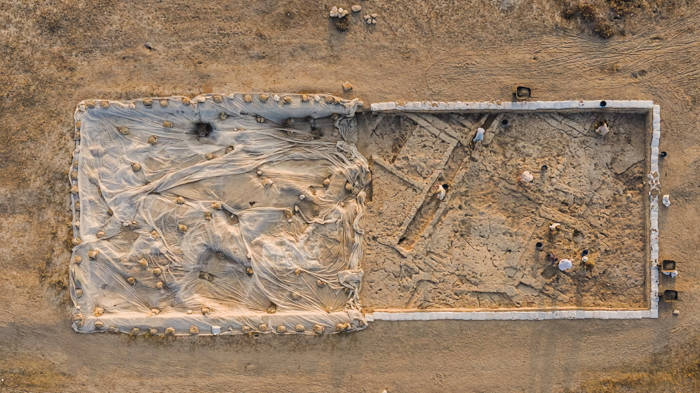
The archaeological team continues excavations at Canhasan 3 (DHA)
Global Implications for Understanding Human Settlement Evolution
The discovery of street-like spaces at Canhasan 3 represents a significant milestone in archaeological research, as streets are traditionally considered markers of social complexity and planned urbanism. Finding such sophisticated urban planning elements almost 10,000 years ago pushes back the timeline for these innovations considerably. This challenges archaeologists and historians to reconsider when and how humans first began organizing their communities in complex ways.
The contrast with Çatalhöyük, famous for its densely packed houses without traditional streets, demonstrates that Anatolian Neolithic societies were far from uniform in their approaches to settlement design. Different communities experimented with various solutions for everyday needs, indicating a much more diverse and innovative prehistoric landscape than previously understood. This diversity suggests that early humans were actively experimenting with different forms of social organization and urban design concepts.

Age of Exploration Matte Paper Poster from the Ancient Origins Store.
The ongoing excavations at Canhasan continue to provide valuable insights into the daily lives of Neolithic peoples, with researchers hoping to determine whether these ancient "streets" served purely functional purposes or carried symbolic and communal significance. As Professor Baysal noted, by carefully studying the architecture, artifacts, and environmental remains, archaeologists can reconstruct how these early communities lived, farmed, and interacted with their surroundings, offering unprecedented glimpses into humanity's shared prehistoric heritage.
Top image: At Canhasan 3 Mound in Karaman, archaeologists uncovered one of the earliest known streets of the Neolithic Age, dating back 750 years before the 9,000-year-old Çatalhöyük. Source: DHA via ArkeoNews
By Gary Manners
References
Altuntaş, L. 2025. One of the World’s Oldest Streets Unearthed at Canhasan 3 in Türkiye, Dating Back 9,750 Years. Arkeonews. Available at: https://arkeonews.net/one-of-the-worlds-oldest-streets-unearthed-at-canhasan-3-in-turkiye-dating-back-9750-years/
Altuntaş, L. 2025. 9,750-Year-Old Street Unearthed in Central Türkiye Challenges Neolithic Narratives. Anatolian Archaeology. Available at: https://www.anatolianarchaeology.net/archaeologists-uncover-one-of-the-earliest-known-streets-at-canhasan-3-central-anatolia/