

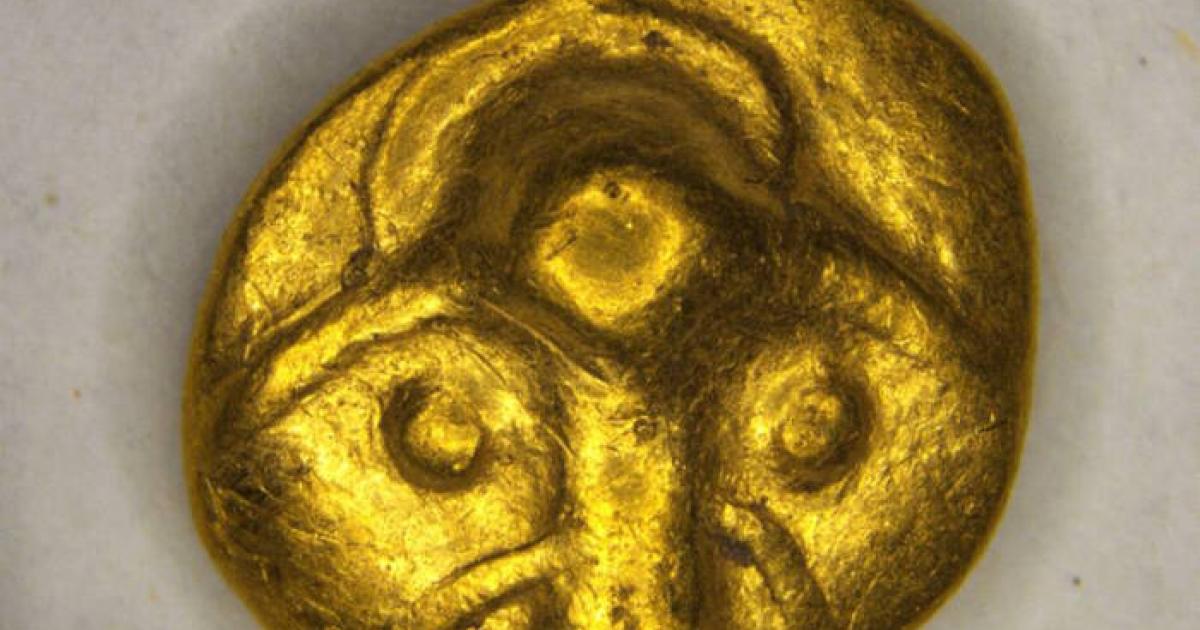

A certified metal detectorist has made a groundbreaking discovery near Leipzig, Germany, uncovering the oldest coin ever found in Saxony. The 2,200-year-old Celtic gold coin, known as a "rainbow cup" or quarter stater, is shedding new light on ancient trade connections between Germanic tribes and their Celtic neighbors.
Daniel Fest made the remarkable find in July 2025 while searching a field near Gundorf, northwest of Leipzig. He immediately reported the discovery to the Saxony State Office for Archaeology, demonstrating the exemplary cooperation between amateur detectorists and professional archaeologists that makes such discoveries possible. The coin was officially presented to the public on October 27, 2025, in the presence of Saxony's Minister for Culture and Tourism, Barbara Klepsch.
- Rare Hoard of 2000-year-old Curved Celtic Gold Coins Found in Germany
- Bird Watcher Digs Up Million-Dollar Bounty of Gold Celtic Coins
A Coin of Nearly Pure Gold
The coin weighs just two grams and is crafted from almost pure gold, making it an extraordinary artifact. According to the Saxony State Office for Archaeology, the coin's obverse features a stylized head, likely of an animal such as a stag, while the reverse displays distinctly Celtic symbols including an open torc (neck ring) with thickened ends, a rounded star, and a sphere.
State archaeologist Dr. Regina Smolnik identified the coin as dating to the third century BC, originating from the north Bohemian Celtic settlement area. Comparable pieces have been found primarily in what is now the Czech Republic.
"Celtic coins are a rarity in Saxony," Smolnik explained. "Although Saxony lies outside the Celtic settlement area, this valuable new find is further evidence that there were regular contacts and connections."
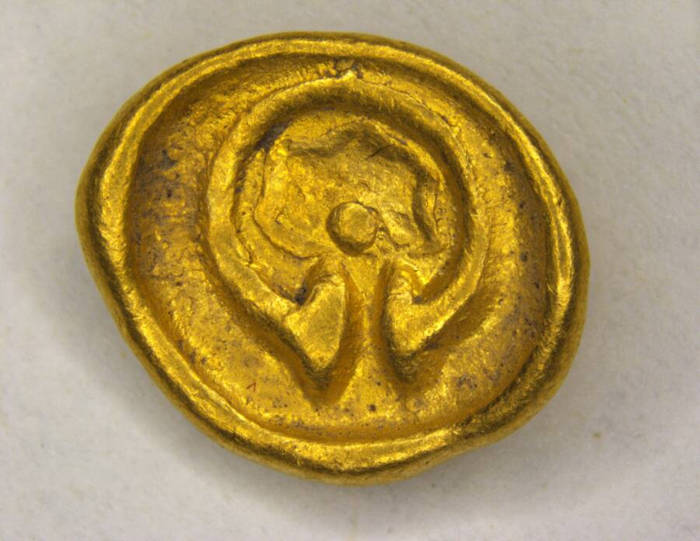
The reverse side displays Celtic symbols including a torc, star, and sphere. (Saxony State Office for Archaeology)
Rainbow Cups and Ancient Folklore
The coin's curved, bowl-like shape has earned similar artifacts the charming nickname "rainbow cups" or Regenbogenschüsselchen in German. This term stems from ancient folklore suggesting these golden treasures fell from the sky where rainbows touched the earth, as reported by All That's Interesting. The legend likely arose because heavy rainstorms would wash these coins out of the soil onto farmers' fields.
Before this discovery, only two Celtic coins were known in Saxony, with one considered lost since the 19th century. Recent intensive field surveys have added nine more coins to the archaeological record, but only one other gold piece has been found, and it lacks decoration.
- Celtic Warriors Amongst 40,000 Other Artifacts Found in Bavaria
- Searching for Celtic Trade Routes and the Stories Behind Them
Status Symbol of the Elite
Despite being termed a "coin," experts believe this nearly mint-condition artifact likely never circulated as currency. Dr. Smolnik suggests it more probably served as a status symbol or wealth reserve for elite members of Germanic tribes who maintained trade relationships with the Celts.
The discovery displaces the previous record holder, a silver Büschelquinar found at Zauschwitz in 2007, which dated to the early first century BC. The Gundorf rainbow cup now holds the distinction of being Saxony's oldest coin, pushing the region's numismatic history back by approximately two centuries.
Minister Klepsch praised both the finder and the archaeological team:
"This gold coin is a tangible fragment of our history, illuminating ancient trade and the people who once lived here. It shows how civic engagement contributes to uncovering and preserving our cultural identity."
The coin will soon be displayed in a museum, allowing the public to appreciate this remarkable window into ancient Celtic culture and the sophisticated trade networks that connected prehistoric Europe.
Top image: The obverse of the 2,200-year-old Celtic gold quarter stater showing a stylized animal head, possibly a stag. Source: Saxony State Office for Archaeology
By Gary Manners
References
Saxony State Office for Archaeology. 2025. Presentation of 2200-Year-Old Celtic Gold Coin. Available at: https://www.medienservice.sachsen.de/medien/news/1091738
Johnson, C., 2025. A Metal Detectorist In Germany Has Stumbled Upon The Oldest Coin Ever Found In The Saxony Region. Available at: https://allthatsinteresting.com/saxony-germany-ancient-celtic-gold-coin






















