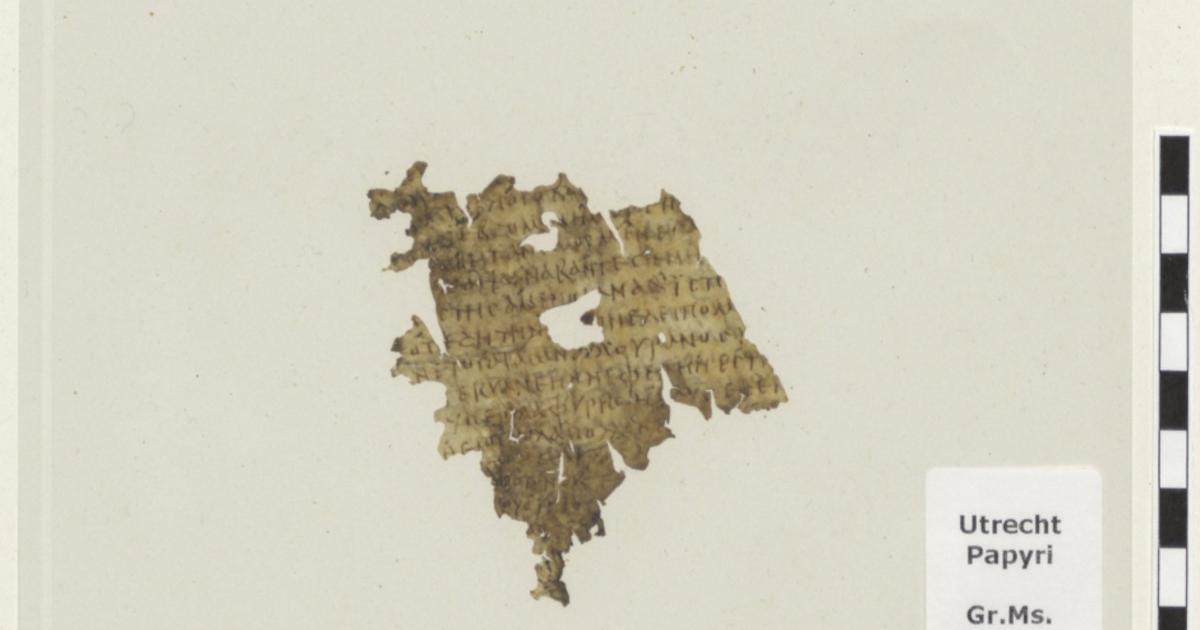

A torn fragment of parchment safeguarded in Utrecht University Library has just been recognized as a rare fragment of Homer’s Odyssey of around 2,000 years old. The piece authenticated by Mark de Kreij from Radboud University contains verses from Book 12 of the epic, and it is possible that it was part of a pocket sized copy carried in Roman Egypt.
A manuscript hiding in plain sight
The find was made in the course of a project that aimed to study ancient manuscripts in the Special Collections of the city of Utrecht. In the mid-20th century, Utrecht University obtained the manuscript from the heirs of the German researcher Carl Schmidt, who was believed to have acquired it somewhere in the 19th century. The fragment was regarded as a very ordinary seventh-century manuscript, however, de Kreij noticed some vocabulary that relates to Homer and determined that the manuscript is Utrecht Gr. Ms. B6.39a, one of only about 30 comparable fragments known worldwide, according to Utrecht University.
The find adds a physical witness to a poem transmitted for centuries through performance and writing, a history explored in Ancient Origins’ Homer: From Oral Tradition to Canon.
- Clay Tablet Found at Olympia May Be the Oldest Excerpt from the Odyssey
- Ten years in the Med? The Hunt for the Real Odyssey Locations!
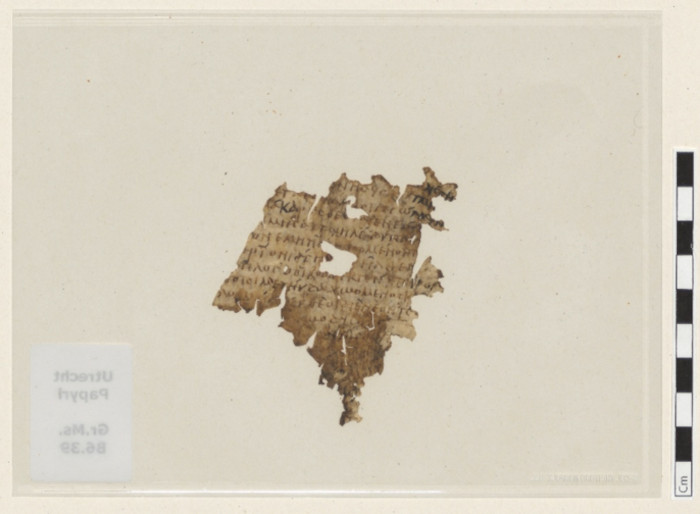
The back of the damaged parchment fragment. (Utrecht University)
A turning point in Odysseus’ journey
The surviving lines come from the moment Helios discovers that Odysseus’ starving companions have slaughtered and eaten the Sun god’s sacred cattle. Zeus’ punishment will destroy their ship and kill the entire crew, leaving Odysseus alone to continue his journey home. The passage follows the hero’s encounters with Circe, the Cyclops, Scylla and Charybdis, and forms the dramatic climax of his story to the Phaeacians.
De Kreij described the passage to Live Science as “a really fun passage,” an apt observation for a fragment that catches Odysseus at one of the epic’s darkest moments.
- The Mythic Scheria and the legendary Phaeacians
- Polyphemus - Whose Prayer for Revenge Was the Origin of the Curse?
A pocket epic from Roman Egypt
Both sides of the Utrecht fragment carry neat Greek writing. Its small size suggests it came from a compact edition of the complete poem, probably owned by a Homer enthusiast living in Egypt’s Fayum oasis around AD 300. As CBS News reports, the discovery was made around 2024 but announced publicly only in September 2026.
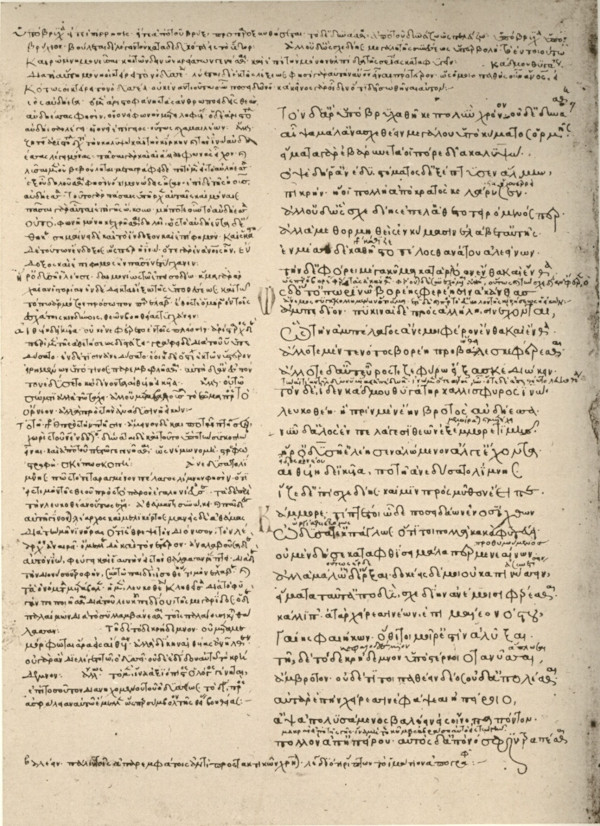
Page from Homer’s Odyssey in the Vaticanus Palatinus graecus 7 manuscript (Public Domain). Source: Wikimedia Commons
Odyssey fragment significance
The parchment does not reveal a lost episode, but it illuminates how widely Homer was read beyond the Greek world. The university says De Kreij’s forthcoming catalogue will publish many more Egyptian, Greek and Coptic texts from the collection, raising the possibility that other overlooked witnesses remain nearby.
Top image: Utrecht University’s parchment fragment of Homer’s Odyssey. Source: Utrecht University
By Gary Manners
References
CBS News. 2026. 1,700-year-old fragment of “Odyssey” discovered between pages of a library book. Available at: https://www.cbsnews.com/news/odyssey-fragment-found-library-netherlands-utrecht/
de Kreij, M. 2026. 4th-century fragment of the Odyssey discovered in Utrecht University Library. Available at: https://www.uu.nl/en/news/4th-century-fragment-of-the-odyssey-discovered-in-utrecht-university-library
Killgrove, K. 2026. 1,700-year-old fragment of the ‘Odyssey’ discovered in Dutch library. Available at: https://www.livescience.com/archaeology/1-700-year-old-fragment-of-the-odyssey-discovered-between-pages-of-dutch-library-book
Klimczak, N. 2022. The Spellbinding Story of Circe, Goddess of Magic in Ancient Greece. Available at: /myths-legends-europe/spellbinding-story-circe-goddess-magic-006787