

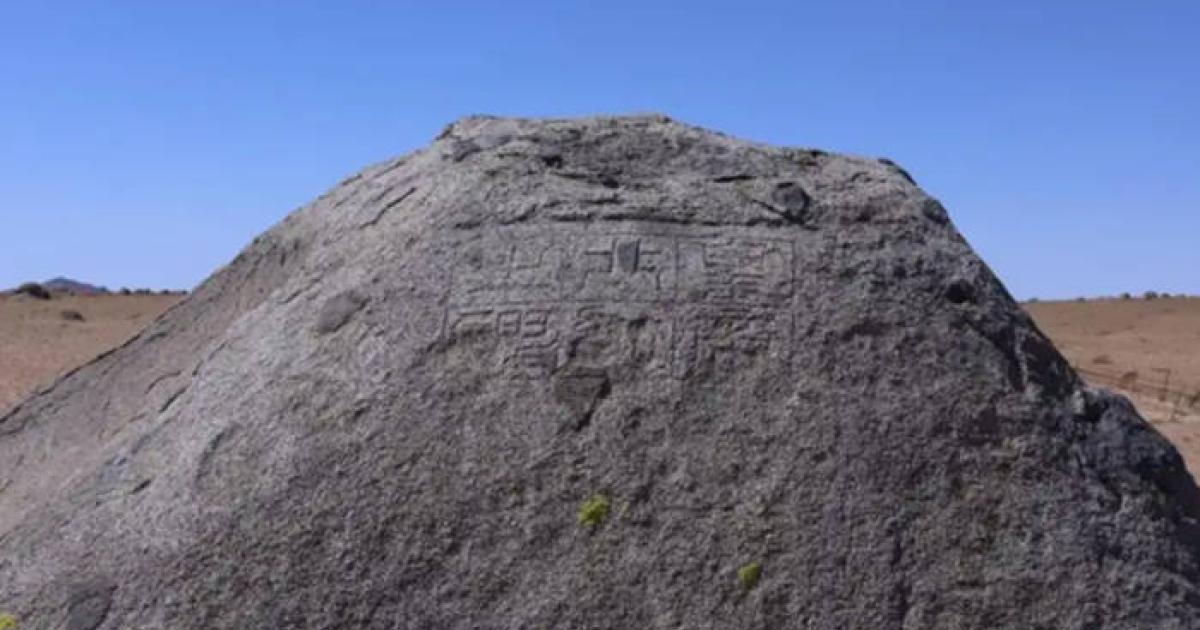

A remarkable imperial stone inscription, tentatively dated to the Northern Wei Dynasty (386-534 AD), has been discovered carved into a natural granite boulder in the grasslands of Mongolia. The find represents one of the most significant epigraphic discoveries related to ancient Chinese imperial campaigns in recent years, potentially shedding new light on frontier governance and cultural exchange during one of China's most transformative periods.
The inscription, bearing the title "Stele of the Emperor's Northern Tour" in elegant seal script, was identified during a joint archaeological survey by the Inner Mongolia Institute of Cultural Heritage and Archaeology and local heritage authorities. If authenticated, it would join an extremely rare collection of imperial commemorative inscriptions from this pivotal dynasty that bridged nomadic steppe culture with traditional Chinese civilization.
- Ancient Neolithic Dragon Made of Mussel Shells Unearthed in Inner Mongolia
- Liao Dynasty Chariot Burial Found in Inner Mongolia
Weathered Stone Preserves Ancient Imperial Message
The inscription, discovered near Ulanqab, Inner Mongolia Autonomous Region, spans an impressive 1.9-meter-wide by 2.6-meter-high section of a naturally formed granite boulder. Despite centuries of weathering across the harsh steppe environment, embedded basalt inclusions within the stone have preserved over 50 legible characters
Among the surviving text, archaeologists have identified crucial terms including dai (dynasty), yiyue (first month), and zhuguozixiyushang (sons of various states, merchants from China's Western Regions) reports Global Times.
Most intriguingly, the term ‘Mofu’ appears at least seven times throughout the inscription. Historical records indicate that Mofu served as a traditional title for tribal leaders of the Eastern Hu lineage in northern China, suggesting the inscription commemorated interactions between the imperial court and frontier peoples. Sun Jinsong, director of the Inner Mongolia Institute of Cultural Heritage and Archaeology, confirmed that his team has conducted high-resolution digital scanning and produced detailed ink rubbings to aid in preservation and analysis efforts.
The discovery location itself provides important contextual clues. The stele sits near Northern Wei-era defensive fortifications and ancient cities, including the Kliment Fortress, reinforcing scholarly theories about its potential connection to imperial military campaigns in the region.
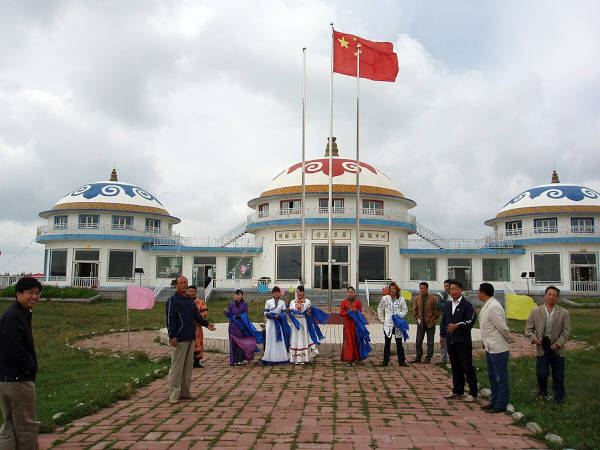
Huanghuagou, near Ulanqab, in the vast grasslands where the ancient imperial inscription was discovered, where the ancient imperial inscription was discovered (CC BY-SA 3.0)
Emperor Daowu's 399 AD Northern Campaign
While the surviving inscription lacks explicit chronological markers such as reign titles or personal names, leading scholars cautiously link it to Emperor Daowu's historic northern expedition of 399 AD. This campaign, documented in the authoritative historical text Zizhi Tongjian (Comprehensive Mirror in Aid of Government), represents one of the Northern Wei Dynasty's most significant military undertakings against the nomadic Gaoche tribes.
According to historical accounts, Emperor Daowu departed from Pingcheng (modern Datong, Shanxi Province) in the first lunar month of 399 AD, dividing his forces into eastern and western columns. Personally commanding the central column of the eastern force, the emperor achieved decisive victories against nearly 40 Gaoche clans in a series of coordinated battles across the northern frontier, explains Arkeonews.
The campaign concluded with the army's return south of the Gobi Desert and a grand imperial hunt at Niuchuan, during which the famous Bushan Commemorative Stele was inscribed. Experts theorize that the newly discovered "Northern Tour Stele" may have been created in a similar commemorative context, celebrating imperial authority and military success on the challenging northern frontier.
This connection gains additional credibility from the calligraphic style of the inscription and its proximity to known Northern Wei defensive installations in the Ulanqab region.
- Calligraphy of Tang Master Yan Zhenqing Unearthed in Ancient Tomb
- Over 120 Child Remains Found in Jars in Inner Mongolia
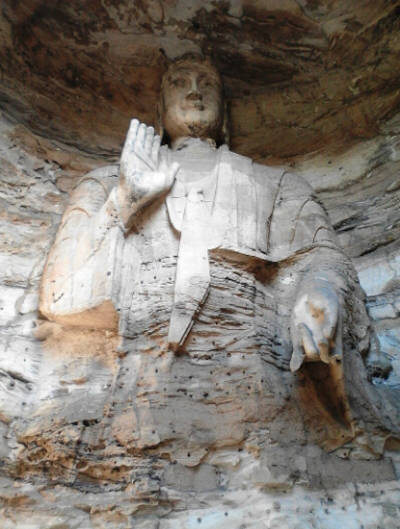
Statue purportedly of Emperor Daowu of Northern Wei. (TAOZIlovewiki/CC BY-SA 4.0)
Rare Imperial Commemorative Traditions
The Northern Wei court maintained a distinctive tradition of commemorating major military campaigns through monumental stone inscriptions. Previously identified examples include the "Stele of the Emperor's Eastern Expedition" and the "Ode to the Emperor's Southern Gobi Expedition," both of which celebrate imperial military achievements in frontier regions.
The "Stele of the Emperor's Eastern Expedition" survives only through historical rubbings documented in the Commentary on the ShuiJingzhu (Commentary on the Water Classic), while the "Ode to the Emperor's Southern Expedition" exists as a fragmentary monument that was relocated to Datong for preservation. Liu Zheng, a member of the Chinese Society of Cultural Relics, emphasizes the extraordinary rarity of these imperial inscriptions, noting that they represent "major historical artifacts" that illuminate the dynasty's approach to frontier governance.
If authenticated, the "Stele of the Emperor's Northern Tour" would become only the third confirmed imperial commemorative inscription from the Northern Wei period, making it an invaluable addition to our understanding of how this transformative dynasty projected power across its vast territorial holdings.
Ulanqab's Strategic Historical Importance
The discovery's location in Ulanqab adds significant historical context to the find. This region of south-central Inner Mongolia, covering over 54,000 square kilometers, has served as a crucial cultural and commercial crossroads for millennia. Historically known as Jininglu, Ulanqab functioned as a strategic transport hub along the Tea Road, a vital Eurasian trade corridor connecting China with Mongolia and Russia.
Archaeological evidence demonstrates the area's continuous cultural significance. The Laohushan Culture, dating from approximately 2700-2200 BC, was first identified in Liangcheng County within Ulanqab and represents one of the earliest Bronze Age urban societies in northern China. The region also contains numerous prehistoric rock art sites and petroglyphs, some dating to the Neolithic period, depicting hunting scenes, celestial symbols, and human figures that provide insights into early steppe inhabitants' spiritual beliefs and daily life.
During the Northern Wei period, Ulanqab's position along crucial migration and trade routes made it a natural staging ground for imperial campaigns against nomadic peoples. The area's strategic value continued through subsequent dynasties, with various defensive installations and administrative centers established to control movement between the settled agricultural regions of China proper and the vast steppes beyond.
The ongoing investigation represents a crucial opportunity to better understand how the Northern Wei Dynasty, founded by the nomadic Xianbei people, successfully integrated steppe political traditions with Chinese administrative practices. As researchers continue their analysis, the "Stele of the Emperor's Northern Tour" promises to provide unprecedented insights into one of Chinese history's most culturally significant periods, when nomadic and settled civilizations converged to create a unique and influential imperial system.
Top image: The recently discovered stone inscription in Ulanqab, Inner Mongolia, showing the weathered granite surface with ancient Chinese characters still visible after 1,500 years. Source: Global Times
By Gary Manners
References
Global Times. (2025). 'Stele of the Emperor's Northern Tour,' possibly of Northern Wei, discovered in N.China. Available at: https://www.globaltimes.cn/page/202508/1340000.shtml
Inner Mongolia Institute of Cultural Heritage and Archaeology. (2025). Archaeological survey report on imperial stone inscription discovery in Ulanqab.
Liu, Z. (2025). Expert assessment of Northern Wei commemorative inscriptions. Chinese Society of Cultural Relics.
Sun, J. (2025). Digital documentation and preservation of Ulanqab stone inscription. Inner Mongolia Institute of Cultural Heritage and Archaeology.






















