
The Odyssey has been a massive box office hit, grossing over $1.35 billion to date, making it the highest earning R-rated film of all time. So once the dust settles and the seas calm, what is the final verdict on the now record-breaking blockbuster? What did it get right and what has been left to artistic license? Here, exclusive to Ancient Origins, Dr. Richard Marranca poses the questions to Classics scholar and TV personality Dr. Michael Scott.

Dr Michael Scott. (FlipFlop27/CC BY-SA 4.0)
Dr. Michael Scott has a natural affinity for making antiquity feel immediate and pulsing. As the Pro-Vice-Chancellor (International) and Professor of Classics and Ancient History at the University of Warwick, he blends a distinguished academic career with prolific research, insightful authorship and a dynamic presence as a public classicist in broadcasting. He also directs the Warwick Classics Network, an initiative centered on expanding public access to the study of the ancient world.
To global audiences, Dr. Scott is known for his captivating history documentaries. He has written and presented acclaimed series for the BBC and other international broadcasters, including Ancient Invisible Cities, Jesus: Rise to Power, Who Were the Greeks?, Guilty Pleasures, Rome’s Invisible City, and Sicily: Wonder of the Mediterranean.
Dr. Scott bridges the gap between scholarship and storytelling magic in books such as Delphi: A History of the Center of the Ancient World, Life in Ancient Greece, and Ancient Worlds: An Epic History of East and West. His recent biography, Themistocles: The Rise and Fall of Athens’s Naval Mastermind, chronicles the brilliant general who helped preserve Greek independence during the Persian invasion of 480–479 BCE. With luck & pluck and wisdom, Themistocles helped outmaneuvered Xerxes’ juggernaut.
While history gives us the real-world Themistocles, myth offers Odysseus—the archetypal mariner, trickster, warrior, and king in the West’s foundational epic. Back home in Ithaca, his queen, Penelope, proves to be his intellectual peer. She wages her own war of wits, surviving years of intrigue and a domestic siege by the predatory Suitors.
In this interview, Dr. Richard Marranca asks Dr. Scott about Christopher Nolan’s cinematic blockbuster adaptation, The Odyssey, which released over the summer.
Dr. Richard Marranca: I recently watched your program, "Delphi: Bellybutton of the Ancient World," and just started your book on the subject — brilliant and wonderfully informative. Are oracles and seers important in both Homer and Nolan’s Odyssey?
Dr. Michael Scott: Delphi's history of oracular telling starts formally in 8th century - so after the time in which the Odyssey is set (Mycenaean period c. 1200 BCE). But the people listening to the Odyssey are from 8-6th centuries BC and onwards and so would be very comfortable with oracles and seers - and with Delphi. So, while the tradition of oracles is present in Odyssey (cf to dead seer Tirersias helping him in underworld) Delphi and Odysseus don’t overlap.
- Odysseus, Off Course in the Baltic Sea
- Ten years in the Med? The Hunt for the Real Odyssey Locations!
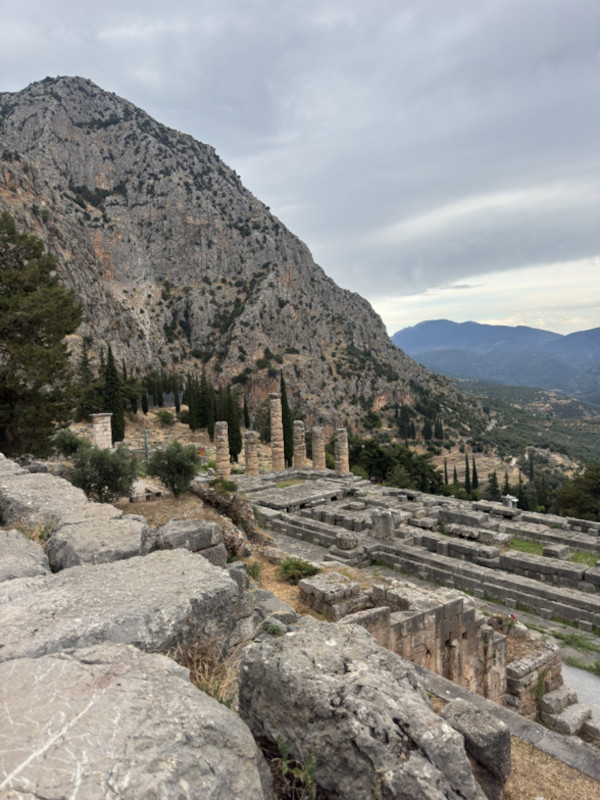
Oracle of Delphi. Photo by Renah Marranca. June 2026 (In the Odyssey, prophets were also wanderers.)
RM: Nolan frames Zendaya's Athena as a manifestation of Odysseus’s trauma rather than a literal deity. Does this modern depiction align with how people in antiquity experienced the gods?
MS: No, I think this is a very modern interpretation (and makes the Odyssey/ Odysseus much more about shame and atonement for his 'crimes' than I think the ancient epic really indicates).
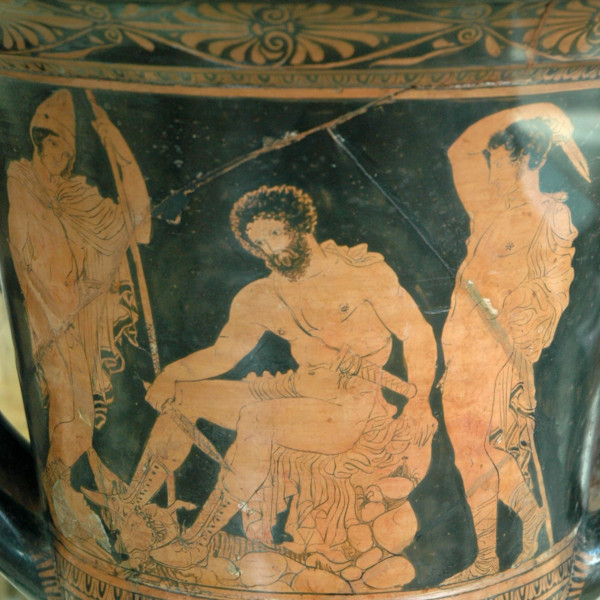
Odysseus Consulting the Shade of Tiresias. Lucanian red-figured calyx-krater, ca. 380 BC. (Musée de la BnF/Public domain)
RM: By casting Travis Scott as the opening bard, Nolan highlights the storyteller's evolution. How well does this choice capture the ancient reality of bards as creative adapters rather than static preservers of text?
MS: Really interesting and innovative choice that absolutely underlines the idea of these oral storytellers adapting and refining the story told.
RM: Nolan filmed in Greek caves using reconstructed ancient boats. What do this depiction and others get right about the harsh reality of Bronze Age seafaring?
MS: Yes, this is done well on both counts.
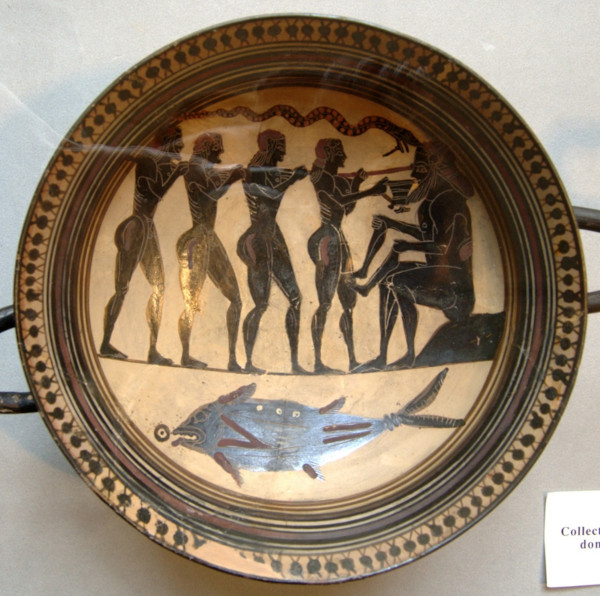
Odysseus and his men blinding Polyphemus, Laconian black-figure cup, 565–560 BC. (ArchaiOptix/ CC BY-SA 4.0)
RM: The film leans heavily into veteran grief and guilt. (Lots of grief in his movie Oppenheimer, too). How does Nolan’s somber atmosphere enrich our modern understanding of nostos (homecoming)?
MS: I think it moves the story away from the ancient original. Homer's Odyssey is very clear in opening lines that Odysseus' men don't return because they ate the cattle... their fault, not his. Odysseus in Homer’s version does not display anything like this much guilt for his acts at Troy.
RM: So, Odysseus returns to a Mycenaean world facing structural collapse. Does the film’s bleak design mirror the anxiety of a transformed or even dying Bronze Age civilization? (By the way, I recall your very powerful documentary on Greek tragedy, opening with The Trojan Women.)
MS: Again, no sense in Homer's version that this is a society on the brink of collapse - that is the historical context we now associate with Trojan War (a kind of last hurrah of the Mycenaean period). The connection between the way Troy was taken / the breaking of Xenia /the coming of the Sea Peoples is all Nolan.
RM: Homer captivates audiences with all sorts of twists and turns. Do you see a direct cinematic equivalent in Nolan’s non-linear editing structure?
MS: Yes, it was good to see stories told within stories (eg. Odysseus narrating/remembering to Calypso). But the 'cunning' nature of Odysseus - outlined in first line of poem - is missing a bit in film. He ends up a little more one dimensional. He has lost his arrogance.
- Enchanting Women of the Odyssey: From Seductive Sirens to Wicked Witches
- New Evidence of Odysseus: Was a Real Man Behind the Legend?
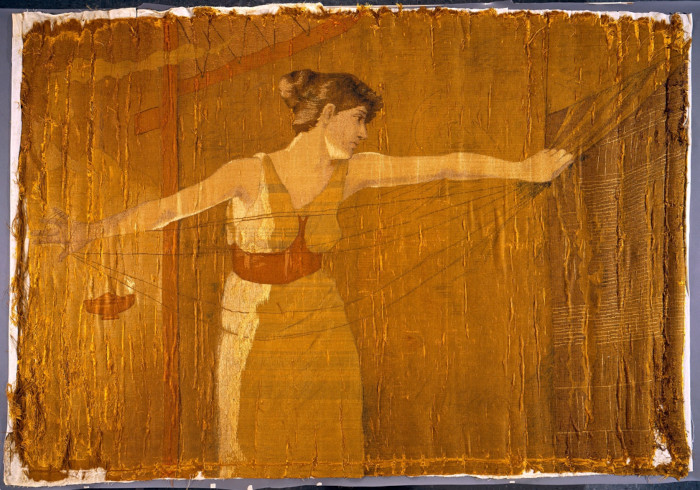
Penelope Unraveling Her Work at Night by Dora Wheeler. (MET ADA6426)
RM: Beyond her famous weaving strategy, does Nolan’s film successfully depict Penelope’s resistance as a form of intellectual warfare that rivals Odysseus’s cunning?
MS: Yes, Penelope is well written (and her outburst and annoyance good too). But other females downgraded (what about Nausica - completely taken out of story).
RM: What do you like most about Nolan’s Odyssey?
MS: Circe scene - brilliant acting and brilliantly done.
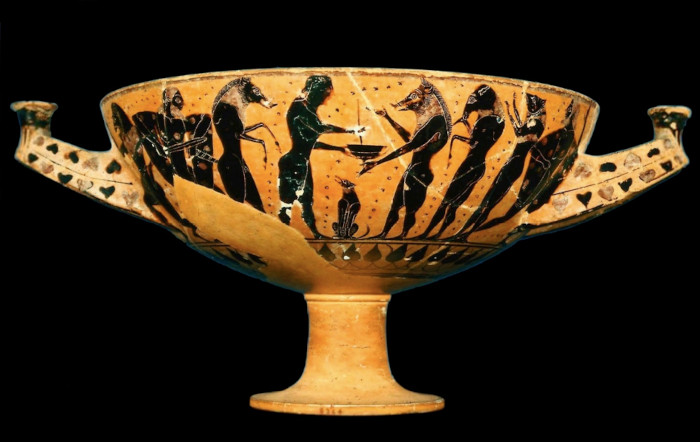
Wine cup (kylix) of Circe turning the men into pigs from Homer’s Odyssey. Greek, Archaic Period, ca. 560-550 BC. (Painter of the Boston Polyphemos/CC BY 2.0)
RM: Nolan's Odyssey is a blockbuster. How do you think it helps the study of Homer, as well as the humanities in general? With the rise of STEM and the diminishment of the humanities in some areas, do you think that popular culture can step in to inspire and educate us with these classics?
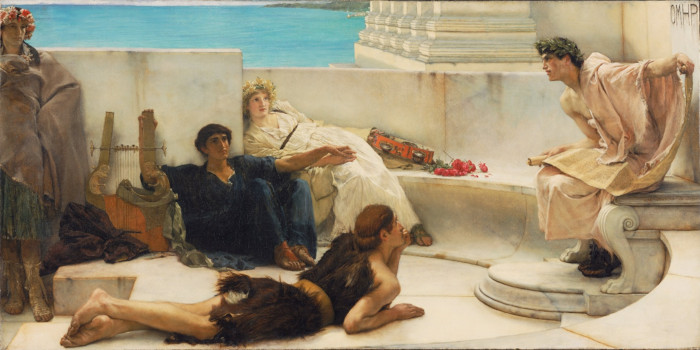
Sir Lawrence Alma-Tadema’s A Reading from Homer (1885). (Lawrence Alma-Tadema/Public domain)
MS: Young teenagers paying to see the film - that's a success. Sadly, some of the backlash from scholars like Emily Wilson (who has complained about the level of language he used) makes Classics sound quite old-fashioned and not prepared to move with the times... so film all good - classical world response is not entirely helpful.
Top image: The Odysseus Press Conference at Soeul 2026. Source: Republic of Korea/CC BY-SA 4.0