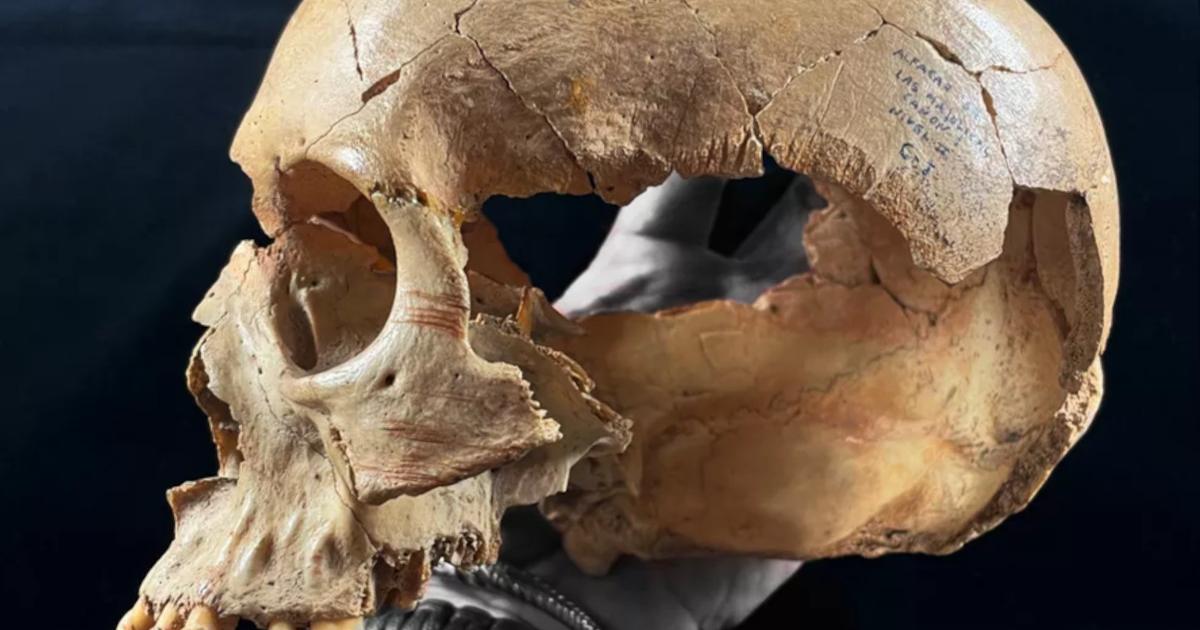

One Label, Three Very Different Stories
The original study in the Journal of Archaeological Science re-evaluated existing collections from Malalmuerzo, Carigüela and Majolicas caves through radiocarbon dating and standardized taphonomic analysis. The researchers scrutinized bones under a microscope looking for cut marks, blows, fresh fractures and human bite marks, while also checking for signs of marrow extraction, boiling and intentional skull breaking. According to the report published by Archaeology News, every assemblage displayed systematic treatment that matches with the occurrence of cannibalism.

Palmira Saladié, Francesc Marginedas and Ana Solari examine the historic collections at the University of Granada. (IPHES-CERCA)
That conclusion relies on patterns rather than a single dramatic sign. Archaeologists must be able to discern the difference between consumption, funerary defleshing, destruction by animals, and damage that occurred much later, after burial, while human tooth marks offer strong evidence. The team also used demographic estimates and statistical and machine-learning methods to determine whether fractures were made intentionally or as a result of accident.
- Shocking Discovery: Neolithic Farmers Cannibalized Enemy Families
- A Site of Archaeological Treasure and Murder at Atapuerca, Spain
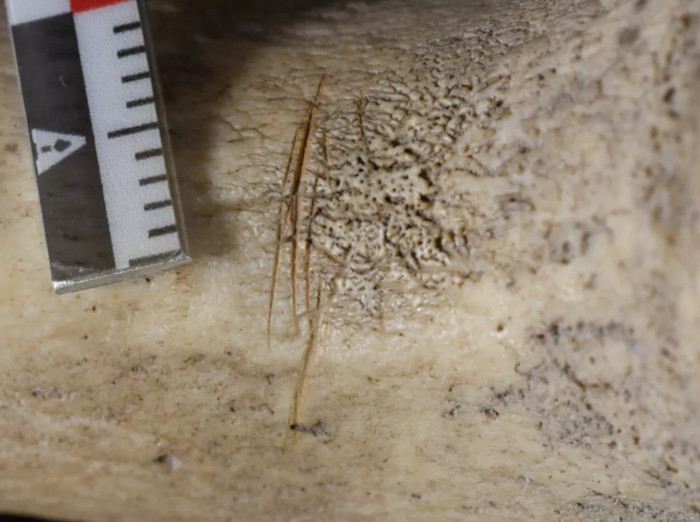
Cut marks evident on a long human bone from one of the sites. (Antonio Rodríguez-Hidalgo/IAM-CSIC)
Malalmuerzo Points to Collective Violence
Malalmuerzo provided the most concrete proof. Exact dating of its remains, which dates back to 5300 - 4950 BC, is made possible by an independent detailed record, which lists as many as 714 fragments and not less than 36 individuals, children included. Blunt-force wounds on the skulls, closely grouped dates and diverse ages point towards one event in which many if not all of a community’s people could have been killed and then eaten.
“Behind similar archaeological evidence there may exist very different social realities,” Antonio Rodríguez-Hidalgo explained in the IPHES-CERCA announcement, translated from Spanish. This distinction is important because cannibalism has served very different purposes across history, from survival to mortuary rites and violence against enemies. At Malalmuerzo, trauma and demographics make interpersonal violence the strongest current interpretation, although who the perpetrators were and the reason for the act remain unknown.
- Human Skull ‘Cups’ and Butchered Bones Lead Archaeologists to One Conclusion – Neolithic Cannibals
- The Mystery of Herxheim: Was an Entire Village Cannibalized?
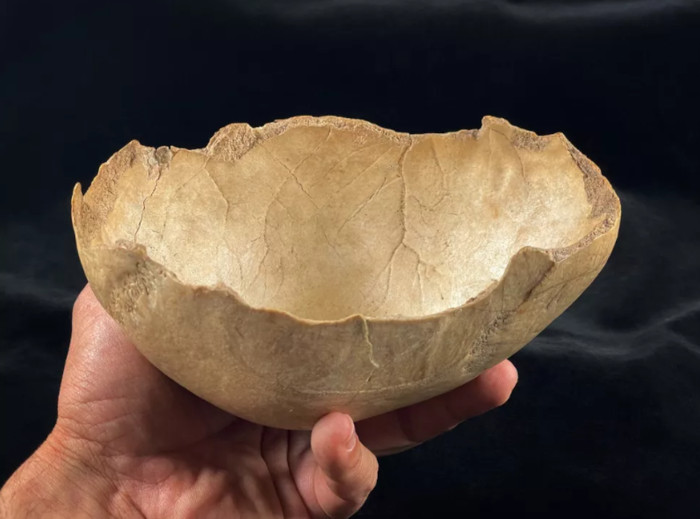
A Neolithic skull cup from Carigüela Cave in Granada. (Antonio Rodríguez-Hidalgo/IAM-CSIC via IPHES-CERCA)
Skull Cups Mark Recurring Acts at Carigüela
The Carigüela Cave offers a more intricate narrative. The direct chronology points to the handling of corpses during different periods rather than just in one event. Cut marks and fractures occur alongside two skulls deliberately fashioned into containers, echoing other prehistoric skull cups and chewed bones found across Europe.
The process of creating a skull cup includes not just the extraction of the soft tissues but also the opening of the cranium and the finishing of the edges, which points to more than the unintentional destruction associated with butchering. While such objects can signify trophies, ceremonial or funerary purposes, the skull cup cannot betray its meaning on its own. The dating might point to recurring Neolithic cannibalism that may be indicative of endocannibalism—the act of eating the flesh of a member of one’s community— but the researchers remain cautious.
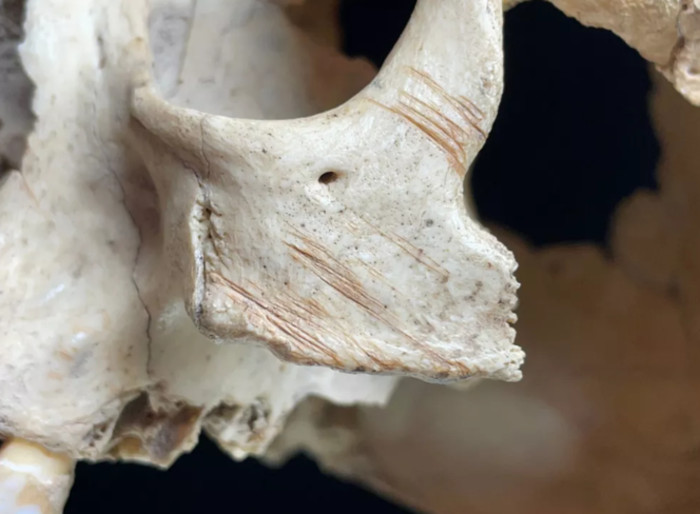
Cut marks cross the zygomatic, or cheekbone, of an adult skull from Majolicas Cave. (Antonio Rodríguez-Hidalgo/IAM-CSIC)
Cinnabar Hints at Ritual Treatment
Majolicas contains the most recent episode, attributed to about 3950–3760 BC. Long bones were fragmented less intensively, there was no clear evidence of violence and the remains were stained in red cinnabar. This rare mercury sulfide was highly symbolic in Iberian funerary practices, and it is connected with the repeated use of mercury which could be harmful for prehistoric populations.
The pigment lends credence to the idea of mortuary or ceremonial functions at the Majolicas, but the authors do leave the door open to other interpretations.
The episodes of cannibalism seem to be separated by gaps in time and may not form a continuous story. Taking the Neanderthal cannibalism into consideration also shows that not all findings can be interpreted similarly. In this light, the Granada caves therefore replace a simple picture of Neolithic cannibalism with a more unsettling one: similar acts could express violence, remembrance, ritual or several motives at once.
Top image: Adult skull from the Majolicas Cave with cut marks, indicating cannibalism in Neolithic Iberia. Source: Antonio Rodríguez-Hidalgo/IAM-CSIC/ IPHES-CERCA
By Gary Manners
References
IPHES-CERCA. 7 September 2026. Tres cuevas de Granada revelan que el canibalismo en el sur de Iberia fue una práctica recurrente en el Neolítico. Available at: https://comunicacio.iphes.cat/spa/p/news/new/noticias/v/category/1/1147.htm
Radley, D. 7 September 2026. Cannibalism in Spain took different forms during the Neolithic, from violence to ritual. Available at: https://archaeologymag.com/2026/09/cannibalism-in-spain-took-different-forms/
Saladié, P., Rodríguez-Hidalgo, A., Marginedas, F., Solari, A. and Botella, M. C. 2026. Multiphase human cannibalism in Neolithic southern Iberia: Chronological and taphonomic evidence from Malalmuerzo, Carigüela, and Majolicas Caves. Journal of Archaeological Science, 194, 106666. Available at: https://doi.org/10.1016/j.jas.2026.106666