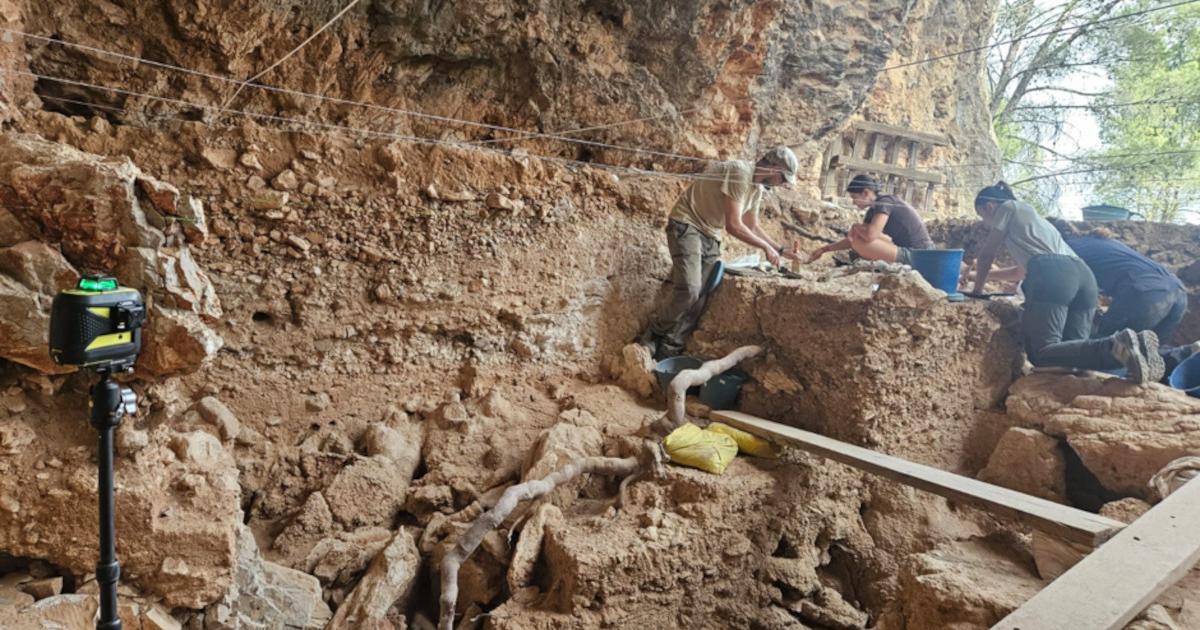

Discoveries of new stone tools in a cave in Zaragoza, Spain, are helping archaeologists to reconstruct the daily lives of some of the last Neanderthals that lived in Aragón around forty thousand years ago. During the excavation of ‘Aguilón P5’ in July 2026, experts determined the existence of a certain activity area in the entrance of the cave and revealed high-quality flint tools produced from stone from near Botorrita, which is located beyond the site itself. These finds, shared by the University of Zaragoza, provide proof that worked stone means more than just that, it reflects movement, planning and use of landscape in question.
A Neanderthal Workspace at the Cave Mouth
The latest investigation focused on determining the nature of the occupied area at the entrance in which light, protection and accessibility to the environment would help people accomplish their daily activities. The tools discovered belong to the Mousterian stone tools tradition associated with the Neanderthals of Europe. Their presence may help identify the locations where people have been chipping flint, preparing food, or cooking at least, similarly to what was done in the previous research of other Neanderthal sites.
Scientific co-director Marta Alcolea said in the university release that “Aguilón P5 offers an exceptional opportunity to understand the last Neanderthal communities that inhabited Aragón” (translated from Spanish). Her comments emphasize the importance of reconstructing Neanderthal behaviors, not just increasing the collection of artifacts. As she noted, each expedition is another step towards recognizing when these communities existed, how they organized themselves, and what surroundings they worked in. The cave is an opportunity to study continuation and change, as findings from much older Middle Paleolithic times prove that Neanderthals visited the site many times before.
- The Hominids of Hiberia: Neanderthals, Dolmens and Myths Entwined
- The ‘Last Neanderthal Necklace’ Has Been Found In Spain
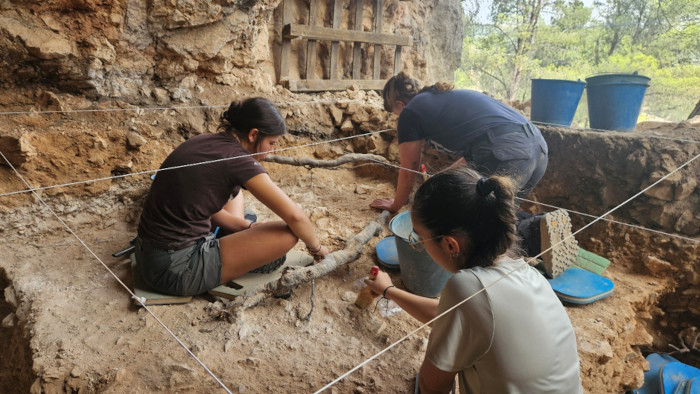
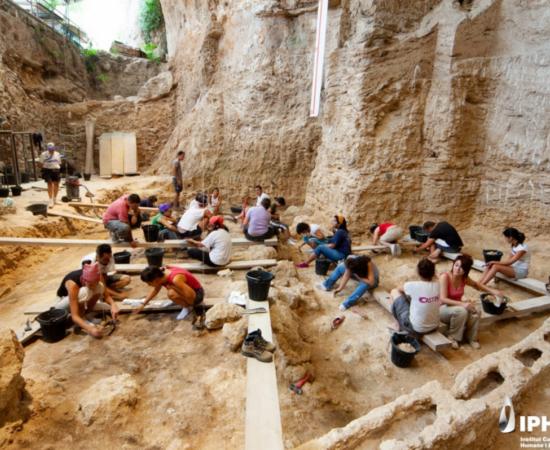
University of Zaragoza students excavate a Mousterian occupation level at Aguilón P5. (University of Zaragoza)
Flint Carries a Map of Neanderthal Movement
The newly excavated tools came from superior rock, namely flint from outcrops close to Botorrita. The source of the material is important because it serves as a map in the sense it reveals places the people knew, selected and collected the stone from before the tools arrived at the cave. Similar studies conducted utilizing technology focused on the long-distance movements of the Neanderthal population, while a bone spear point found in Spain demonstrates how flexibly these hunters could use available materials.
- Unique 50,000-Year-Old Neanderthal Bone Spear Point Recovered in Spain
- Top Ten Myths about Neanderthals
Aguilón P5 had already produced points, scrapers, notches and denticulates, along with fractured animal bones and numerous hearths. A 2020 study by Carlos Mazo and Marta Alcolea in Quaternary International reported lithics, processed fauna and charred plant remains from successive occupations dated from beyond 50,000 to about 41,900 years before present. By 2024, approximately 10,000 stone and animal-bone remains had been recovered, according to the Aragón Environmental Science Research Institute.
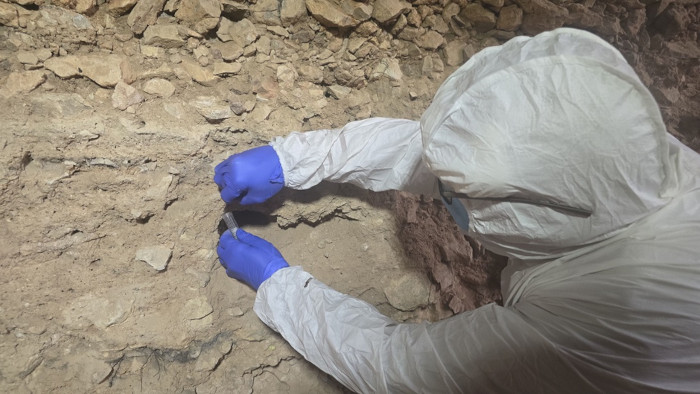
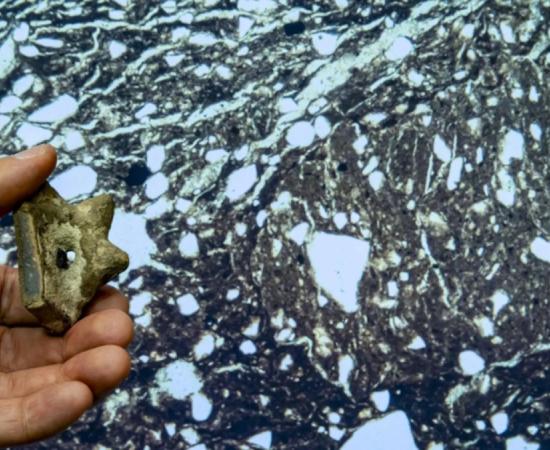
A researcher collects sediment for ancient DNA analysis at Aguilón P5 during the 2024 campaign. (Image source: Unizar / IUCA via AraInfo)
Rebuilding a Lost Ice Age Environment
Excavation forms only a small part of the project. New dating, geoarchaeological work, technological analysis and palaeoenvironmental work are ongoing throughout the year, including the first systematic research on small mammals from the cave. Examination of small mammals can help reconstruct the conditions in which the inhabitants of Aguilón P5 found themselves, since small mammals respond to host, climate etc.
Researchers also sampled cave sediment for ancient DNA in 2024, adding palaeogenetics to an already broad scientific program. It is crucial to take such a multidisciplinary approach to a site reflecting the end of the Neanderthal epoch in the region. Recent studies done in various places point at decreasing populations and a lower diversity among the last inhabitants of Europe; however the evidence from Aguilón P5 should be interpreted according to its archaeological schedule.
A Key Site for Neanderthals and Modern Humans
Excavation work commenced in 2010 at Aguilón P5, which is located on the northern side of the Iberian System below the Ebro River. The dated archaeological sites coincide with the Middle to Upper Paleolithic periods which marks an important moment in the history of human populations in Iberia, being the time when the last Neanderthals and the first Homo sapiens appeared on the region. Finds such as the roughly contemporary eagle-talon ornament from Cova Foradada warn against reducing that transition to a simple tale of one “advanced” population replacing another.
Top image: Archaeologists work inside Aguilón P5 during the 2026 excavation campaign. Source: University of Zaragoza
By Gary Manners
References
AraInfo Redacción. 2024. La cueva de Aguilón preserva uno de los últimos refugios para los neandertales en la cordillera Ibérica. Available at: https://arainfo.org/la-cueva-de-aguilon-preserva-uno-de-los-ultimos-refugios-para-los-neandertales-en-la-cordillera-iberica/
Instituto Universitario de Investigación en Ciencias Ambientales de Aragón. 2024. The Mousterian site of AGP5 cave (Aguilón, Zaragoza ) continues to reveal evidence about the final period of Neanderthal presence in the Iberian Range. Available at: https://iuca.unizar.es/en/noticia/the-mousterian-site-of-agp5-cave-aguilon-zaragoza-continues-to-reveal-evidence-about-the-final-period-of-neanderthal-presence-in-the-iberian-range/
Mazo, C. and Alcolea, M. 2020. New data concerning Neanderthal occupation in the Iberian System: First results from the late Pleistocene (MIS 3 ) Aguilón P5 cave site (NE Iberia). Quaternary International, 551. Elsevier. Available at: https://doi.org/10.1016/j.quaint.2019.07.025
Universidad de Zaragoza. 2026. Los hallazgos en Aguilón P5 contribuyen, un año más, a reconstruir cómo vivían los neandertales hace 40.000 años. Available at: https://www.unizar.es/noticia/los-hallazgos-en-aguilon-p5-contribuyen-un-ano-mas-reconstruir-como-vivian-los-neandertales