
A coded letter sent on Napoleon Bonaparte's orders in March 1809 has finally been read, 217 years after it was written. The breakthrough came not from a professional cryptographer but from Carter Church, an AI engineer at the cybersecurity firm Sentinel One, who turned OpenAI's GPT-6 Astra loose on the document and had a solution in about six hours. What emerged was a secret military briefing written two weeks before Austria invaded Bavaria, listing French, Bavarian, Polish and Saxon positions on the eve of war.
A Cipher That Defeated Every Codebreaker for 217 Years
The letter survived only through a single reproduction in a 1969 French army journal, the Revue historique des Armées, printed under the wrong date. Its opening line is ordinary French — "You must have received, General Marmont, my letters of the 8th, 14th and 20th of this month" — but the twenty-four rows beneath it hold 1,300 cipher units of two-digit numbers, stray letters, Greek characters and some seventy hand-drawn marks with no printed equivalent.
It is a homophonic cipher, the kind of system that buries undeciphered codes beyond the reach of frequency counting: common letters carried several interchangeable signs, so no two E's in a row need look alike. As Church explains in his published write-up, only thirty-three values had ever been documented, by the French cryptology historian Daniel Tant — roughly a third of the text. "Several researchers had tried over the decades to reconstruct the document's contents, but none had published a full decipherment," Euronews reported.
- 9 Mysterious Undeciphered Codes and Inscriptions in History
- The Ancient Writing Systems Nobody Can Read
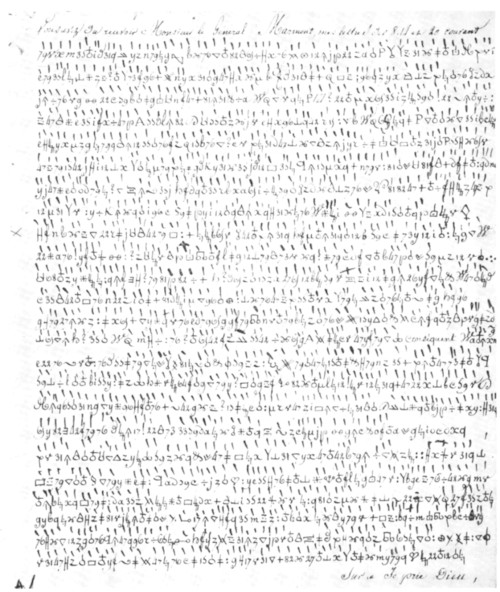
The only surviving reproduction of the 1809 cipher letter to General Marmont, known from a 1969 French army journal plate (Carter Church, reproduced from J. Vilcoq, Revue historique des Armées, 1969)
What Napoleon Told Marmont on the Eve of War
In February 1809 Vienna resolved on war with France, judging that the Habsburgs would be next after Napoleon deposed the Spanish Bourbons and took their kingdom for his brother. Archduke Charles had spent three years rebuilding an army of some 340,000 regulars, and Napoleon's Egyptian campaign a decade earlier had shown how far his ambitions ran.
Napoleon's problem had a name: Marmont. A personal friend of the Emperor, he commanded some 13,000 of the finest French troops, parked in Dalmatia across the Adriatic with Austrian territory between him and every other army. On 16 March 1809 the Emperor wrote from Paris to his stepson Eugène de Beauharnais, Viceroy of Italy, ordering that Marmont be told where every French and allied force stood — the message to go, in his words:
"dans une lettre chiffrée et par un officier intelligent" - "in a coded letter, carried by an intelligent officer."
The recovered letter names the Duke of Danzig with 40,000 Bavarians at Munich and Passau, Prince Poniatowski with 30,000 Poles camped on the Vistula threatening Cracow, and the Prince of Ponte-Corvo holding the Saxon army before Dresden:
"The Russians are marching against Austria, and the army [of] Friuli today numbers eighty thousand men," it reads. "She is consequently hastening toward her ruin. When you receive the order to march, you must not allow yourself to be intimidated by a few troops or a gathering of rabble."
- The Rosetta Stone: One of Archaeology's Greatest Treasures
- AI Just Read Scrolls Burnt by Vesuvius 2000 Years Ago
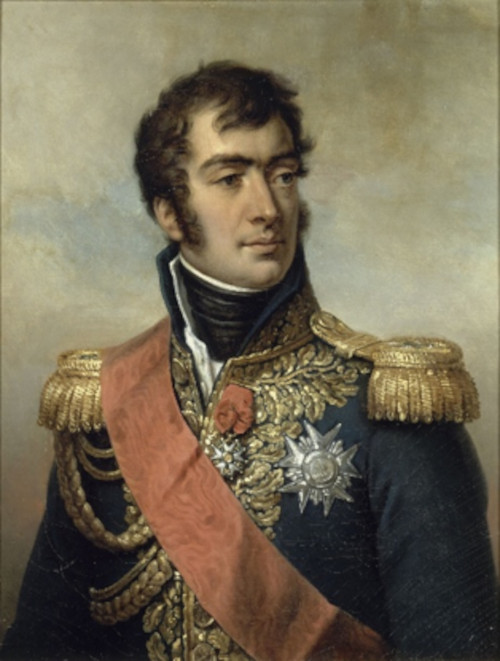
Marshal Auguste de Marmont, the isolated commander the 1809 letter was written to warn (Public Domain)
From Army Clerks to the Great Paris Cipher
French headquarters ran on a pair of sheets: the tableau chiffrant, plain text down the left with the signs to use beside it, and its inverse for the officer at the other end. A clerk enciphered the draft one letter at a time, choosing among the signs on offer so that no two looked alike. When the key was lost, the letter went dark, and cracked systems have a habit of staying that way.
Napoleon's ciphers were not always so stubborn. By 1811 the French had introduced the Great Paris Cipher, a code of roughly 1,400 entries used by King Joseph in Spain, which the British staff officer George Scovell broke within days — helped, as the Tokyo researcher Satoshi Tomokiyo documents at Cryptiana, by the plain words French clerks kept leaving among the numbers.
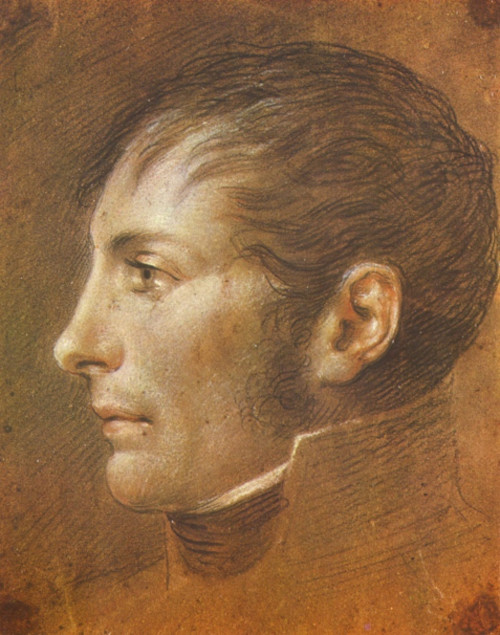
Eugène de Beauharnais, Viceroy of Italy, at whose headquarters the cipher letter was drawn up on Napoleon's order (Public Domain)
AI and the New Age of Decipherment
Astra handled the work end to end. It cut the plate into rows, read the signs, decided which of 175 hand-drawn marks were the same sign written twice, then attacked the cipher, testing letters against French word patterns and rechecking each value on the image. "Transcription and cryptanalysis are usually separate skills, often separate careers. Here they ran as one workflow," Church wrote.
Tomokiyo reviewed the solution and marked the entry "solved," and Church published his full record on 18 September, including transcription, key tables and scripts that regenerate the reading. It joins a widening wave of machine-assisted decipherment, from the burned Herculaneum scrolls to the Voynich manuscript and AI tools built for hieroglyphs, and raises an awkward question for archivists: how many documents still sit unread?
Marmont, for his part, marched. His Army of Dalmatia reached the Danube in time for the second day of Wagram, the largest battle Europe had yet seen, and Napoleon made him a marshal. Five years later, with the Allies at the gates of Paris, Marmont negotiated with them and marched his corps into their lines — the act that convinced Napoleon to give up his throne.
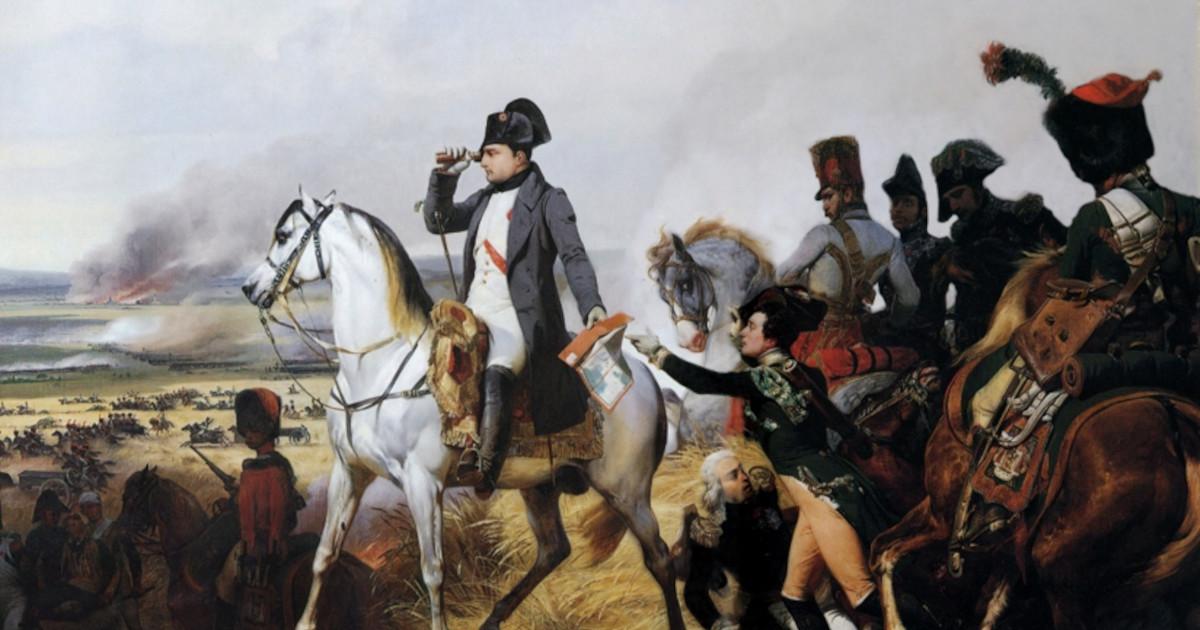
Top image: Napoleon Bonaparte at the Battle of Wagram, by Horace Vernet (1836). Source: Public Domain
By Gary Manners
References
Church, C. 2026. Breaking the Marmont Cipher, 1809. Available at: https://carter.church/writeups/the-letter-to-marmont/
Davies, P. 2026. AI decodes 217-year-old Napoleonic letter in 6 hours. Euronews. Available at: https://www.euronews.com/2026/10/02/ai-decodes-217-year-old-napoleonic-letter-in-6-hours
Spitz, E. 2026. A Cipher Used By Napoleon In 1809 Was Just Decoded By AI. All That's Interesting. Available at: https://allthatsinteresting.com/napoleon-cipher-decoded
Tomokiyo, S. 2015. Great Ciphers of Napoleon's Grande Armée. Cryptiana. Available at: https://cryptiana.web.fc2.com/code/napoleon2.htm
Vilcoq, J. 1969. Le chiffre sous le Premier Empire. Revue historique des Armées. Available at: https://www.persee.fr/doc/rharm_0035-3299_1969_num_25_4_8686