Beneath the crowded streets and ancient stone walls of Jerusalem, archaeologists have uncovered a remarkable tunnel that offers a new glimpse into the city’s past. Hidden for centuries beneath layers of earth and history, the passageway may have served as part of the water system, expedited an industrial activity like quarrying, or been an unfinished section of a complex project. The discovery not only highlights the engineering skill of ancient builders but also adds another chapter to the long and complex story of one of the world’s oldest continuously inhabited cities. As excavations continue, researchers hope the tunnel will reveal fresh clues about daily life, warfare, and survival in ancient Jerusalem.
The Mystery Begins
The tunnel mystery began when an archaeological team excavating near Kibbutz Ramat Rachel in the city of Jerusalem uncovered a large underground tunnel. The tunnel was well- preserved because of the craftsmanship of ancient stone cutters, builders, and architects who planned the tunnel route and carved directly into bedrock.
Problems Arise for Archaeologists and Urban Planners
Discovered in the wake of major excavations required before authorities could allow planning for a new residential neighborhood, the ancient tunnel is puzzling for archaeologists and challenging for urban planners. The neighborhood project is north of Ramat Rachel, a mixed-use residential area that has 488 housing units, shops, workplaces, and two schools. Officials from the Israel Antiquities Authority must now include tunnel preservation as part of a future archaeological park within this up-and-coming new neighborhood.

The ancient tunnel was discovered in the city of Jerusalem. (Yoli Schwartz/Israel Antiquities Authority)
Long Stone Passages Lead Nowhere
Initially, site surveyors noticed what appeared to be a natural cavity in the rocky terrain. As work continued, the opening expanded into a large underground passage. The tunnel stretched about fifty meters through the rock. However, researchers who were documenting the area encountered sections of the tunnel that were impassable because walls or ceilings had collapsed. Until engineers check the structural stability, archaeologists will be unable to expose the full length of the passage. Originally, the tunnel entrance had a staircase that led to a carved opening. Within the tunnel, the archaeologists found multiple layers of compact soil that had gradually filled the passage over time.
- Remarkable 3,000-year-old Subterranean Tunnels Discovered in Jerusalem
- Puzzling Subterranean Chambers Discovered at Jerusalem's Western Wall
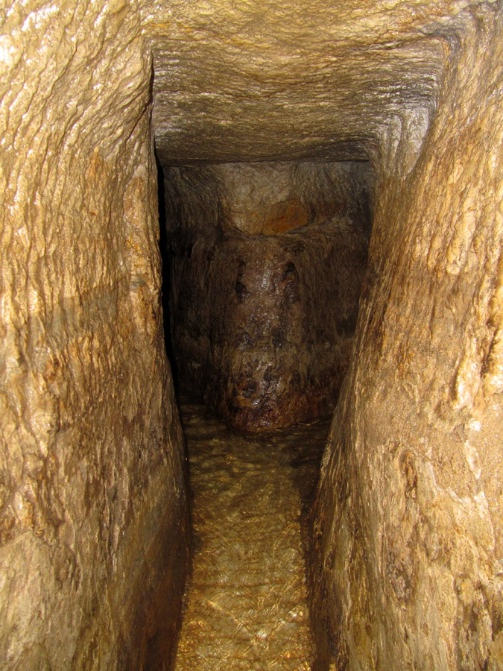
Siloam tunnel, commonly dated to the late 8th century BC, carved out during the reign of King Hezekiah of Judah, was discovered in 1838 CE. (Credit to Tamar Hayardeni תמר הירדני/CC BY 3.0), Source.
After test excavations, archaeologists estimated the original size of the space. They believe that it reached 5 meters in height and 3 meters in width. The walls preserved the expertise of the stone cutters despite the time that has passed. The smooth surfaces and regular shapes suggest efficient planning and painstaking labor.
More Questions Than Answers
There are several theories about the tunnel’s use and the date of construction. At first, archaeologists excavating in the immediate area considered the possibility of a water system that was designed to reach an underground spring, but finally rejected the idea. The walls contain no plaster; a thick plaster surface was economical and widely used in the ancient world for water installations to prevent leakage. As time went on, a geological review revealed no underground water source in the area, and excavators saw no evidence of standing or flowing water inside the passage itself.
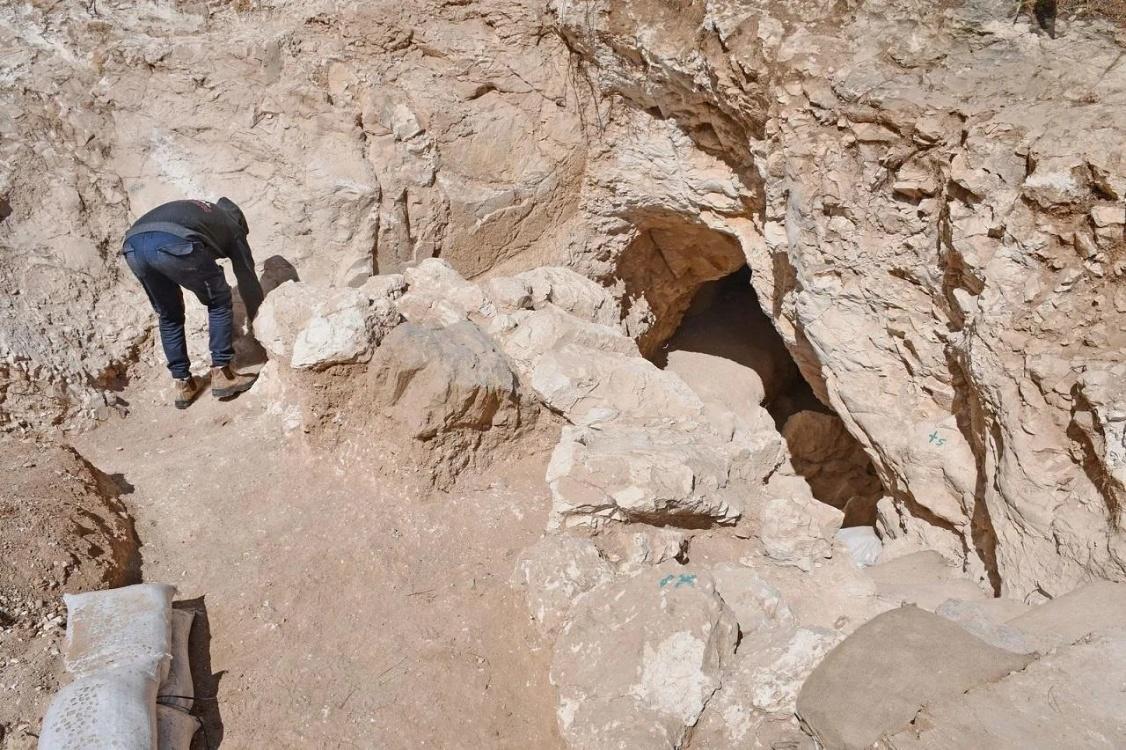
Just one of many entrances that take you into the underground complex uncovered during the excavations near the Ramat Rachel Kibbutz, located within Jerusalem’s municipal boundaries. (Credit to Yoli Schwartz/Israel Antiquities Authority).
Researchers then proposed an agricultural or industrial function. This explanation was unlikely because of the sheer scale of this site and the absence of similar underground systems nearby.
The current leading theory links the tunnel to quarrying activity. The archaeologists believe that the builders may have been trying to reach a potential chalk layer suitable for producing lime or extracting building material. A vertical shaft had also been found carved into the ceiling. Such openings provided ventilation within the underground work areas. Excavators were also able to recover quarry debris scattered across the floor.
- Archaeologists Unveil 2,000-Year-Old Underground Banquet Hall in Jerusalem
- Remnants of a Revolt: What Did Israeli Archaeologists Find Hidden Under Second Temple Period Homes?
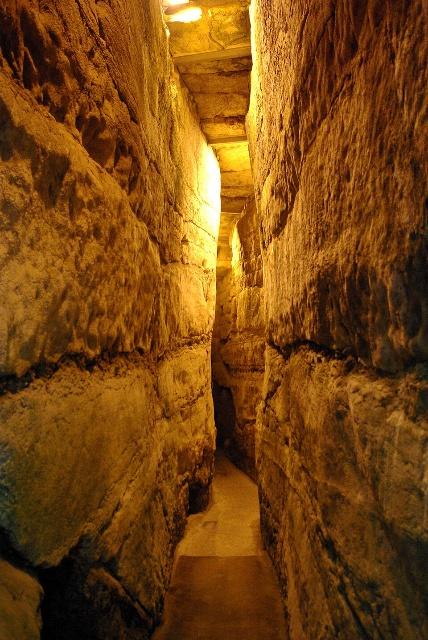
Western Wall Tunnel, an ancient retaining wall of the Temple Mount, dates to the period of King Herod’s rule over the Roman province of Judea in 19BC. (עמוס גל/CC BY-SA 4.0), Source.
Another distinct possibility is that this project was never completed. If work stopped at one point before the tunnel reached its final stage, then the original purpose may unfortunately remain unknown. Dating this structure has been problematic. Archaeologists have found no pottery fragments, tools, coins, or organic remains inside this tunnel for evidence of the time period. The surrounding landscape adds additional layers of complexity to this find.

An ancient tunnel is being uncovered in Jerusalem (Credit to Yoli Schwartz/Israel Antiquities Authority)
The Mystery Deepens
Dr. Zenovi Matskevich and his team continue to explore the theories and date possibilities: “The date of the tunnel is a mystery to us, since not even the smallest find was uncovered that could indicate when it was created. At the same time, the tunnel lies only a few hundred meters, as the crow flies, from two significant ancient sites - a public building from the Iron Age in the Arnona neighborhood, and Tel Ramat Rachel, where settlement remains dating from the Iron Age through the Islamic period have been documented.”
So the mystery of the ancient tunnel continues, awaiting the next pottery shard or silver coin to reveal the answers.
Top Image: The Israel Antiquities Authority excavation directors at the entrance to the complex, Source: Israel Antiquities Authority.
References
Freeman, Charles. “Chapter 6: Ancient Near East, 1200-500 BC.” Essay. In Egypt, Greece, and Rome: Civilizations of the Ancient Mediterranean, Second Edition, 95–97. New York City, New York: Oxford University Press, 2004.
Lahav, Shosh. “A mysterious, ancient, and impressive tunnel was discovered in an archaeological excavation in Jerusalem.” IAS, May 15, 2026.https://www.ias.co.il/%D7%AA%D7%99%D7%99%D7%A8%D7%95%D7%AA/%D7%9E%D7%A0%D7%94%D7%A8%D7%94-%D7%9E%D7%A1%D7%AA%D7%95%D7%A8%D7%99%D7%AA-%D7%A7%D7%93%D7%95%D7%9E%D7%94-%D7%95%D7%9E%D7%A8%D7%A9%D7%99%D7%9E%D7%94-%D7%94%D7%AA%D7%92%D7%9C%D7%AA%D7%94-%D7%91%D7%97/.
Radley, Dario. “Mysterious Ancient Tunnel Discovered in Jerusalem Puzzles Archaeologists.” Archaeology News Online Magazine, May 16, 2026. https://archaeologymag.com/2026/05/mysterious-ancient-tunnel-discovered-in-jerusalem/.
Urbanus, Jason. “News - Mysterious Ancient Tunnel Discovered beneath Jerusalem Streets.” Archaeology Magazine, May 15, 2026.https://archaeology.org/news/2026/05/15/mysterious-ancient-tunnel-discovered-beneath-jerusalem-streets/.